Table of Contents
- Painting vs Replacing Kitchen Cabinets: The Core Decision
- Cost of Painting Kitchen Cabinets vs New: A Full Breakdown
- How to Tell If Your Cabinets Are Worth Painting
- How Long Does It Take to Paint Kitchen Cabinets vs Replace Them?
- Best Paint for Kitchen Cabinets: Products That Deliver a Factory Finish
- Cabinet Refacing: The Middle-Ground Option Worth Considering
- Painting vs Replacing Kitchen Cabinets: Pros, Cons, and Who Each Is For
- Conclusion: Which Option Is Right for Your Denver Kitchen?
Last Updated: May 13, 2026
Painting vs Replacing Kitchen Cabinets: The Core Decision
The decision around painting vs replacing kitchen cabinets is one of the most consequential choices in any kitchen remodel, and most homeowners get it wrong by defaulting to full replacement before exploring what a professional finish can actually achieve. Denver Cabinet Painting Colorado has helped hundreds of Colorado homeowners navigate exactly this decision, and the verdict is rarely as simple as “just replace them.” Cabinet painting is the process of professionally stripping, sanding, priming, and coating existing cabinet boxes and doors to produce a smooth, factory-quality finish without altering the underlying structure. Below, we’ll show you exactly how to weigh your options, understand the real cost gap, and identify which choice fits your specific kitchen.
Here’s what most guides get wrong: they treat this as a purely financial decision. Cost matters, but so does the structural integrity of your existing cabinet boxes, the material your cabinets are made from, and how long you plan to stay in your home. Get those factors wrong and you’ll either overspend on replacement you didn’t need or waste money painting cabinets that won’t hold a finish.
Cabinet Painting Service Areas in Denver & Surrounding Cities, Cabinet Refinishing in Denver County,
Serving Lakewood, CO, Littleton, CO, Golden, CO, Evergreen CO, Roxborough Park CO, Ken Carl Ranch CO,
Arvada, CO, Wheat Ridge, CO,
and Parker CO. Castle Pines CO. Englewood CO. Centennial CO.
Cabinet Painting in Arapahoe County, CO
Including Centennial, CO, Greenwood Village, CO,
Cherry Hills Village, CO, Englewood, CO,
and Aurora, CO.
Cabinet Painting in Adams County & Broomfield, CO
What Cabinet Painting Actually Involves
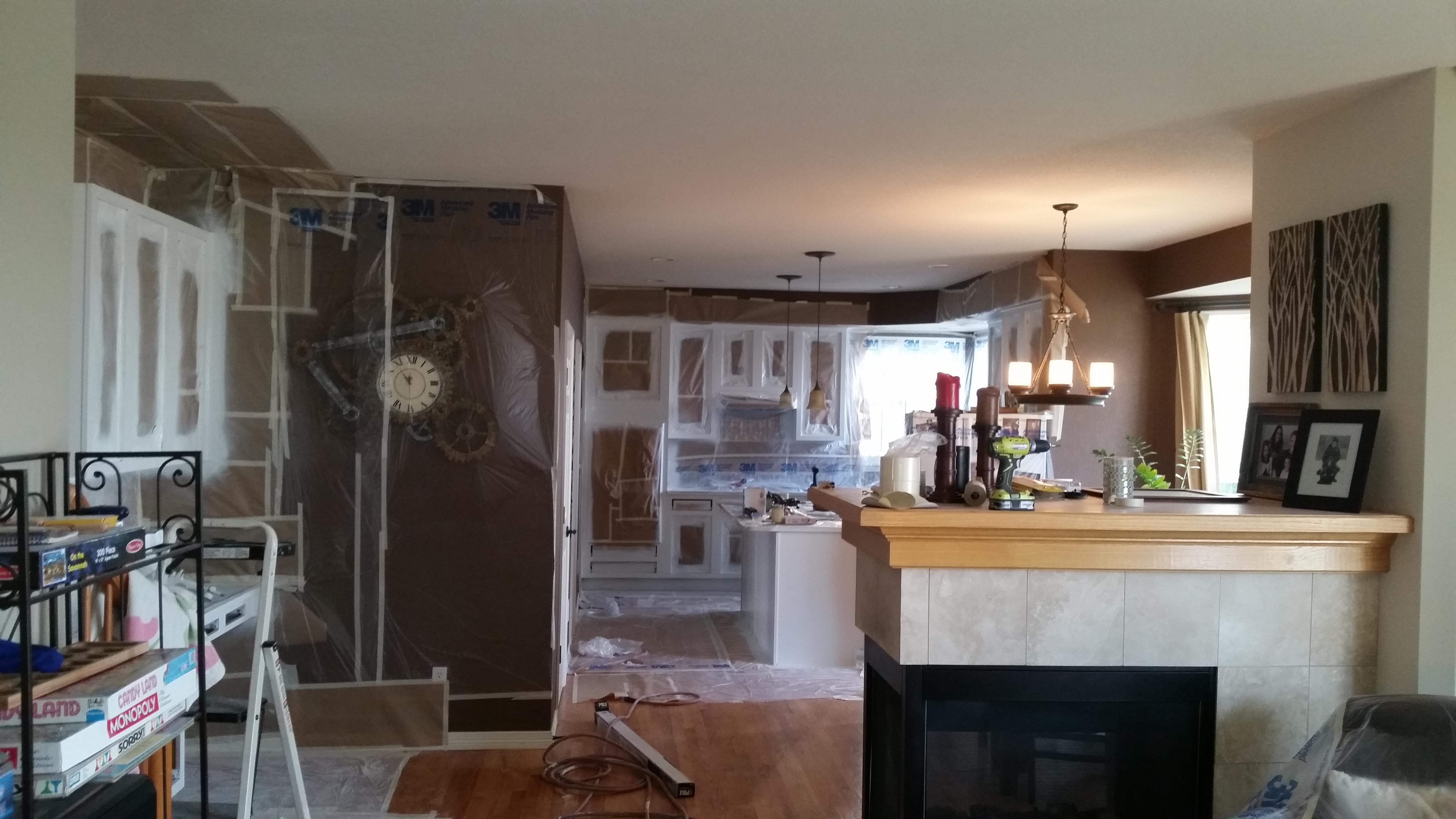
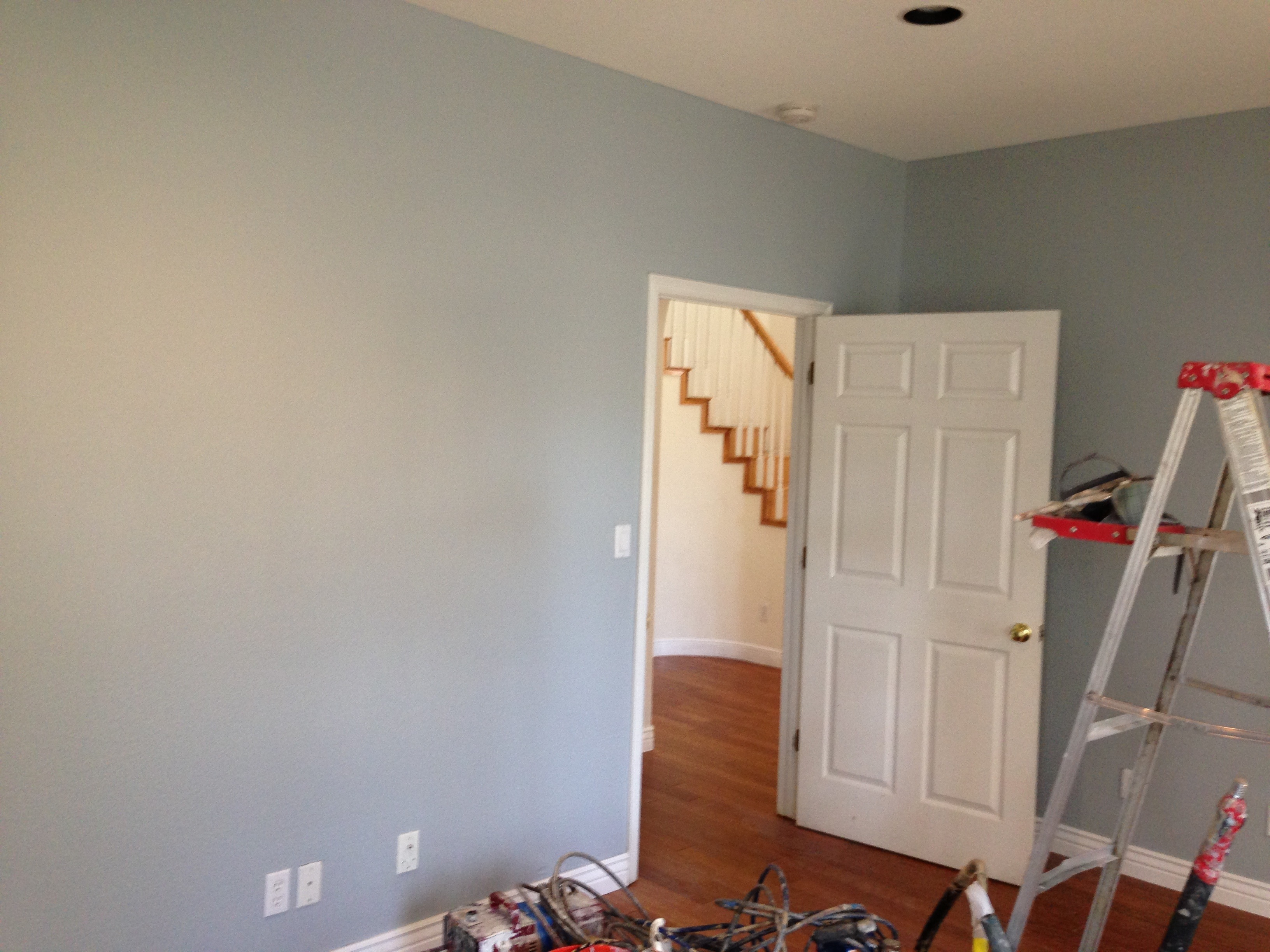
Cabinet painting is not a weekend brush-and-roll project. Done correctly, it involves removing all cabinet doors and drawer fronts, thorough degreasing, sanding to scuff the surface, applying a bonding primer, and then spraying or rolling a topcoat designed for high-traffic surfaces. The prep work is where professional results are earned or lost. Skip the prep and primer, and even the best paint peels within a year. My Review of Graco FFLP Tips for Spraying Cabinets
Professional cabinet refinishing also includes filling hardware holes, caulking gaps, and reassembling with precision. The result, when executed properly, is a kitchen that looks updated without the disruption of a full demolition.
What Cabinet Replacement Actually Involves
Cabinet replacement means removing the existing cabinet boxes entirely, disposing of the old units, and installing new cabinetry from scratch. This opens the door to a layout redesign, new dimensions, and custom cabinetry options. It also means dealing with demo and disposal costs, potential drywall repair, new flooring transitions, and significantly longer kitchen downtime.
Full replacement gives you the most flexibility. If your current layout is inefficient or your cabinet boxes are structurally compromised, replacement is sometimes the only logical path. But for kitchens with sound cabinet boxes and a functional layout, replacement is often an expensive solution to a cosmetic problem.
Cost of Painting Kitchen Cabinets vs New: A Full Breakdown
The cost of painting kitchen cabinets vs new cabinets is the clearest argument for painting in most situations. Professional cabinet painting for an average kitchen typically runs a fraction of the cost of full replacement, which can climb dramatically once you factor in cabinet boxes, installation labor, countertop adjustments, and finish work.
| Option | Typical Cost Range | Kitchen Downtime | Layout Changes Possible |
|---|---|---|---|
| Professional Cabinet Painting | Lower investment | 3-5 days | No |
| Cabinet Refacing | Mid-range investment | 5-7 days | Limited |
| Full Cabinet Replacement | Highest investment | 2-6 weeks | Yes |
| DIY Cabinet Painting | Lowest upfront cost | 1-2 weeks | No |
According to Remodeling Magazine’s Cost vs. Value Report, kitchen remodels rarely recoup their full cost at resale, which makes cost control a priority for most homeowners.
Hidden Costs of Cabinet Replacement Most Homeowners Miss
Full replacement looks straightforward on a contractor quote. It rarely is. Here are the costs that don’t appear in the initial estimate:
- Demo and disposal fees: Hauling away old cabinet boxes adds to the total, sometimes significantly
- Drywall repair: Removing cabinets almost always exposes damaged or unfinished wall sections
- Countertop replacement: New cabinet dimensions often require new countertops, especially if the existing ones are integrated
- Electrical and plumbing adjustments: A layout redesign can trigger permit requirements
- Extended kitchen downtime: Weeks without a functional kitchen means takeout costs and lifestyle disruption
- Hardware upgrades: New cabinet doors rarely come with matching cabinet hardware
Many homeowners receive a cabinet replacement quote that excludes countertop work, drywall repair, and disposal. Always request an all-in estimate before comparing it to a painting or refacing quote. The gap between initial quote and final invoice can be substantial.
How to Tell If Your Cabinets Are Worth Painting
Cabinets are worth painting when the cabinet boxes are structurally sound, the doors and drawer fronts are flat and undamaged, and the existing layout serves your needs. The question of how to tell if cabinets are worth painting comes down to three quick checks.

Check 1: Press on the cabinet box sides. If the panels flex significantly or feel soft, the substrate may be water-damaged or delaminating. Paint won’t fix structural problems.
Check 2: Inspect the door faces. Peeling laminate, deep gouges, or warped doors are signs that the surface may not hold paint well without extensive prep.
Check 3: Open and close every drawer. If the drawer boxes are broken or the slides are failing, those components need replacement regardless of whether you paint or replace the doors.
If all three checks pass, painting is almost certainly the smarter financial decision.
Material-Specific Compatibility: Which Cabinets Can Be Painted?
Not all cabinet materials accept paint equally. This is the part most guides skip entirely.
- Solid wood and MDF: Both accept paint well with proper prep and primer. These are the best candidates for professional refinishing.
- Thermofoil or vinyl wrap cabinets: Painting is possible but tricky. The vinyl must be lightly sanded and primed with a bonding primer, or it will peel. Some severely delaminated thermofoil cabinets are better candidates for refacing than painting.
- Laminate cabinets: Can be painted with the right bonding primer, but the finish is more susceptible to chipping at edges. Not the ideal candidate for DIY.
- Particleboard cabinet boxes: The boxes themselves aren’t painted in most projects, but if they’re swollen from water damage, no amount of paint will restore them.
When painting laminate cabinets, adhesion is everything. Apply a shellac-based primer before your topcoat, and allow full cure time before reinstalling doors. Rushing this step is the number one cause of peeling on laminate surfaces.
How Long Does It Take to Paint Kitchen Cabinets vs Replace Them?
Knowing how long it takes to paint kitchen cabinets vs replace them is critical for planning around your household’s routine. Professional cabinet painting typically takes three to five days from start to finish, including removal, prep, painting, and reinstallation. Your kitchen remains partially functional throughout most of the process since the cabinet boxes stay in place.
Full cabinet replacement is a different story. Demo alone can take a full day. New cabinet delivery, installation, and finish work typically stretch across two to six weeks, depending on whether you’re ordering stock cabinets (faster) or custom cabinetry (significantly longer). Add countertop lead times and you may be without a functioning kitchen for a month or more.
For most Denver households, that timeline difference alone tips the scales toward painting.
Best Paint for Kitchen Cabinets: Products That Deliver a Factory Finish
The best paint for kitchen cabinets needs to cure hard, resist grease and moisture, and level smoothly enough to eliminate brush marks. Two products consistently deliver professional results.
Benjamin Moore Advance is a waterborne alkyd formula that combines the durability of oil-based paint with easy soap-and-water cleanup. Its self-leveling properties minimize brush strokes and roller texture, and it cures to a hard, scrubbable surface. The trade-off is a longer recoat time compared to fast-drying acrylics, so patience is required between coats. It’s best for solid wood and MDF cabinets where you want a furniture-grade finish.
Sherwin-Williams Emerald Urethane Trim Enamel is a urethane-modified alkyd designed specifically for high-traffic surfaces. It’s extremely hard-curing, resists yellowing over time (critical for white or light-colored cabinets), and adheres well to previously finished or slick surfaces. The premium price is justified for cabinets that take daily punishment.
For DIYers chasing a spray finish, the Wagner FLEXiO 5000 HVLP Paint Sprayer (around $270) produces results that brushing and rolling simply can’t match. The setup and cleanup time is real, but the finish quality is significantly better than hand-application for flat cabinet doors.
The paint product matters less than the prep work beneath it. A premium paint applied over poorly sanded, unprimed surfaces will fail. A mid-range paint applied over properly prepped surfaces will last years. Prep is always the priority.
Cabinet Refacing: The Middle-Ground Option Worth Considering
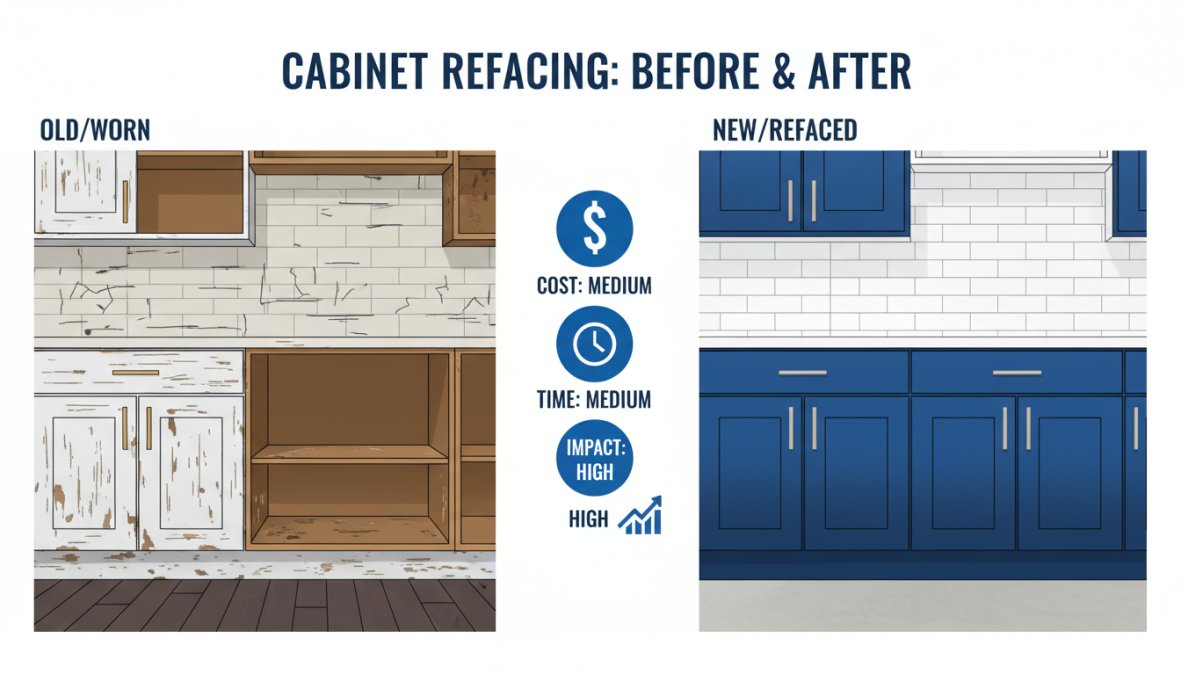
Cabinet refacing is the option that gets overlooked in the painting vs replacing kitchen cabinets debate, and that’s a mistake. Refacing means keeping your existing cabinet boxes in place while replacing the cabinet doors and drawer fronts and applying a wood veneer or laminate to the visible box surfaces. The result looks like new cabinets at a fraction of full replacement cost.
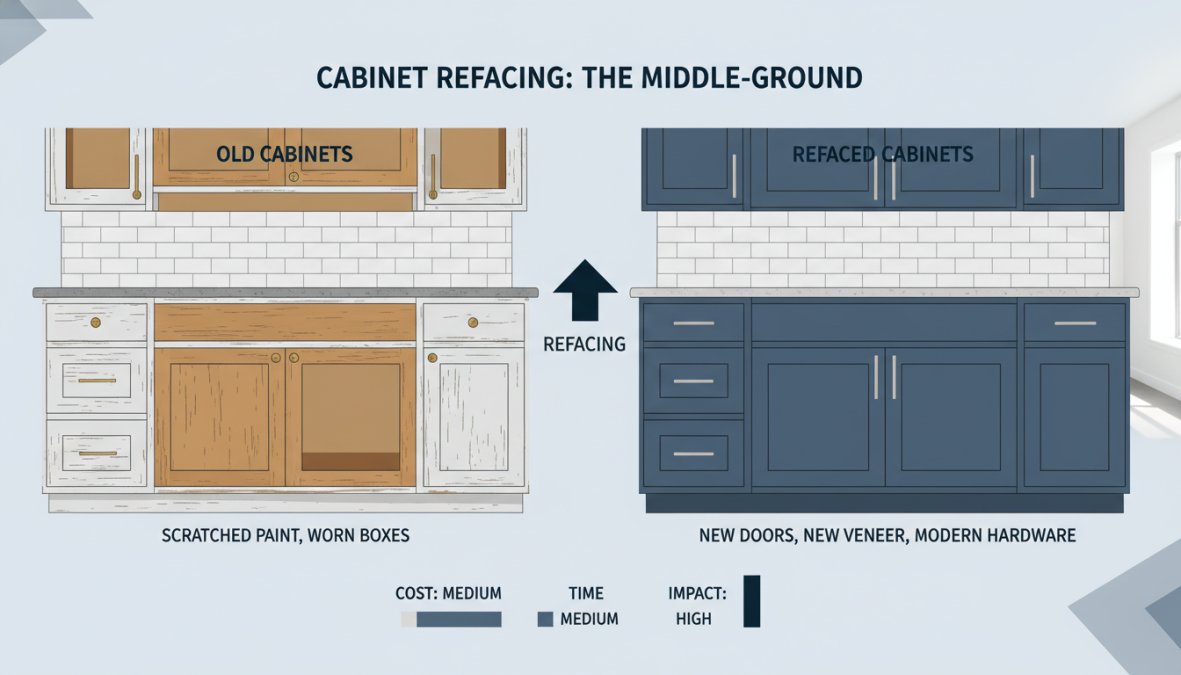
Refacing makes sense when your cabinet boxes are sound but your doors are damaged, outdated in style, or made from a material that doesn’t paint well. It’s also the right call when you want to change the door style, such as switching from flat-panel to shaker style, without the expense of full replacement.
Services like The Home Depot Cabinet Refacing Service offer project management from design through installation, including options for soft-close hinges and organizational upgrades. The limitation is that refacing, like painting, doesn’t allow for a layout redesign. If your kitchen’s workflow is the real problem, refacing won’t solve it.
The honest comparison: refacing costs more than painting but less than full replacement. It’s the right middle ground when the door style is the primary complaint and the cabinet boxes are structurally solid.
Painting vs Replacing Kitchen Cabinets: Pros, Cons, and Who Each Is For
Here’s a direct breakdown so you can match the right option to your situation.
Cabinet Painting: Pros
- Lowest cost of the three options
- Shortest kitchen downtime (3-5 days)
- Eco-friendly: keeps existing materials out of landfills
- Dramatically improves kitchen aesthetics without structural changes
- High ROI, especially for homeowners not planning to sell immediately
Cabinet Painting: Cons
- Cannot change cabinet layout or dimensions
- Results depend heavily on material compatibility and prep quality
- Not suitable for severely damaged or delaminating surfaces
Cabinet Replacement: Pros
- Complete layout redesign is possible
- New cabinet boxes, new structural integrity
- Access to custom cabinetry and modern storage configurations
- Highest resale value impact for high-end renovations
Cabinet Replacement: Cons
- Highest remodeling costs by a significant margin
- Longest kitchen downtime
- Hidden costs frequently exceed initial contractor quotes
- Generates significant demo and disposal waste
According to the National Association of the Remodeling Industry’s remodeling impact data, kitchen updates that preserve existing structures tend to deliver stronger joy scores relative to cost than full gut renovations, suggesting the emotional payoff doesn’t require the highest price tag.
DIY vs Professional Labor: What the Difference Really Costs You
DIY cabinet painting looks financially appealing until you account for the full cost of supplies, equipment, and time. A serious DIY attempt requires a quality sprayer or brush set, primer, topcoat, sandpaper, degreaser, drop cloths, and masking materials. The Wagner FLEXiO 5000 alone runs around $270, and that’s before paint and primer.
More importantly, DIY cabinet painting is a multi-week project when done correctly. Each coat needs adequate dry time, and the cure time before the cabinets can handle regular use extends the timeline further. A common mistake is reassembling too early, which leads to doors sticking and finish damage.
Professional labor costs more upfront but delivers a factory finish in a fraction of the time, with warranties on the work. For most homeowners, the time cost of a proper DIY job, combined with the risk of a subpar result, makes professional refinishing the smarter investment. As the Consumer Reports guide to kitchen renovations notes, professional application consistently outperforms DIY on durability metrics for cabinet finishes.
The real difference between a DIY finish and a professional one comes down to spray equipment, controlled environments, and years of prep technique. Those aren’t things you can shortcut.
Conclusion: Which Option Is Right for Your Denver Kitchen?
Choosing between painting vs replacing kitchen cabinets is a decision that hinges on the condition of your cabinet boxes, your budget, your timeline, and your long-term plans for the home. For most Denver homeowners with structurally sound cabinets, professional painting delivers the best return on investment with the least disruption.
Outdated kitchen cabinets are one of the most common complaints Denver homeowners bring to renovation professionals, and full replacement is rarely the only answer. Denver Cabinet Painting Colorado brings 40 years of experience to every project, specializing in cabinet painting, refinishing, and glazing that produces smooth, consistent finishes without the cost or chaos of full replacement. Get a free quote from Denver Cabinet Painting Colorado and see what a professional finish can do for your kitchen.
Frequently Asked Questions
Is it cheaper to paint or replace kitchen cabinets?
Painting kitchen cabinets is almost always significantly cheaper than replacing them. Professional cabinet painting typically costs a fraction of what new stock or custom cabinetry runs, especially when you factor in demo and disposal, new cabinet boxes, installation labor, and potential countertop adjustments. For homeowners in Denver looking for a budget-friendly refresh, cabinet painting or refinishing delivers strong ROI without the disruption of a full kitchen remodel.
How long do painted kitchen cabinets last?
When properly prepared and finished with a high-quality product like Benjamin Moore Advance or Sherwin-Williams Emerald Urethane Trim Enamel, professionally painted cabinets can last 8 to 15 years with normal care. Surface durability depends heavily on prep and primer quality, the paint system used, and how well the cabinets are maintained. Avoiding harsh abrasive cleaners and wiping up moisture promptly will extend the life of any painted finish considerably.
Can you paint any type of kitchen cabinet?
Not all cabinets are equally suited for painting. Solid wood and MDF cabinet boxes are ideal candidates. However, laminate cabinets and vinyl wrap surfaces require specialized primers and careful prep work to achieve proper adhesion, and results can vary. Cabinets with significant structural damage, warped cabinet boxes, or a compromised cabinet substrate may not be worth painting. A professional assessment helps determine whether painting, cabinet refacing, or full replacement is the right call.
Does painting kitchen cabinets add value to your home?
Yes, a professional cabinet painting or refinishing job can meaningfully improve kitchen aesthetics and resale value, especially when the overall kitchen layout and cabinet boxes are in good condition. Buyers respond positively to fresh, clean kitchens. While painting won’t match the ROI of a full custom cabinetry upgrade in luxury markets, it’s one of the most cost-effective home improvement investments for mid-range Denver homes where a clean, updated look matters most to buyers.
When should you replace kitchen cabinets instead of painting?
Cabinet replacement makes sense when the cabinet boxes have serious structural integrity issues, such as water damage, mold, or failing joints, that painting cannot fix. It’s also the right choice if you want a completely new kitchen layout redesign, need significantly more storage, or are upgrading to custom cabinetry as part of a high-end remodel. If your cabinets are functionally sound and you simply want a fresh look, painting or cabinet refacing is almost always the smarter, lower-cost path.
This article was written using GrandRanker