Table of Contents
- Why Denver Homeowners Book Professional Kitchen Cabinet Painting
- Kitchen Cabinet Refinishing Cost Denver: What to Expect
- How to Prepare Kitchen Cabinets for Painting: A Step-by-Step Overview
- How Long Does Cabinet Painting Take? Realistic Denver Timelines
- Factory Finish vs. On-Site Refinishing: Which Is Right for Your Kitchen?
- How to Book Professional Kitchen Cabinet Painting in Denver: What to Look For
- Post-Painting Maintenance and 2026 Color Trends for Denver Kitchens
- Conclusion
Last Updated: June 3, 2026
Homeowners across Colorado spend thousands replacing kitchen cabinets that could be transformed for a fraction of the cost. If you’re ready to book professional kitchen cabinet painting denver, this guide from Denver Cabinet Painting Colorado covers honest cost breakdowns, realistic timelines, material-specific prep advice, and the questions most homeowners forget to ask before signing a contract, including what to do after the paint dries and which 2026 color trends are worth chasing on the Front Range.
Why Denver Homeowners Book Professional Kitchen Cabinet Painting
Cabinet refinishing is the most cost-effective kitchen upgrade most Denver homeowners haven’t fully explored. Full replacement involves demolition, new box installation, hardware, and countertop adjustments. Professional kitchen cabinet painting sidesteps all of that at a substantially lower investment.
What most people get wrong: they assume painting cabinets is a weekend DIY project. A durable finish requires proper surface preparation, the right bonding primer, industrial coatings applied in controlled conditions, and adequate cure time. Skip any of those steps and you’re looking at peeling or chipping within a year.
According to the National Association of Realtors’ remodeling impact data, kitchen updates consistently rank among the top projects for recouped value at resale. Denver Cabinet Painting Colorado has spent 40 years refining this process for residential and commercial clients across the metro area.
Cabinet Refinishing vs. Full Replacement: The Cost-Effective Choice
Cabinet refinishing cleans, sands, primes, and repaints existing cabinet boxes, doors, and drawer fronts without replacing the underlying structure. Done correctly, the result is indistinguishable from new cabinetry.
Full replacement makes sense when cabinet boxes are structurally compromised or layouts need to change. For the majority of Denver kitchens, the bones are fine, the finish is the problem. Refinishing preserves your existing layout, keeps the timeline short, and produces far less waste.
Why Cabinet Finishes Fail, and How Professionals Prevent It
Cabinet finishes fail for three predictable reasons: inadequate prep, the wrong primer, and insufficient cure time before returning hardware and loading shelves.
Grease, silicone residue, and cleaning product buildup all prevent adhesion. A professional prep process includes degreasing, light sanding or chemical etching, and a bonding primer formulated for the substrate. On MDF and thermofoil surfaces, skipping this step is especially costly because those materials don’t absorb paint the way raw wood does.
Applying standard wall paint to kitchen cabinets without a bonding primer is the most common DIY mistake. Kitchen humidity and repeated contact cause the finish to peel within months. Always use a primer rated for cabinetry, not interior walls.
Professionals also control the application environment. Spray application using negative air scrubbers to capture overspray and dust produces the smooth, consistent finish that holds up to daily use.
Kitchen Cabinet Refinishing Cost Denver: What to Expect
Kitchen cabinet refinishing cost in Denver varies based on cabinet count, material type, current condition, and finish complexity. A professional estimate should break down labor, materials, prep work, and any additional services like glazing or hardware replacement.
Pricing Breakdown by Cabinet Type and Scope
| Project Scope | Cabinet Count | Typical Scope | Key Variables |
|---|---|---|---|
| Small kitchen | Up to 20 doors | Doors and drawer fronts only | Material type, condition |
| Mid-size kitchen | 20-35 doors | Doors, fronts, and boxes | Finish complexity, prep needs |
| Large/full kitchen | 35+ doors | Full cabinet system | Glazing, specialty coatings |
Builder-grade oak requires more prep due to open grain. MDF and thermofoil need specific primers to avoid bubbling. Cabinets being repainted in a new color involve color-blocking steps that add time. The most reliable way to get an accurate kitchen cabinet refinishing cost in Denver is an on-site estimate, photos rarely capture surface condition or damage accurately.
Warranty Comparison: What Top Denver Painters Actually Offer
Warranty terms separate professional cabinet painters from budget operators. What to look for:
- Coverage period: One to three years on labor and materials. Shorter than one year is a red flag.
- What’s covered: Adhesion failure and peeling should always be included.
- Transferability: Relevant if you plan to sell within the warranty period.
- Response time: How quickly will the contractor address a claim?
Always get the warranty in writing before work begins.
How to Prepare Kitchen Cabinets for Painting: A Step-by-Step Overview
Preparation is the single most important phase of any cabinet painting project. Professional painters consistently say 70 percent of final quality comes from prep, not application.
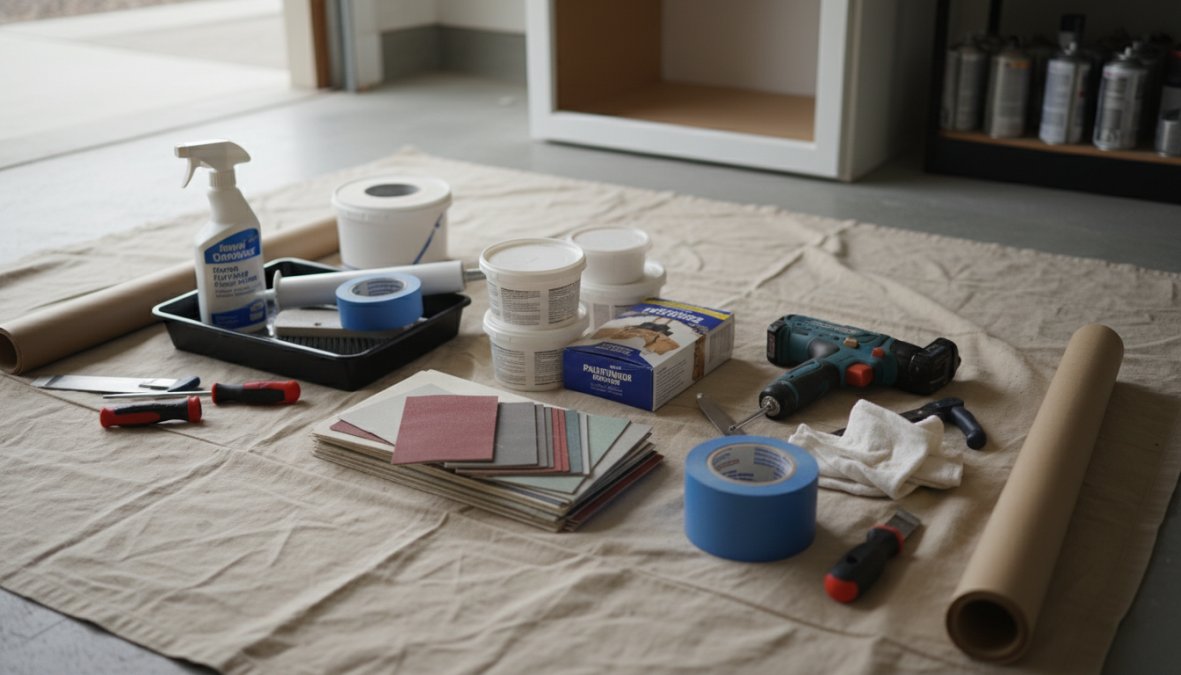
Here’s how a professional prep process unfolds:
- Remove all doors and drawer fronts for off-site or spray booth finishing
- Degrease all surfaces with a TSP substitute or professional-grade cleaner
- Sand or chemically etch surfaces to create mechanical adhesion for the primer
- Fill grain and imperfections on open-grain wood like oak for a smooth factory finish
- Apply bonding primer rated for the specific substrate (wood, MDF, thermofoil)
- Mask and protect countertops, appliances, and floors before spray application
- Inspect surfaces under raking light before applying topcoats
Material-Specific Painting Guides: Oak, MDF, Thermofoil, and More
Different cabinet materials require meaningfully different approaches.
Builder-grade oak is porous and open-grained. Without grain filler, wood texture telegraphs through the paint. A two-step process, filler, then primer, is standard for a smooth factory finish.
MDF absorbs moisture readily, making it vulnerable to swelling at edges. Oil-based or shellac-based primers seal raw MDF edges more effectively than water-based options.
Thermofoil cabinets require assessment for delamination before painting. If the vinyl film is peeling, it must be fully removed or paint will bubble and lift. Bonding primers for slick surfaces are non-negotiable.
Previously painted cabinets require adhesion testing and light sanding to degloss the existing finish before priming.
Ask your contractor specifically which primer they use for your cabinet material. A professional who can name the product and explain why they chose it is demonstrating real expertise. Vague answers are a warning sign.
How Long Does Cabinet Painting Take? Realistic Denver Timelines
Most professional kitchen cabinet painting projects in Denver run three to seven business days from start to final hardware reinstallation.
- Day 1: Door removal, degreasing, initial prep
- Days 2-3: Sanding, grain filling, primer application, first inspection
- Days 3-5: Topcoat application (two coats with dry time between)
- Days 5-7: Final inspection, door reinstallation, hardware replacement, cleanup
One thing many homeowners overlook: full cure time. Paint may be dry to the touch within hours, but kitchen cabinet coatings typically need five to seven days to fully cure before cleaning or loading with dishes. Rushing this phase is how you scratch a finish that looks perfect on day one.
Factory Finish vs. On-Site Refinishing: Which Is Right for Your Kitchen?
Factory finish means doors and drawer fronts are removed and finished in a controlled spray booth, often with UV curing technology that produces an exceptionally hard surface. The controlled environment eliminates dust contamination and ensures consistent mil thickness. Cabinet boxes must still be finished on-site regardless.
On-site refinishing keeps everything in place and minimizes kitchen downtime. With proper masking, negative air scrubbers, and professional spray equipment, skilled painters can achieve results very close to spray booth quality in-home, the right call for homeowners who can’t afford extended kitchen disruption.
According to the EPA’s guidance on interior coating applications, proper ventilation during on-site painting is essential for both finish quality and occupant safety, which is why professional setups use negative air pressure systems rather than simply opening windows.
Health and Safety: Low VOC Coatings and Negative Air Scrubbers
Low VOC coatings contain reduced levels of volatile organic compounds, the chemicals responsible for paint odor and indoor air quality concerns. For kitchen cabinet painting, low VOC and non-toxic coatings have become the professional standard. Many now match the hardness and durability of conventional solvent-based products while producing far less off-gassing, which matters in kitchens where surfaces contact food preparation areas.
Negative air scrubbers filter airborne particles that would contaminate wet paint and capture solvent vapors before they spread through the home. Any professional you hire for on-site refinishing should use them as standard practice.
How to Book Professional Kitchen Cabinet Painting in Denver: What to Look For
The quality gap between contractors in this space is significant, and the wrong choice means living with a failing finish for years. The most reliable way to evaluate a cabinet painter is to ask specific, technical questions during the estimate.
Denver Cabinet Painting Colorado brings 40 years of Colorado-specific experience to every project, serving residential and commercial clients across the Denver metro. Their free quote process gives homeowners a clear, itemized picture of scope and cost before any commitment.
As documented in Houzz’s annual kitchen trends report, cabinet painting and refinishing consistently rank among the top kitchen updates homeowners pursue before listing a home or after a decade of wear.
Questions to Ask Before You Hire
Use this checklist before signing any contract:
- What specific primer do you use for my cabinet material, and why?
- Do you finish doors off-site in a spray booth, or entirely on-site?
- What topcoat product do you use, and what is its hardness rating?
- Do you use negative air scrubbers during on-site work?
- What does your warranty cover, and for how long?
- Can I see photos of completed projects on the same cabinet material as mine?
- Are you using subcontractors, or is your own crew doing the work?
- What is the realistic timeline from start to final reinstallation?
- How long should I wait before cleaning the cabinets after completion?
- Is your estimate itemized, or is it a single lump sum?
The subcontractor question deserves particular attention. Some companies quote the job and hand it to a third-party crew with no oversight, this is where quality control breaks down.
The single most important question to ask a cabinet painter is what primer they use and why. It separates contractors who understand material science from those who apply the same process to every job regardless of substrate.
Post-Painting Maintenance and 2026 Color Trends for Denver Kitchens
A freshly refinished kitchen is an investment worth protecting. Painted cabinets are easy to maintain as long as you follow a few non-negotiable rules in the first weeks after completion.
Caring for Your Newly Painted Cabinets
The first seven days after cabinet painting are the most critical for long-term durability. The coating is still curing and is more vulnerable to scratches, moisture, and chemical damage.
- Wait at least seven days before cleaning cabinets with any product
- Use only mild soap and water for routine cleaning; avoid ammonia-based cleaners, bleach, or abrasive scrubbers
- Dry surfaces immediately after water contact, standing moisture near seams is the leading cause of paint failure
- Avoid steam exposure from dishwashers and stovetop cooking during the cure period
- Use soft cloths only, paper towels are abrasive enough to dull a high-gloss finish over time
For long-term care, a light coat of paste wax applied annually extends finish life and makes cleaning easier, particularly near the stove. According to the American Coatings Association’s consumer guidance on painted surfaces, proper post-application care is the single largest variable in how long a professionally painted surface maintains its appearance.
Top Cabinet Color Trends for 2026 on the Front Range
Denver homeowners are moving away from stark white kitchens toward warmth and colors grounded in the natural environment.
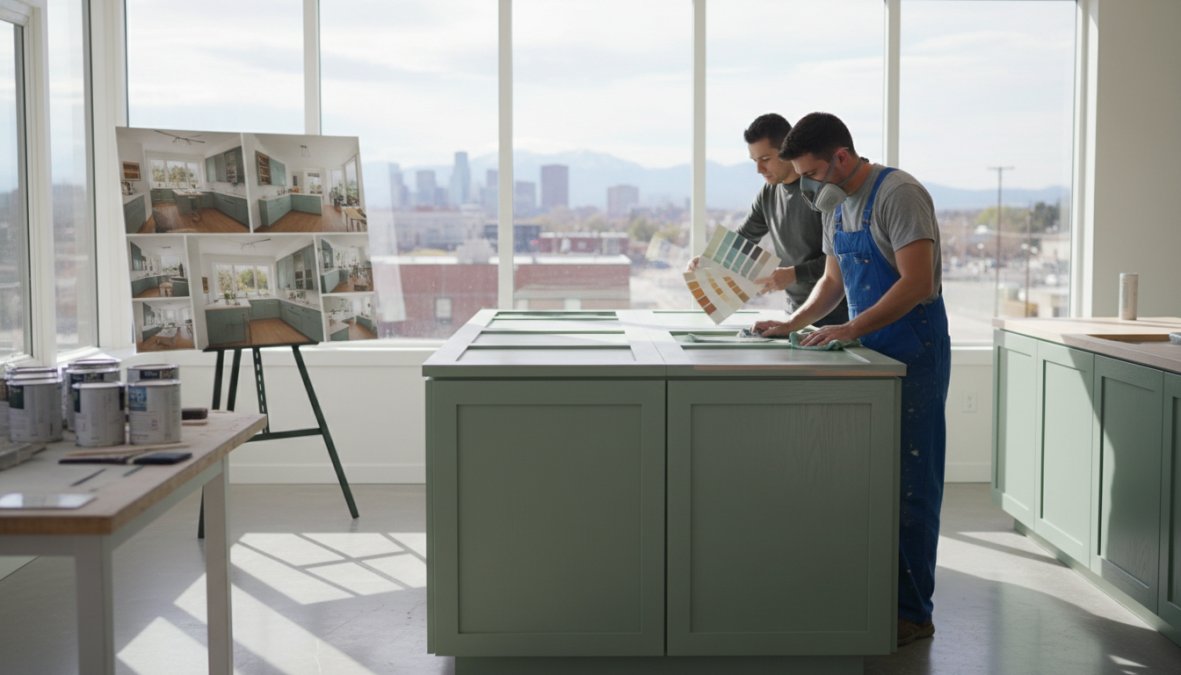
Muted sage and eucalyptus greens are the most-requested colors in Denver cabinet painting projects. They read as neutral in warm light but feel intentional, pairing well with natural wood accents and quartz countertops common in Colorado new construction.
Warm off-whites and creams are replacing cool, blue-toned whites. Benjamin Moore’s "White Dove" and Sherwin-Williams "Antique White" are frequently specified, these tones age better under Colorado’s intense sunlight, which yellows cool whites over time.
Deep navy and charcoal remain strong for kitchen islands and lower cabinet banks in two-tone designs, adding visual weight without overwhelming the space.
Terracotta and warm clay tones are emerging for homeowners who want a distinctly Colorado aesthetic, working particularly well in homes with southwestern architectural details or exposed brick.
The most important consideration for any color: request a large sample painted directly on your cabinet material in your actual kitchen before committing. Colors shift significantly under different light conditions.
Most Denver kitchens don’t need new cabinets. They need a professional who knows the difference between a good finish and a lasting one. Denver Cabinet Painting Colorado has spent 40 years developing exactly that expertise, offering cabinet painting, refinishing, and glazing services for residential and commercial clients across the metro area. Get a free quote from Denver Cabinet Painting Colorado and find out what your kitchen could look like without the cost or disruption of full replacement.
Frequently Asked Questions
How much does professional kitchen cabinet painting cost in Denver?
Kitchen cabinet refinishing cost in Denver varies based on kitchen size, cabinet material, and finish type. Smaller kitchens with standard cabinet doors and drawer fronts typically fall at the lower end of the range, while larger kitchens with builder-grade oak or specialty finishes like cabinet glazing cost more. Getting a free estimate from a local Denver professional is the most reliable way to get an accurate number for your specific project.
How long does it take to paint kitchen cabinets professionally?
Most professional kitchen cabinet painting projects in Denver take between three and seven business days, depending on the scope of work, number of cabinet doors, and the finish method used. Off-site spray booth refinishing may add transit time, while on-site refinishing can sometimes be completed faster. Turnaround time also depends on drying and curing requirements for the specific industrial coatings applied.
Is it worth it to have kitchen cabinets professionally painted?
For most Denver homeowners, professional cabinet refinishing is significantly more cost-effective than full cabinet replacement while delivering a durable, factory-quality finish. A skilled team uses proper surface preparation, bonding primer, and professional-grade low VOC coatings to ensure the finish lasts. The result is a kitchen renovation upgrade at a fraction of replacement costs, making it one of the highest-value improvements for resale or everyday enjoyment.
Do I need to empty my cabinets before professional cabinet painting?
Yes, most professional painters ask you to empty cabinet boxes, remove items from shelves, and clear countertops before work begins. This protects your belongings and gives the crew full access to cabinet doors, drawer fronts, and interior surfaces. Some painters handle hardware removal themselves, but confirming this during your estimate appointment ensures no surprises on project day.
What should I look for when hiring a cabinet painter in Denver?
When booking professional kitchen cabinet painting in Denver, look for experience with your cabinet material, a clear prep work process, use of low VOC coatings, and a written warranty. Ask whether they use a spray booth or on-site refinishing, whether they employ subcontractors, and what their typical turnaround time is. Checking reviews and requesting before-and-after photos of past cabinet restoration projects will help you evaluate quality before committing.
This article was written using GrandRanker