Table of Contents
- Why Cabinet Finishes Fail (And What Factory Finish Painting Solves)
- Cabinet Painting vs Refacing Denver: Which Option Is Right for You?
- The Professional Cabinet Spray Painting Process: Step by Step
- Material-Specific Painting Guides: What Works on Your Cabinet Type
- Kitchen Cabinet Refinishing Denver Cost: What to Budget in 2026
- Cabinet Painting Timeline: How Long Will Your Project Take?
- Top Factory Finish Cabinet Painting Services in Denver: Provider Comparison
- Post-Painting Maintenance and Care: Making Your Finish Last
- 2026 Cabinet Color Trends for Denver Kitchens
- Conclusion
Last Updated: June 2, 2026
Factory finish cabinet painting services denver represent one of the most cost-effective kitchen upgrades available to Front Range homeowners, and Denver Cabinet Painting Colorado has helped clients across the metro area achieve showroom-worthy results for over 40 years. The gap between a professional spray finish and a DIY brush-and-roll job is not subtle, it is the difference between a kitchen that looks renovated and one that looks repainted. Below, we cover exactly how the process works, what it costs, which materials respond best to professional coatings, and how to choose a provider who will deliver a finish that lasts.
Here is what most guides get wrong: they focus on the color change and skip the science of why finishes fail in the first place. Fix that root cause and everything else follows.
Why Cabinet Finishes Fail (And What Factory Finish Painting Solves)
Cabinet finish failure is almost always a prep problem, not a product problem. Understanding this changes how you evaluate any service provider.
Common Causes of Finish Breakdown on Builder-Grade Oak and Wood Cabinets
Builder-grade oak cabinets are notoriously difficult to paint well. The open grain structure of oak absorbs coatings unevenly, and factory-applied conversion varnishes on new cabinets create a surface that resists bonding without aggressive prep. The most common failure points are:
- Inadequate surface preparation, skipping degreasing or light sanding before priming
- Using a brush-and-roll method on surfaces that require a sprayed finish for smoothness
- Applying latex paint over oil-based factory finishes without a compatible bonding primer
- Skipping grain filler on oak, which causes texture to telegraph through topcoats
Moisture fluctuation in Colorado kitchens also accelerates finish cracking. Denver’s semi-arid climate creates dramatic seasonal humidity swings that cause wood to expand and contract, stressing any coating that lacks adequate flexibility.
How Factory Finish Cabinet Painting Services in Denver Address These Problems
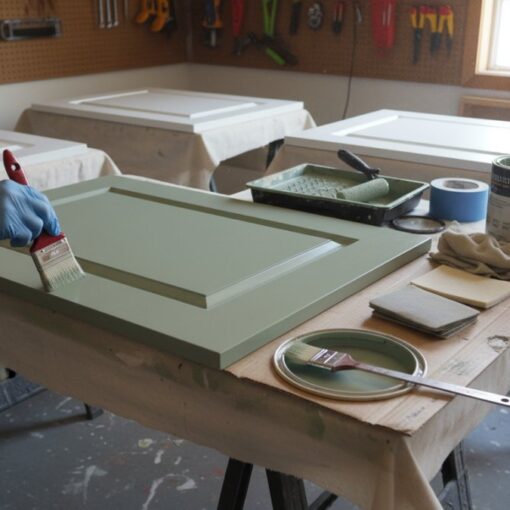
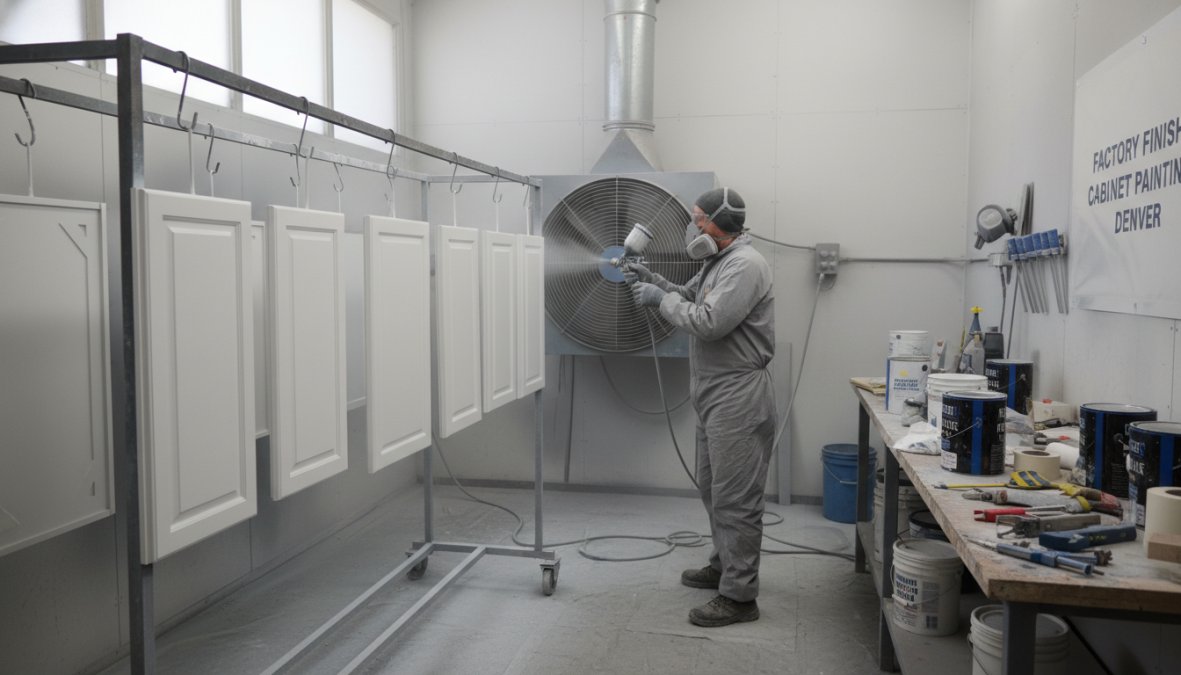
A true factory finish replicates the controlled conditions of a manufacturing environment. Professional cabinet painters use bonding primer specifically formulated to adhere to previously coated or laminate surfaces, apply topcoats through HVLP spray equipment for a level, brush-mark-free result, and allow proper cure time before reinstallation.
The phrase "factory finish" refers to a coating system, typically a catalyzed lacquer, conversion varnish, or industrial-grade water-based enamel, applied in controlled conditions that eliminate dust contamination and ensure even film thickness. This is categorically different from a brush-and-roll application, which leaves visible texture regardless of the painter’s skill level.
Hiring a general painter rather than a cabinet specialist for this work is the most common mistake Denver homeowners make. General painters rarely stock the right primers, spray equipment, or industrial coatings required. The result looks fine for six months, then chips at every door edge.
Cabinet Painting vs Refacing Denver: Which Option Is Right for You?
The cabinet painting vs refacing Denver debate comes down to one question: are your cabinet boxes structurally sound? If yes, painting wins on cost and disruption. If no, refacing or replacement deserves serious consideration.
Pros and Cons of Cabinet Painting
Cabinet painting is the right call for the majority of Denver kitchen renovations. The cabinet boxes, the frames, shelves, and interior structure, account for roughly 80% of the total material cost of a kitchen. Painting preserves that investment while completely transforming the visible surface.
Pros:
- Significantly lower cost than refacing or replacement
- Faster turnaround time (typically 5-10 days)
- Minimal disruption to kitchen function
- Access to virtually unlimited color options
- Reversible, cabinets can be repainted again in the future
Cons:
- Does not change door style or hardware layout
- Requires proper prep to achieve durability; shortcuts produce poor results
- Not suitable for cabinets with significant water damage or structural issues
Pros and Cons of Cabinet Refacing
Refacing replaces cabinet doors, drawer fronts, and applies a veneer to the visible box surfaces while keeping the existing box structure. Companies like Dun-Rite Home Improvements offer refacing with options like their Duraline system and custom-built replacement doors.
Pros:
- Changes door style entirely, not just color
- Can address warped or damaged doors without full replacement
- Often includes new hardware and hinges
Cons:
- Considerably more expensive than painting
- Longer project timeline
- Still does not address structural box problems
For most Denver homeowners with sound cabinets who want a color change or a cleaner, more modern look, professional cabinet painting delivers the best return.
The Professional Cabinet Spray Painting Process: Step by Step
Professional cabinet spray painting follows a precise sequence. Skipping any step compromises the final result, and experienced painters will tell you the finish is only as good as the prep underneath it.
Surface Preparation: Cleaning, Sanding, and Bonding Primer
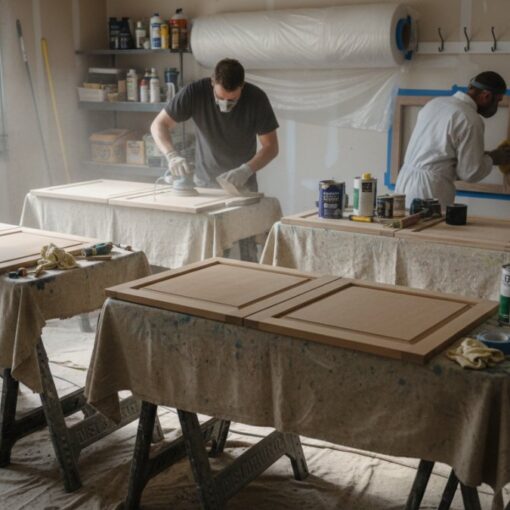
Surface preparation is where the project is won or lost. A proper prep sequence for kitchen cabinets includes:
- Remove all hardware, doors, and drawer fronts from the cabinet boxes
- Degrease all surfaces using a TSP substitute or dedicated cabinet cleaner to remove cooking grease and silicone residue
- Sand lightly with 150-220 grit to scuff the existing finish and improve mechanical adhesion
- Fill grain and defects, critical on builder-grade oak to prevent texture telegraphing
- Apply bonding primer formulated for cabinetry; allow full cure time before topcoating
- Sand primer coat with 220 grit for a glass-smooth base
- Apply finish coats via HVLP spray, typically two coats with light sanding between
According to EPA guidelines on interior coating preparation, proper surface prep is the single most important factor in coating longevity for interior wood surfaces.
Off-Site Spray Booth vs On-Site Refinishing: What Denver Homeowners Should Know
This is the part of the process most guides skip entirely. There are two legitimate approaches to professional cabinet painting, and each has real trade-offs.
Off-site spray booth: Doors and drawer fronts are removed and transported to a controlled spray environment. Providers like Mod Paint Works and Kitchen Transformed use this method. The benefit is a dust-free, climate-controlled setting that produces the most consistent factory-quality result. The limitation is that cabinet boxes must still be painted on-site, and the logistics add coordination time.
On-site refinishing: The entire project is completed in your kitchen. Professional on-site painters use negative air scrubbers and plastic containment to control overspray and dust. This approach requires more careful setup but eliminates the door transport step.
Both methods can produce excellent results when executed by skilled professionals. The on-site approach introduces more variables, so the painter’s experience level matters more.
Ask any prospective provider whether they use negative air scrubbers for on-site work. Painters who do not use them are cutting corners on dust control, which shows up as texture in the final finish.
Material-Specific Painting Guides: What Works on Your Cabinet Type
Not all cabinet materials respond the same way to paint. A coating system that works perfectly on solid wood can fail completely on thermofoil within a year. This section covers what actually works.

Painting Solid Wood and Builder-Grade Oak Cabinets
Solid wood and builder-grade oak are the most forgiving materials for cabinet refinishing, but oak’s open grain requires extra steps. Grain filler is non-negotiable on oak if you want a smooth, flat finish rather than a textured one. Water-based grain fillers work well and sand easily after drying.
For solid wood, a catalyzed water-based enamel or conversion varnish delivers the best combination of hardness, scrubbability, and low VOC content. These industrial coatings cure to a much harder film than standard latex paint, which is why they resist chipping at door edges where consumer products typically fail.
Low VOC coatings are worth specifying on any interior project. As documented in Colorado Department of Public Health and Environment air quality guidelines, reducing volatile organic compound emissions in occupied homes improves indoor air quality significantly, particularly in kitchens where ventilation is often limited.
Painting MDF, Thermofoil, and Laminate Cabinet Doors
MDF doors paint extremely well because the surface is already smooth and uniform. The main risk with MDF is moisture at the edges, raw MDF edges must be sealed with a high-solids primer before topcoating, or the material will swell and the finish will crack.
Thermofoil and laminate are the challenging cases. Thermofoil is a vinyl film that can delaminate when heated, and standard primers do not bond reliably to its surface. Adhesion-promoting primers (shellac-based or specialty bonding formulations) are required. Some thermofoil surfaces in poor condition are better candidates for door replacement than repainting.
Laminate cabinet doors in good condition can be painted successfully with proper prep, scuff sanding and a bonding primer are essential. The finish will not be as durable as on wood, but it can extend the life of functional cabinets by several years.
Kitchen Cabinet Refinishing Denver Cost: What to Budget in 2026
Kitchen cabinet refinishing Denver cost varies based on project scope, material type, finish quality, and provider. Unlike competitors who stop at "it depends," this section gives you the actual pricing framework Denver cabinet specialists use so you can evaluate any estimate with confidence.
Realistic Price Ranges for Denver Cabinet Painting Projects
Professional cabinet painting in the Denver metro is most commonly priced by door and drawer-front count, with a separate line item for cabinet box surfaces. Based on the structure of how Denver specialists price their work, most residential projects fall into one of three tiers:
| Project Tier | Typical Scope | What Drives the Price |
|---|---|---|
| Entry-level refinish | 15-20 doors, standard enamel, on-site process | Straightforward prep, no specialty primers, single color |
| Mid-range factory finish | 20-30 doors, catalyzed water-based enamel, off-site spray booth | Premium coating system, controlled environment, grain filling on oak |
| Premium finish | 30+ doors, Fine Paints of Europe or conversion varnish, off-site booth | Top-tier product cost, multi-step prep, two-tone or glazing detail |
Be cautious of any estimate that does not itemize doors, drawer fronts, and box surfaces separately. A lump-sum quote with no line items makes it impossible to compare bids accurately or identify where a low-ball estimate is cutting corners.
Per-Door Pricing: The Number That Actually Matters
The most useful unit for comparing Denver cabinet painting estimates is the per-door price, which typically includes the door, its paired drawer front, and the proportional share of box prep and painting. When you divide a total project quote by the number of doors and drawer fronts, you get a number that cuts through scope differences and lets you compare providers on an apples-to-apples basis.
Providers using off-site spray booths and premium coatings will price higher per door than on-site generalists, and that premium is usually justified by finish quality and longevity. A finish that lasts 12 years instead of 4 years is a better value even at twice the per-door cost.
Factors That Affect Your Estimate
The main cost drivers for a cabinet painting project in Denver are:
- Door and drawer-front count: The primary pricing unit for most specialists. Count every door and every drawer front before requesting quotes, providers need this number to give you an accurate estimate.
- Cabinet box linear footage: Box surfaces (the frames visible when doors are open) require separate prep and painting. Measure your total linear footage of upper and lower cabinet runs.
- Material type: MDF doors are straightforward. Thermofoil and laminate require adhesion-promoting primers that add both material cost and prep time. Oak requires grain filler, which adds a full prep step.
- Current finish condition: Heavy grease buildup from years of cooking, previous DIY paint jobs (especially brush-applied latex over oil-based factory finishes), or damaged surfaces all require more prep labor. A kitchen that has never been painted costs less to prep than one with three failed DIY attempts on top of the original finish.
- Finish quality tier: Industrial water-based enamels are the standard. Catalyzed conversion varnishes and premium brands like Fine Paints of Europe (used by Mod Paint Works) cost more in materials but cure harder and resist chipping longer.
- Off-site vs. on-site process: Off-site spray booth work carries a premium for the controlled environment and transport logistics. The trade-off is a more consistent, dust-free result that is difficult to replicate on-site.
- Color complexity: Single-color projects are the baseline. Two-tone combinations (different colors on uppers vs. lowers) add masking time and sometimes require a second primer coat on the accent-color surfaces.
- Hardware: If you are replacing hardware at the same time, confirm whether the painter handles hardware installation or whether that is a separate trade.
How to Sanity-Check Any Estimate You Receive
Three questions that separate legitimate cabinet painting specialists from underqualified bidders:
- "What primer system are you using, and why is it right for my cabinet material?" A specialist will name a specific product and explain why it bonds to your existing finish. A generalist will say "a good primer."
- "Is the topcoat water-based enamel, catalyzed lacquer, or conversion varnish, and what is its hardness rating?" Hardness (measured in pencil hardness scale, from B to 4H) determines how well the finish resists scratching. A professional should know this number.
- "What is your cure time before reinstallation, and what is the full cure time before the finish reaches maximum hardness?" Correct answers: handling strength in 24-48 hours, full cure in 7-30 days depending on the product. Any answer shorter than this is a red flag.
Cabinet painting specialists almost always deliver better value than general contractors for this work. Their pricing reflects cabinet-specific expertise, proper equipment, and materials, not hourly rates applied to a task outside their core competency. Getting three quotes from cabinet specialists (not general painters) is the single most effective way to calibrate your budget accurately for the Denver market.
Warranty Comparison: What Top Denver Providers Offer
Warranty terms are one of the clearest signals of a provider’s confidence in their own work. But not all warranties are equal, a "lifetime warranty" from a provider who will be out of business in two years is worth nothing. Here is what a genuinely strong cabinet painting warranty looks like, and how Denver providers compare.
What a good warranty actually covers:
- Peeling, chipping, or delamination under normal use conditions (not caused by abuse or improper cleaning)
- Adhesion failure at door edges, the highest-stress point on any painted cabinet
- Color fading or yellowing beyond normal aging
- A defined remediation process: does the provider repaint, touch up, or replace?
- A minimum term of 2 years for standard finishes; 5 years is the benchmark for premium catalyzed systems
Warranty red flags to watch for:
- Verbal-only warranties with no written documentation
- Warranties that exclude "normal wear" without defining what that means
- No stated process for filing a claim or getting a callback
- Warranties that transfer liability to the coating manufacturer rather than the applicator
| Provider | Specialty | Warranty Approach | Best For |
|---|---|---|---|
| Denver Cabinet Painting Colorado | Cabinet painting, refinishing, glazing | Workmanship guarantee; free quotes | Residential and commercial, full metro area |
| Denver Cabinet Coatings | Solid-color factory finishes | Project-based; contact for terms | Long-term durability focus |
| N-Hance of Denver | UV Lightspeed curing system | Franchise-backed process warranty | Fast turnaround, minimal downtime |
| Mod Paint Works | Off-site spray, premium coatings | Transparent process documentation | High-end finishes, premium products |
| Kitchen Transformed | Off-site shop, cabinet-only focus | Specialized consistency guarantee | Avoiding on-site mess |
| 5280 Cabinet Coatings | Painting and refacing | 30+ years local experience | Small business, personalized service |
Always ask for warranty terms in writing before signing any contract. Ask specifically: "If a door edge chips within the warranty period, what is your process and timeline for fixing it?" A provider who answers that question clearly and confidently is a provider who has handled warranty claims before and stands behind their work. A provider who hedges or redirects is telling you something important.
As noted in National Association of Realtors kitchen renovation ROI data, kitchen updates consistently rank among the highest-return home improvement projects, which helps contextualize the investment in professional cabinet refinishing.
Cabinet Painting Timeline: How Long Will Your Project Take?
A professionally executed cabinet painting project in Denver typically runs 5-10 business days from start to finish. The timeline breaks down roughly as follows:
- Day 1-2: Hardware removal, door removal, surface cleaning, and degreasing
- Day 2-3: Sanding, grain filling, and bonding primer application
- Day 3-4: Primer cure and sanding
- Day 4-7: Finish coat application (typically two coats with inter-coat sanding)
- Day 7-10: Cure time, reinstallation of doors and hardware
N-Hance of Denver’s proprietary UV Lightspeed curing technology compresses the cure phase significantly, reducing kitchen downtime for homeowners who cannot tolerate a week without cabinet doors. Off-site spray booth projects add 1-2 days for door transport logistics but often reduce the on-site footprint.
The biggest timeline variable is cure time. Water-based enamels reach handling strength in 24-48 hours but do not reach full hardness for 7-30 days depending on the product. Reinstalling doors too early and slamming them before full cure is a common cause of edge chipping on otherwise well-executed projects.
Top Factory Finish Cabinet Painting Services in Denver: Provider Comparison
Choosing among factory finish cabinet painting services denver requires matching the provider’s strengths to your specific project needs. Here is an honest breakdown of the leading options.
1. Denver Cabinet Painting Colorado
The top choice for most Denver homeowners. With 40 years of experience serving Colorado, Denver Cabinet Painting Colorado brings a depth of knowledge in cabinet painting, refinishing, and glazing that generalist painters simply cannot match. Their emphasis on meticulous preparation, the factor that determines whether a finish lasts 2 years or 15, sets them apart. They serve both residential and commercial clients across the full Denver metro area and offer free quotes. For homeowners who want smooth, consistent finishes without the expense of full cabinet replacement, this is the most experienced option in the market.
2. Denver Cabinet Coatings
A family-owned pioneer in Denver’s cabinet coating industry. Their focus on high-durability coatings and custom designer door options makes them a strong choice for homeowners who want to combine painting with door replacement. No online instant pricing, so budget extra time for the estimate process.
3. N-Hance of Denver
The right call when turnaround time is the priority. Their UV Lightspeed instant curing technology genuinely reduces kitchen downtime, and the franchise system provides standardized processes. Service territory availability varies, so confirm coverage for your specific neighborhood.
4. Mod Paint Works
Best for clients who want premium product quality above all else. Their use of Fine Paints of Europe and off-site spray booth process produces exceptional results. The trade-off is cost, premium coatings carry premium pricing.
5. Kitchen Transformed
A cabinet-only specialist with a dedicated off-site shop. The exclusive focus on cabinets produces high consistency. The limitation is scope, they do not handle other painting work, so any adjacent projects require a separate contractor.
6. JR Colorado Painting
A versatile local contractor serving Boulder, Broomfield, and the broader Denver metro. A practical option for homeowners who want cabinet refinishing bundled with interior painting work under one contractor.
7. Pristine Mountain Painting
Strong focus on visual appeal and longevity, with experience across various cabinetry types including built-ins. Requires a consultation for accurate project scoping, which is standard for complex projects.
8. Cabinet Restoration, Inc.
Particularly well-suited for homeowners preparing a home for sale. Their focus on ROI and home appraisal value aligns with pre-listing renovation goals.
9. 5280 Cabinet Coatings
Over 30 years of local experience in a small family-owned operation. The personalized service is a genuine advantage; the trade-off is that smaller operations sometimes carry longer lead times during peak seasons.
10. Dun-Rite Home Improvements
The right choice when painting is not enough. Their refacing options, including Duraline and custom door builds, serve homeowners who want a more substantial structural upgrade. More expensive than painting, but financing options are available.
As noted in National Association of Realtors kitchen renovation ROI data, kitchen updates consistently rank among the highest-return home improvement projects, which helps contextualize the investment in professional cabinet refinishing.
Post-Painting Maintenance and Care: Making Your Finish Last
This is the section no other Denver cabinet painting guide bothers to write, and it is the section that determines whether your investment lasts 4 years or 14. A factory-quality finish applied by a skilled professional can degrade quickly under the wrong cleaning habits, or hold up beautifully for over a decade with the right care. The rules are not complicated, but they are specific, and most homeowners learn them the hard way.
Understanding What You Are Protecting: How Factory Finishes Cure
Before covering what to do, it helps to understand what a catalyzed water-based enamel or conversion varnish actually is after it is applied. Unlike latex wall paint, which dries by water evaporation alone, catalyzed cabinet finishes cure through a chemical cross-linking reaction that continues for days to weeks after the surface feels dry to the touch.
This matters because the finish passes through three distinct phases after installation:
- Phase 1, Handling strength (24-48 hours): The surface feels hard and can be touched without leaving marks, but the cross-linking reaction is still early. Impact, abrasion, or chemical exposure during this window causes damage that is not immediately visible but shows up as premature wear within months.
- Phase 2, Working hardness (7-14 days): The finish is firm enough for normal use but has not reached its full chemical resistance. Avoid harsh cleaners, prolonged moisture contact, and anything abrasive during this period.
- Phase 3, Full cure (21-30 days for most water-based enamels; up to 30 days for conversion varnishes): The finish has reached its rated hardness and chemical resistance. Normal cleaning routines can begin.
The most common cause of premature finish failure on otherwise well-executed cabinet painting projects is cleaning the cabinets with a “degreaser” spray during the first two weeks. The solvents in most commercial degreasers attack the cross-linking reaction in catalyzed finishes before it completes, leaving a surface that looks fine but has significantly reduced hardness and adhesion.
Daily and Weekly Cleaning: What to Use and What to Avoid
Once the finish has fully cured, the cleaning protocol is straightforward, but the products matter more than most homeowners expect.
Safe cleaning options:
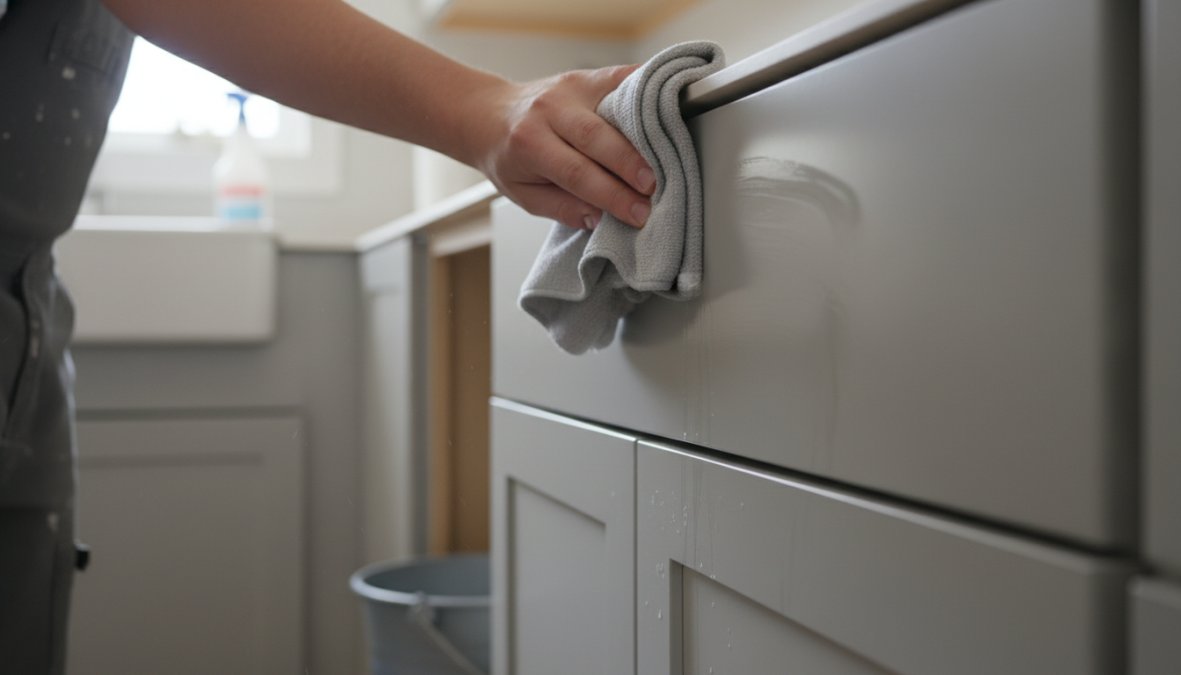
- Warm water and a few drops of mild dish soap (plain Dawn or equivalent) applied with a soft microfiber cloth
- Plain warm water for light dust and fingerprints
- A dry microfiber cloth for daily wipe-downs
Products that damage catalyzed cabinet finishes over time:
- Ammonia-based cleaners (most glass cleaners, including Windex), ammonia softens the topcoat with repeated exposure
- Bleach or bleach-containing sprays, degrades the binder in the finish and causes yellowing on white and off-white cabinets
- Commercial kitchen degreasers (409, Fantastik, most "heavy duty" sprays), the solvents in these products are formulated to cut through grease, and they do not distinguish between grease and your topcoat
- Magic Erasers and melamine foam, these are micro-abrasives that remove the sheen from a painted surface with every use; they feel gentle but cause cumulative dull spots
- Abrasive sponges or scrubbing pads of any kind
If you are not sure whether a cleaning product is safe, test it on the inside face of a cabinet door, an area that is never visible, and wait 24 hours before checking for any change in sheen or surface texture. This is the same test professional painters use when evaluating compatibility.
The Five Highest-Risk Zones in a Denver Kitchen
Not all cabinet surfaces age at the same rate. These five locations account for the majority of premature finish failures in Denver kitchens:
-
Lower cabinet doors flanking the dishwasher. Dishwasher steam vents discharge directly onto adjacent cabinet faces during and after cycles. Over time, repeated steam exposure causes finish lifting at the door edges. The fix: confirm your dishwasher’s steam vent direction before installation, and if it discharges toward a cabinet face, ask your appliance installer about a vent deflector.
-
Cabinet doors immediately above the range or cooktop. Heat and grease vapor accumulate here faster than anywhere else in the kitchen. These doors need more frequent cleaning, but with the right products. Grease left on a painted surface for extended periods acts as a mild solvent, slowly softening the topcoat.
-
Door edges at pull locations. Every time a cabinet door is opened, the edge near the pull experiences a small impact stress. This is where chipping begins on finishes that were either under-prepped or reinstalled before full cure. Inspect these edges every six months; catching a small chip early and touching it up prevents it from spreading.
-
Lower cabinet toe kicks and base areas. Mopping and floor cleaning frequently splash water onto toe kicks and the bottom edges of lower cabinet doors. These areas are often overlooked during cleaning but accumulate moisture that works into the finish from the bottom edge.
-
Cabinet surfaces near the sink. Splashing, wet hands, and the habit of resting wet items against cabinet faces all concentrate moisture in this zone. Wipe these surfaces dry after any water contact rather than letting them air-dry.
Annual Maintenance: The One Step That Extends Finish Life Significantly
Once per year, most practitioners recommend doing this in spring after the dry Colorado winter, apply a thin coat of paste wax to all painted cabinet surfaces. This is the single highest-value maintenance step available to homeowners with factory-finish cabinets.
Paste wax creates a sacrificial layer on top of the topcoat. Daily abrasion, fingerprints, and light cleaning wear on the wax rather than on the finish itself. When the wax layer degrades, you buff it off and apply a fresh coat, the topcoat underneath remains untouched.
How to apply paste wax to painted cabinets:
- Ensure the surface is clean and completely dry before starting
- Apply a thin, even coat of paste wax (Johnson’s Paste Wax or a dedicated furniture wax) using a soft cotton cloth, working in small sections
- Allow the wax to haze (typically 5-10 minutes depending on temperature)
- Buff off with a clean, dry microfiber cloth using light circular pressure
- Do not use liquid waxes or spray waxes that contain silicone, silicone residue creates adhesion problems if the cabinets are ever repainted
Skip the wax on any cabinet surfaces where you have applied peel-and-stick shelf liner or contact paper inside the cabinet. Wax on interior surfaces makes liner adhesion unreliable. Paste wax is for exterior painted faces only.
Touch-Up Protocol: Addressing Chips Before They Spread
Even with perfect care, small chips at door edges or hardware locations can occur over years of use. Addressing them early prevents moisture from working under the finish and causing the chip to spread.
For touch-ups to be invisible, you need the original paint color and ideally the original topcoat product. When your project is completed, ask your cabinet painter for:
- The exact paint color formula (manufacturer, color name, and formula code)
- A small quantity of the topcoat product used, or the product name and sheen level so you can source it
- Their recommended touch-up brush size for edge repairs
Small chips on flat door faces can be touched up with a fine artist’s brush and feathered at the edges. Chips on door edges are more visible and more difficult to touch up invisibly, if a door edge chip is larger than a few millimeters, contacting your original provider for a professional touch-up is usually worth the cost.
As documented in Colorado Department of Public Health and Environment air quality guidelines, low-VOC coatings used in professional cabinet finishing also perform better in long-term durability tests under real-world conditions, which means the maintenance protocols above are most effective when the underlying coating system was properly specified from the start.
2026 Cabinet Color Trends for Denver Kitchens
Color selection is where the renovation becomes personal, and the 2026 Front Range market shows some clear directional shifts worth knowing before you commit to a color.
Warm whites and off-whites remain the dominant choice for kitchen cabinet refinishing in Denver. Shades like Benjamin Moore White Dove, Sherwin-Williams Alabaster, and similar warm-toned whites read as clean without the clinical coldness of pure white. They also photograph well for real estate listings, which matters for homeowners thinking about resale.
Deep blues and navy tones have moved from trend to established choice. Navy on lower cabinets with white uppers is now a classic combination rather than a risk. These colors work particularly well in Denver’s abundant natural light.
Greens, specifically sage and forest tones, are the most active area of growth in 2026 cabinet color requests. Sage pairs naturally with the natural wood and stone elements common in Colorado mountain-modern interiors.
Two-tone combinations are increasingly requested. Upper cabinets in a light neutral, lower cabinets in a deeper accent color. This approach adds visual depth without overwhelming a space.
What is fading: stark gray cabinets. The cool gray trend that dominated from roughly 2015-2022 is giving way to warmer, earthier tones that feel more connected to Colorado’s natural landscape aesthetic.
According to Benjamin Moore color trend forecast, warm and earthy tones are projected to dominate interior color choices through 2026, aligning with what Denver cabinet painters are seeing in client requests.
Choosing the right provider for a cabinet painting project is harder than it looks, the market includes specialists, generalists, and franchise operators, all claiming similar results. Denver Cabinet Painting Colorado brings 40 years of Colorado-specific experience, a proven emphasis on surface preparation, and expertise across cabinet painting, refinishing, and glazing for both residential and commercial clients throughout the Denver metro. Get a free quote from Denver Cabinet Painting Colorado and see what a properly executed factory finish can do for your kitchen.
Frequently Asked Questions
What is a factory finish for cabinet painting?
A factory finish refers to a smooth, consistent, spray-applied coating that mimics the look of cabinets finished in a controlled manufacturing environment. Unlike brush-and-roll painting, factory finish cabinet painting services in Denver use professional spray equipment, often in a dedicated spray booth, combined with industrial coatings and bonding primer to eliminate brush marks and deliver a showroom-worthy result on cabinet doors and drawer fronts.
How much does professional cabinet painting cost in Denver?
Kitchen cabinet refinishing Denver cost varies based on kitchen size, cabinet material, number of doors and drawer fronts, and the coating system used. While most Denver providers do not publish fixed pricing online, a typical kitchen refinishing project generally ranges from a few hundred to several thousand dollars. Factors like off-site spraying, low VOC coatings, and premium industrial coatings can affect the final estimate. Most providers offer free quotes, so getting multiple estimates is strongly recommended.
Is it better to paint or replace kitchen cabinets in Denver?
For most Denver homeowners, professional cabinet painting or refinishing is significantly more cost-effective than full replacement. Cabinet painting preserves existing cabinet boxes while transforming cabinet doors and drawer fronts with a durable finish. Full replacement involves demo costs, new materials, and installation. Cabinet painting vs refacing in Denver is also worth considering, refacing replaces door fronts but keeps the existing frame, sitting in cost between painting and full replacement.
Do I need to remove my cabinets for factory finish painting?
Not necessarily. Many factory finish cabinet painting services in Denver use a hybrid approach: cabinet doors and drawer fronts are removed and taken off-site to a spray booth for a controlled, smooth application, while cabinet boxes are painted on-site using careful masking and sometimes negative air scrubbers to control overspray. This minimizes disruption to your kitchen while still achieving a high-quality, durable finish on all surfaces.
How long does a cabinet painting timeline take in Denver?
A typical cabinet painting timeline for a standard kitchen in Denver runs approximately 3 to 7 business days, depending on the number of cabinets, the coating system used, and whether doors are painted off-site. Some providers like N-Hance use UV Lightspeed curing technology to reduce turnaround time significantly. Prep work, priming, multiple topcoats, and reassembly all factor into the total project duration. Always confirm the estimated timeline with your provider before work begins.
What is the difference between hand-painted and factory-finish cabinets?
Hand-painted cabinets, typically done with brush and roll methods, can leave visible texture, brush marks, or uneven coverage, especially on flat cabinet doors. Factory finish cabinet painting uses professional spray equipment, often in a dedicated spray booth, to apply industrial coatings in thin, even layers that cure to a hard, smooth surface. The result closely resembles cabinets finished at a manufacturing facility, with superior adhesion, durability, and a more consistent appearance across all surfaces.
This article was written using GrandRanker