Table of Contents
- Is Cabinet Refinishing Good for Resale? The Short Answer
- Refinishing vs. Refacing vs. Replacing: Which Adds Resale Value
- Kitchen Cabinet Refinishing Cost vs. Return on Investment
- Best Cabinet Colors for Resale: What Buyers Actually Want
- DIY vs. Professional Cabinet Refinishing: What Impacts Resale Value
- Signs Your Kitchen Cabinets Need Refinishing Before Listing
- The Refinish-Ready Checklist: What Buyers Inspect
- How Cabinet Refinishing Impacts Home Resale Value and Appraisal
Is Cabinet Refinishing Good for Resale? A 2026 Guide
Last Updated: June 30, 2026
When preparing to sell your home, kitchen cabinets are one of the first things buyers notice and a major factor in their decision. Cabinet refinishing consistently ranks among the highest-ROI kitchen improvements available. The real question isn’t whether refinishing is "good", it’s whether it’s the right move for YOUR home, market, and timeline. A fresh cabinet finish modernizes your kitchen and signals maintenance to buyers, but poor execution or wrong color choices can backfire.
Is Cabinet Refinishing Good for Resale? The Short Answer
Cabinet refinishing is generally excellent for resale value when done professionally with proper preparation and neutral colors. A high-quality refinish typically costs 30-50% less than refacing and 70-80% less than full replacement, making it one of the most cost-effective kitchen upgrades available. Buyers perceive freshly finished cabinets as a sign of home maintenance and modernization, which directly influences their offer prices and appraisal expectations.
However, the resale benefit depends entirely on execution quality. A professional finish with smooth, durable paint and updated hardware signals value. A DIY refinish with visible brush marks, peeling paint, or mismatched finishes signals the opposite. The difference between a $3,000 professional job and a $500 DIY attempt often determines whether your cabinet refinishing helps or hurts your final sale price.
Cabinet refinishing is resale-positive when professionally executed with neutral colors and proper preparation. Poor DIY finishes actively harm buyer perception and appraisal value.
Refinishing vs. Refacing vs. Replacing: Which Adds Resale Value
Understanding the difference between these three approaches is essential because each has different resale implications.
Cabinet Painting and Refinishing
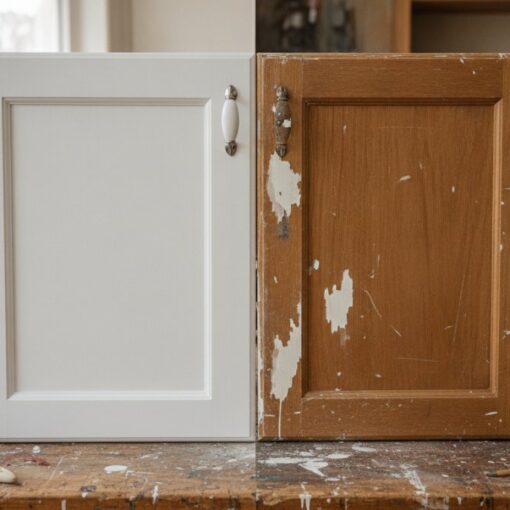
Cabinet refinishing involves sanding, priming, and applying a durable topcoat to existing cabinet boxes, doors, and drawer fronts. This approach works when your cabinet structure is sound with no water damage, warping, or substrate deterioration. From a resale perspective, refinishing signals smart stewardship. Buyers see fresh paint and updated hardware as proof of maintenance. The visual transformation is dramatic: dingy honey oak or dark walnut cabinets become crisp white, soft gray, or warm greige.
The catch: refinishing only works if the underlying cabinet substrate is solid. If your cabinets have water damage or particle board breakdown, refinishing masks the problem temporarily but doesn’t solve it.
Resale impact: Positive when cabinets are structurally sound and finish quality is professional. Neutral to negative if substrate issues exist underneath the paint.
Cabinet Refacing
Refacing replaces cabinet doors and drawer fronts while keeping the cabinet boxes intact. This costs more than refinishing (typically 2-3x the price) but less than full replacement. From a resale standpoint, refacing signals a mid-level investment. Buyers see new doors and hardware, but they also know the underlying boxes are original.
Resale impact: Moderate positive. Refacing improves kitchen aesthetics and signals investment, but doesn’t address underlying cabinet age concerns that experienced buyers notice.
Full Cabinet Replacement
Replacement means removing all cabinets and installing new ones from scratch. This is the most expensive option (typically 3-5x refinishing costs) but also the most transformative. However, replacement doesn’t always deliver proportional resale value. You might spend $15,000 to $25,000 on new cabinets and recoup only 60-70% of that investment at sale.
Resale impact: Strong positive, but often with lower ROI than refinishing. Replacement makes sense when cabinets are damaged or when you’re doing a comprehensive kitchen renovation.
| Option | Typical Cost | Resale Signal | Best When |
|---|---|---|---|
| Cabinet Refinishing | $3,000-$7,000 | Smart maintenance, modern aesthetic | Cabinets are structurally sound, cosmetic update needed |
| Cabinet Refacing | $8,000-$15,000 | Mid-level investment, partial modernization | Boxes are solid but doors/hardware are outdated |
| Full Replacement | $15,000-$30,000+ | Comprehensive update, premium kitchen | Cabinets are damaged, doing major kitchen remodel |
Kitchen Cabinet Refinishing Cost vs. Return on Investment
Cabinet refinishing shines compared to other kitchen upgrades because spending more doesn’t always equal better resale returns. A professional cabinet refinishing project typically runs $3,000 to $7,000 depending on kitchen size, cabinet condition, and finish complexity. In markets where kitchen updates are critical to competitiveness, a professional refinish often delivers 80-120% ROI. You spend $5,000 and see $4,000 to $6,000 in added resale value through higher offers and faster sale velocity.

:::pro-tip
Refinish cabinets 2-4 weeks before listing photos. Fresh paint and clean hardware photograph beautifully and create strong first impressions in online listings, where most buyers start their search.
:::
The safest approach: invest in premium application quality (smooth, durable finish) rather than premium aesthetics (trendy colors or effects). Buyers value a flawless execution of a neutral color far more than a perfectly executed trendy finish.
Best Cabinet Colors for Resale: What Buyers Actually Want
Color choice determines whether your kitchen feels timeless or dated. This decision directly impacts your resale success.
Neutral and Timeless Finishes
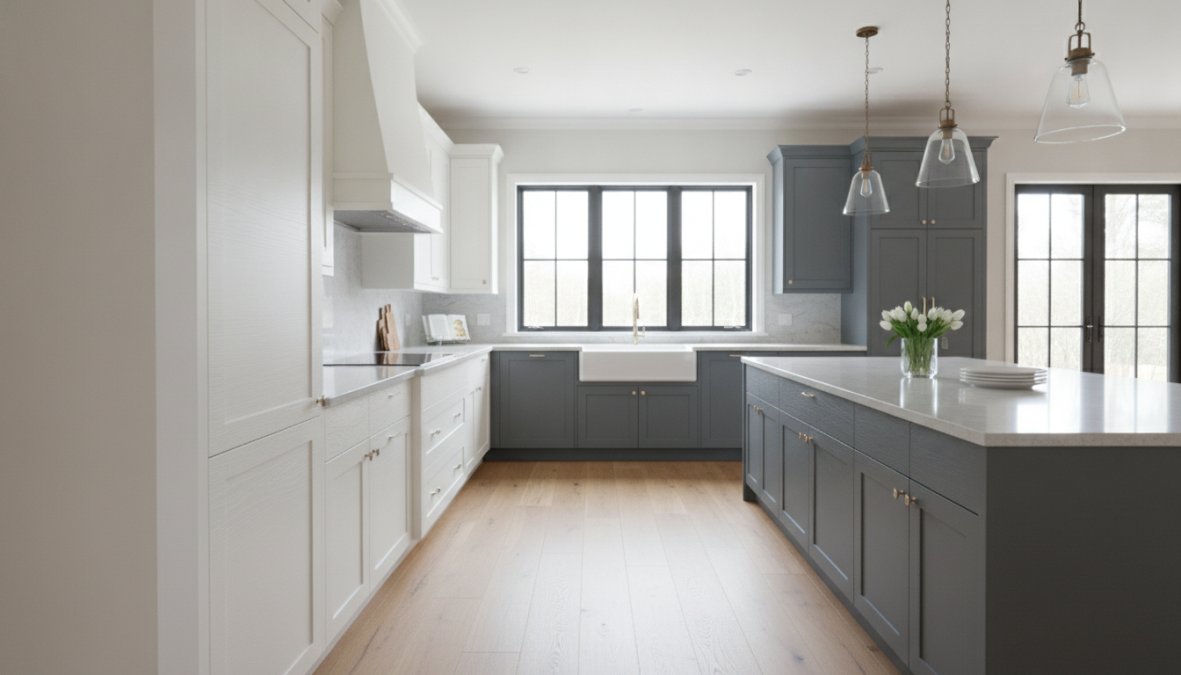
White, soft gray, warm greige, and pale cream cabinets dominate buyer preferences across markets. These colors work because they’re versatile and complement any countertop, backsplash, or appliance choice buyers might envision. White cabinets specifically signal cleanliness, modernity, and brightness. Soft gray and greige offer sophistication without starkness and appeal to buyers seeking warmth and contemporary style simultaneously.
A professional finish on neutral cabinets, with crisp lines, smooth paint, and updated hardware, reads as premium and intentional. A sloppy finish on the same neutral color reads as cheap and careless.
Modern Aesthetics That Appeal to Buyers
Soft blues, warm blacks, and muted sage greens have gained traction in 2026. These colors work when applied to island cabinets or lower cabinetry while keeping perimeter cabinets white or light gray. The two-tone approach feels intentional and contemporary without being risky.
However, these accent colors should be considered carefully in your specific market. The safest strategy: use accent colors on islands or lower cabinets (easier for future owners to repaint) while keeping primary cabinets neutral.
Avoid trendy colors that peaked in 2024-2025: dusty rose, sage green, and soft blue cabinets may feel dated to buyers in 2026. Stick with timeless neutrals or use trendy colors only on removable elements like island cabinets.
DIY vs. Professional Cabinet Refinishing: What Impacts Resale Value
This decision often comes down to budget, but the resale implications are significant. A $500 DIY refinish and a $5,000 professional refinish look dramatically different to buyers and appraisers.
Professional cabinet painters use spray application (which creates smooth, even finishes) rather than brush application (which leaves visible brush marks). They use premium primers and topcoats formulated for kitchen durability and invest time in surface preparation that determines whether paint adheres properly long-term.
When buyers inspect a kitchen, they’re looking for signs of quality and maintenance. A professional cabinet finish signals both. From an appraisal perspective, professional finishes carry weight. Homes with professional cabinet refinishing sell faster (typically 10-20% faster) and command higher offers than homes with visible DIY work.
DIY cabinet refinishing becomes a liability when execution is poor. Visible brush marks, uneven paint coverage, drips, mismatched colors, or peeling paint all signal to buyers that shortcuts were taken. Professional cabinet finishes are designed to withstand kitchen use, heat, moisture, grease, and daily wear. DIY finishes often use paint not formulated for kitchen cabinets, leading to peeling, chipping, or staining within 12-24 months.
Professional cabinet refinishing adds resale value. Visible DIY work subtracts it. If you’re not confident in your execution, hire a professional. The ROI difference is substantial.
Signs Your Kitchen Cabinets Need Refinishing Before Listing
Not every home needs cabinet refinishing before sale. Your cabinets are good candidates for refinishing if they’re structurally sound but cosmetically dated. Honey oak, dark walnut, or dated finishes from the 1990s-2000s feel old to modern buyers. Cabinets with visible dust, grease buildup, or minor surface scratches also benefit from refinishing.
However, cabinets that are warped, water-damaged, or have particle board breakdown are poor refinishing candidates. Refinishing masks these issues temporarily but doesn’t fix them. If your cabinets are already in good condition with a neutral finish and clean appearance, refinishing may not be necessary.
The decision framework: refinish if cabinets are structurally sound AND cosmetically dated. Skip refinishing if cabinets are already in good condition OR if structural issues exist underneath.
The Refinish-Ready Checklist: What Buyers Inspect
When buyers and appraisers evaluate your kitchen, they assess cabinet condition across multiple dimensions. They examine cabinet boxes for signs of water damage, particle board degradation, or structural weakness. They look at the underside of cabinets near the sink and assess whether the substrate will support hardware and daily use.
Appraisers and experienced buyers understand that cabinet finish quality determines longevity. They look for smooth, even paint application with no visible brush marks, drips, or inconsistencies. Buyers notice hardware details immediately. Outdated hardware makes even freshly painted cabinets feel dated. Updated hardware (brushed nickel, simple contemporary styles, matching throughout) makes cabinets feel intentional and modern.
The refinish-ready checklist includes:
- Cabinet substrate inspection (no water damage, particle board intact)
- Paint adhesion verification (smooth, even application, no peeling)
- Hardware replacement (updated, matching throughout)
- Door and drawer alignment (straight, smooth operation)
- Overall finish quality (professional appearance, no visible defects)
How Cabinet Refinishing Impacts Home Resale Value and Appraisal
The connection between cabinet condition and resale value is direct. Appraisers compare your home to comparable properties in your market, and kitchen quality is a major valuation factor. Cabinet condition specifically influences appraisal values because cabinets are a visible, functional component that affects daily kitchen use. A recently refinished kitchen with modern finishes and updated hardware will appraise higher than the same kitchen with original 1990s cabinets.
Research from the National Association of Realtors consistently shows that kitchen updates rank among the highest-ROI home improvements. In markets where kitchen competition is fierce, cabinet refinishing often delivers 80-120% ROI. In conservative markets, the ROI may be 50-70%.
:::pro-tip
Request an appraisal before listing to understand how your refinishing investment translates to appraised value. If your refinished kitchen appraises significantly higher than comparable homes with original cabinets, you’ve made a smart investment.
:::
Buyers make emotional decisions about homes, then justify those decisions with logic. The kitchen is where this dynamic plays out most visibly. A fresh, clean, modern kitchen creates positive emotion. Cabinet refinishing directly addresses this psychological factor. Fresh paint, updated hardware, and modern finishes signal that you’ve invested in the home. Online listing photos are where this matters most. A kitchen with freshly refinished white or gray cabinets photographs beautifully and creates strong first impressions. Buyers who see attractive kitchen photos are more likely to schedule showings and make competitive offers.
Cabinet refinishing is one of the most cost-effective kitchen improvements you can make before selling. When executed professionally with neutral colors and proper preparation, it consistently delivers strong resale value and accelerates your sale timeline. The key is understanding when refinishing makes sense (structurally sound cabinets, cosmetic updates needed) versus when other approaches are better (damaged cabinets, comprehensive renovations). Denver Cabinet Painting Colorado has spent 40 years helping Colorado homeowners make these decisions, delivering professional cabinet refinishing, refacing, and glazing services that transform kitchens and increase home values. Ready to maximize your resale value? Get a free quote from Denver Cabinet Painting Colorado and discover how cabinet refinishing can position your home for a stronger market performance.
Frequently Asked Questions
Does painting kitchen cabinets increase home value?
Cabinet refinishing can increase perceived home value by modernizing the kitchen's appearance, a major buyer consideration. While kitchen cabinet refinishing typically returns 50-80% of its cost at resale, the actual value gain depends on the quality of the professional finish, your local market, and the home's overall condition. Buyers view a well-executed cabinet refinishing project as a cost-effective alternative to full replacement, making your home more marketable. However, poor-quality DIY refinishing can actually decrease value.
What is the average ROI of kitchen cabinet refinishing for resale?
Return on investment for cabinet refinishing typically ranges from 50-80%, depending on execution quality and regional market variations. A professional kitchen cabinet refinishing project costing $3,000-$8,000 may add $1,500-$6,400 in home value. This ROI is significantly higher than full cabinet replacement (which costs $15,000+) but lower than minor cosmetic updates. The key is ensuring professional-grade paint adhesion and finish quality, factors that directly influence how appraisers and real estate professionals evaluate your kitchen's marketability.
Should I refinish or replace cabinets before selling my home?
Cabinet refinishing is usually the smarter choice for resale if your cabinet boxes and structure are sound. Refinishing costs 60-75% less than replacement while delivering comparable visual impact to buyers. However, if cabinets show water damage, severe warping, or outdated hardware that no finish can modernize, replacement may be necessary. Evaluate your cabinet substrate condition first, if the bones are good, professional refinishing with quality paint adhesion and modern hardware updates provides excellent resale value without the expense of full replacement.
What cabinet colors are best for resale value?
Neutral and timeless cabinet colors perform best for resale: white, soft gray, greige, and natural wood tones appeal to the broadest buyer demographic. These best cabinet colors for resale align with modern kitchen aesthetics while remaining versatile enough for various home styles. Avoid highly saturated or trendy colors that may feel dated quickly. Pair neutral cabinet refinishing with updated hardware and ensure professional finish quality, buyers assess kitchen modernization carefully, and a smooth, consistent finish signals proper preparation and durability.
This article was written using GrandRanker