Table of Contents
- Why Affordable Kitchen Cabinet Painting Beats Replacement in Denver
- Kitchen Cabinet Refinishing Denver Cost: What You Actually Pay
- Paint Types for Denver Cabinets: Lacquer, Enamel, and Low VOC Options
- The Professional Cabinet Painting Process: What to Expect
- Best Kitchen Cabinet Painters Denver: How to Choose the Right Professional
- Maintenance and Long-Term Care for Painted Cabinets
- Affordable Cabinet Painting Denver: Common Homeowner Concerns Addressed
- Conclusion: Transform Your Denver Kitchen Without Breaking the Bank
Last Updated: July 24, 2026
Why Affordable Kitchen Cabinet Painting Beats Replacement in Denver
When homeowners in Denver face outdated or worn kitchen cabinets, affordable kitchen cabinet painting has emerged as the clear winner. Cabinet painting delivers results that rival replacement at a fraction of the price, while full replacement runs tens of thousands of dollars, professional refinishing achieves the same visual transformation at significantly lower cost without disrupting your kitchen for weeks of construction.
Cost Savings Without Sacrificing Quality
The financial advantage is straightforward: when done properly, painted cabinets last 7-10 years or longer before needing a touch-up. The difference between professional results and failed DIY attempts comes down to preparation. Doors and drawers must be removed, sanded, primed, and sealed before any color goes on. This foundation work separates a finish that peels within a year from one that holds up for a decade. Denver Cabinet Painting Colorado invests significant time in this preparation phase, which is why results outlast DIY attempts by years.
A refinish job works with what you have and adds polish through color selection and professional application alone. For homeowners who like their cabinet layout and functionality but hate the outdated appearance, this is the perfect solution.
Transformation Timeline: How Fast Can Your Kitchen Change?
A full cabinet replacement typically takes 4-8 weeks from order to completion. Professional cabinet refinishing usually takes 5-10 business days. For families who cook daily and can’t afford a long kitchen shutdown, this matters enormously.
Initial consultation and color selection happen first, then doors and drawers are removed. Preparation takes 2-3 days for a full kitchen. Priming and painting follow, with drying time between coats. Finally, doors and drawers are reinstalled and you’re done.
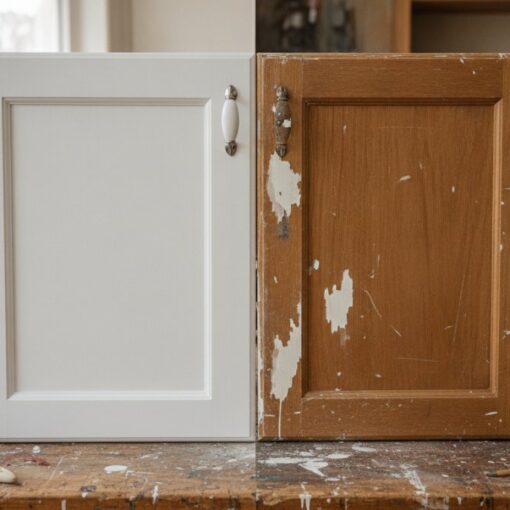
A new color transforms a space dramatically. Shifting from dark wood tones to soft whites, grays, or custom colors instantly makes kitchens feel larger and more modern. The psychological impact rivals a full remodel, but at 20-30% of the cost.
Kitchen Cabinet Refinishing Denver Cost: What You Actually Pay
The cost of professional cabinet painting in Denver depends on several factors. Rather than quoting specific prices, which vary based on your kitchen’s unique size, condition, and finish preferences, we recommend getting a free estimate from Denver Cabinet Painting Colorado to see exact numbers for your situation.
Factors That Drive Your Final Price
Cabinet painting costs scale primarily with the number of linear feet of cabinetry you have. A small galley kitchen with 20 linear feet costs significantly less than a large island kitchen with 50+ linear feet. The condition of your existing cabinets also matters. Well-maintained cabinets needing only color updates cost less than heavily damaged surfaces requiring extensive repair work before painting.
The type of finish you choose affects pricing. Standard enamel and acrylic-polyurethane finishes are typically the baseline cost. Specialty finishes, high-gloss lacquer, matte low VOC options, or UV-curing finishes cost slightly more due to material costs and application technique.
Labor intensity varies based on whether your project is on-site or off-site shop painting. Off-site work usually costs less because the painter has ideal conditions and no disruption to your home.
Avoid pricing quotes significantly lower than competitors. Cabinet painting requires meticulous preparation; if a quote skips this step to save money, the finish will fail prematurely. This is one area where the cheapest option almost always delivers poor long-term value.
Cabinet Painting vs. Refacing vs. Replacement: Side-by-Side Comparison
Three main approaches exist for updating outdated kitchen cabinets, each serving different situations.
| Approach | Timeline | Cost Range | Best For | Durability |
|---|---|---|---|---|
| Cabinet Painting | 5-10 days | Lowest | Quick updates, budget-conscious | 7-10 years |
| Cabinet Refacing | 2-3 weeks | Medium | Keeping layout, updating doors | 10-15 years |
| Full Replacement | 4-8 weeks+ | Highest | Layout changes, major remodel | 20+ years |
Cabinet refacing involves replacing cabinet doors and drawer fronts while keeping the existing box structure. This approach is ideal if your cabinet layout works perfectly but the doors are damaged or outdated. Full replacement makes sense only when you’re redesigning your kitchen layout, adding islands, or making structural changes.
For 80% of homeowners with outdated but functional cabinets, professional painting is the right choice. It’s fast, affordable, and delivers results that last a decade. Reserve refacing for damaged doors. Reserve replacement for layout changes.
Paint Types for Denver Cabinets: Lacquer, Enamel, and Low VOC Options
The type of paint used on your cabinets determines both the final appearance and how well the finish holds up to daily kitchen use.
Lacquer: Durability and Professional Finish
Lacquer has long been the gold standard for professional cabinet painting. It creates an exceptionally hard, smooth finish that resists scratches, moisture, and daily wear. The finish dries quickly, often within hours, allowing painters to apply multiple coats in a single day and complete projects faster.
The downside is that lacquer contains higher volatile organic compounds (VOCs), which means stronger odors during application and a longer off-gassing period. Professional painters typically apply lacquer in controlled shop environments or use proper ventilation to minimize odor exposure. When applied by experienced professionals, lacquer finishes last 10+ years with minimal maintenance.
Enamel and Acrylic-Polyurethane: Pros and Cons
Enamel paints, particularly acrylic-polyurethane enamels, offer a middle ground between durability and ease of application. These paints dry slightly slower than lacquer, giving painters more time to work and reducing application errors. The finish is very durable, typically lasting 7-10 years, and handles moisture and temperature fluctuations well in kitchen environments.
Acrylic-polyurethane enamels have lower VOCs than lacquer, appealing to homeowners concerned about air quality and off-gassing. For families with young children or pets, this is a meaningful advantage. The trade-off is that enamel finishes don’t achieve quite the same glass-like smoothness as lacquer and are slightly more susceptible to scratching under heavy use.
Eco-Friendly Cabinet Painting: Low VOC and Sustainable Finishes
Low VOC cabinet paints have improved dramatically in recent years. Modern low VOC formulations deliver durability comparable to traditional lacquer while reducing environmental impact and indoor air quality concerns.
UV-curing finishes represent the newest frontier in cabinet painting. These paints harden under ultraviolet light, creating an exceptionally durable surface that rivals or exceeds traditional lacquer. UV-cured finishes also tend to be low VOC. The downside is that UV application requires specialized equipment and expertise, so not all painters offer this option.
If environmental impact matters to you, ask your painter about low VOC or UV-cured options. The small premium you pay is worth the peace of mind, especially if you have children or respiratory sensitivities.
The Professional Cabinet Painting Process: What to Expect
Understanding the cabinet painting process removes anxiety about what happens in your home. Professional painters follow a systematic approach that ensures quality results and minimizes disruption.
Preparation: The Foundation of a Lasting Finish
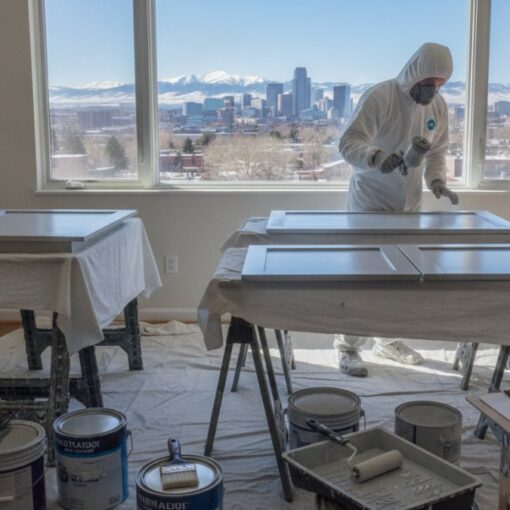
Preparation is where professional cabinet painting separates itself from DIY attempts. Cabinet doors and drawers are removed from their hinges and slides. These pieces are either painted on-site in a controlled area or transported to the painter’s shop for finishing.
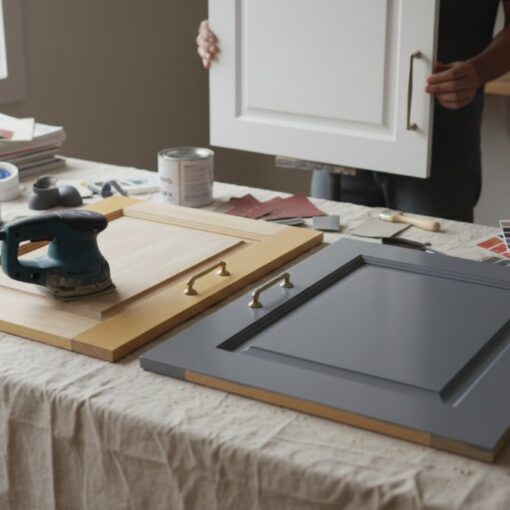
Next comes cleaning and sanding. Every surface must be cleaned to remove grease, dust, and grime. Kitchen cabinets accumulate cooking residue over years, and this must be removed completely or paint won’t adhere properly. After cleaning, the painter sands all surfaces to dull the existing finish and create a surface that paint can grip. Any damaged areas, dents, gouges, or stains are filled and sanded smooth. Once sanding is complete, the entire surface is wiped down to remove all dust. Only then does priming begin.
Spray Application and Finishing Techniques
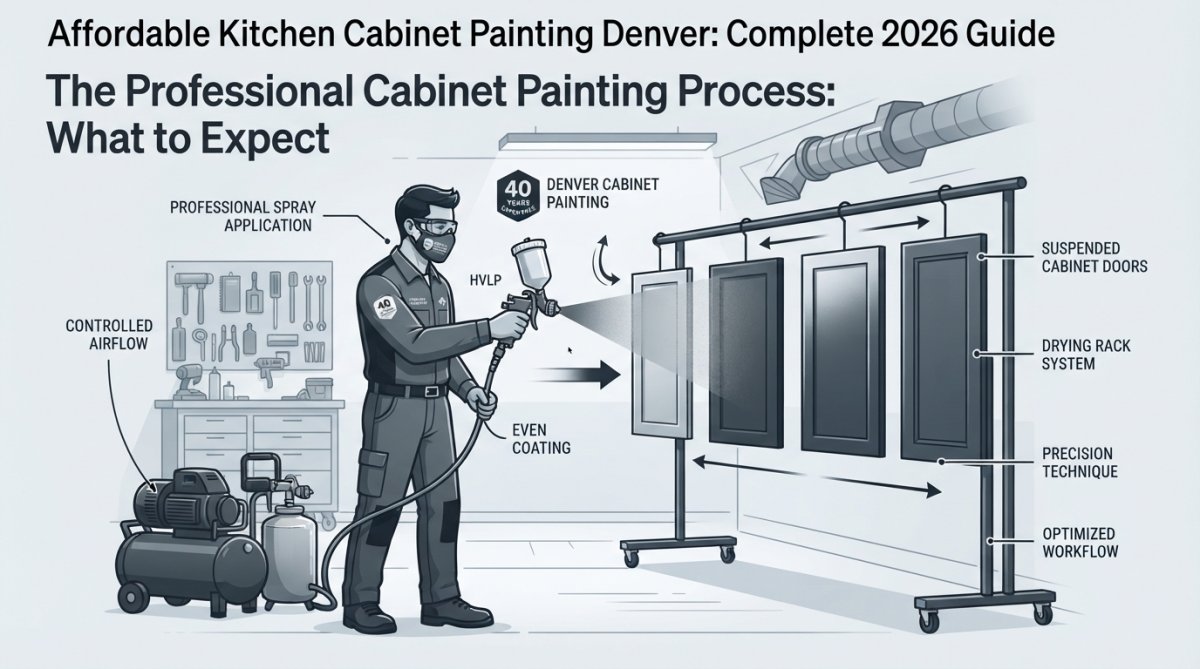
Once primer is dry, the topcoat goes on. Professional painters use spray application rather than brushing because it delivers a smoother, more consistent finish without visible brush marks. Multiple thin coats are applied rather than one thick coat. Two or three topcoats are typical, with drying time between each.
The entire process from start to finish typically takes 5-10 business days for a full kitchen. The first few days are dominated by preparation. Painting itself usually takes 2-3 days. The final days involve drying time, reassembly, and touch-ups. Your kitchen is functional again quickly, though you should avoid heavy use of cabinets for a day or two after completion to allow the finish to fully cure.
On-Site vs. Off-Site Shop Painting: Which Is Right for You?
Off-site shop painting is the preferred approach for most projects. Doors and drawers are transported to a controlled environment where temperature, humidity, and dust can be managed perfectly. This results in superior finish quality and your home stays cleaner. The downside is that you’re without cabinet doors and drawers for the duration of the project.
On-site painting keeps your cabinet doors and drawers in your kitchen, which feels less disruptive psychologically. However, the painter must work around your home, manage dust carefully, and deal with variable temperature and humidity. Most homeowners choose off-site painting for the superior finish quality and faster timeline.
Best Kitchen Cabinet Painters Denver: How to Choose the Right Professional
Choosing a cabinet painter is one of the most important decisions in this process. A skilled painter with proper experience delivers results that last a decade.
Red Flags to Avoid and Questions to Ask
When evaluating cabinet painters, watch for these red flags: painters who won’t remove cabinet doors and drawers for finishing are cutting corners. Painters who quote prices significantly lower than competitors are likely skipping preparation steps. Painters who can’t show before-and-after photos are hiding something. Painters who pressure you to decide quickly are not prioritizing your project.
Ask every painter these questions: How long have you been painting cabinets? Can you show me photos of kitchen projects you’ve completed in the Denver area? What type of paint do you use, and why? Do you remove doors and drawers for finishing, or paint on-site? What’s your preparation process? How long will my project take? What’s included in your warranty?
Experienced painters have extensive project portfolios, can explain their paint choice confidently, remove doors and drawers for quality results, spend significant time on preparation, give realistic timelines, and stand behind their work with warranties.
A painter who quotes a timeline of “2-3 days total” for a full kitchen is either inexperienced or rushing through preparation. Quality cabinet painting takes at least 5-7 days even for small kitchens.
Warranty, Guarantees, and Long-Term Support
A warranty is your insurance policy for cabinet painting. Professional painters typically offer 3-5 year warranties covering paint failure, peeling, or adhesion problems. Ask what the warranty covers specifically and what the process is for warranty claims. Denver Cabinet Painting Colorado, with 40 years of experience serving Colorado, offers warranties that reflect their confidence in their process.
Maintenance and Long-Term Care for Painted Cabinets
Once your cabinets are painted, proper maintenance extends the life of the finish and keeps them looking beautiful.
Daily Cleaning and Protective Measures
Clean painted cabinets with a soft cloth and mild soap and water. Avoid harsh chemicals, abrasive sponges, or heavy scrubbing, which can scratch the finish. Wipe spills immediately, especially grease and acidic substances like lemon juice or wine.
Use coasters under glasses and trivets under hot pots. Avoid placing heavy items on cabinet edges. When opening and closing cabinet doors, use the handle rather than pushing on the door face. Run your exhaust fan while cooking, and ensure your kitchen has adequate ventilation. This is especially important in Denver’s dry climate, where humidity fluctuations can be more extreme than in other regions.
When to Touch Up and How to Extend Cabinet Life
Minor scratches and chips happen as part of normal kitchen use. Small touch-ups are easy. Save paint from your original project, and use a small brush to paint over minor damage.
After 5-7 years, you might notice the finish starting to show wear in high-traffic areas. At this point, a professional refresh extends the life of your cabinets another 5-7 years. With reasonable care, professionally painted cabinets easily last 10+ years.
Affordable Cabinet Painting Denver: Common Homeowner Concerns Addressed
Several concerns come up repeatedly when homeowners consider cabinet painting.
Will the Paint Peel or Fail Like DIY Attempts?
This is the most common concern, and it’s valid. Many people have tried DIY cabinet painting and watched it fail. The difference between a DIY failure and a professional success comes down to preparation and materials.
Professional painters spend days on preparation, cleaning, sanding, filling, and priming, before any topcoat goes on. DIY attempts often skip preparation to save time, which guarantees failure. When a professional painter completes your cabinets, the finish should last 7-10 years with normal use. If it starts peeling or failing before that timeframe, the painter’s warranty covers it.
Can You Modernize Outdated 80s Cabinets Affordably?
Outdated 1980s cabinets, typically heavy oak with dark stains, are perfect candidates for cabinet painting. The structure is usually solid; they just look dated. A fresh coat of paint in a modern color (soft whites, warm grays, or soft greens are popular) instantly makes them feel contemporary.
Pairing fresh paint with updated hardware completes the modernization. For a fraction of the cost of replacement, you can transform 80s cabinets into something that feels current.
How Messy Is the Process? Protecting Your Home
Cabinet painting does create some disruption, but professional painters minimize mess through careful planning. If doors and drawers are painted off-site, your kitchen stays relatively clean. Plastic sheeting protects countertops and appliances.
The smell of paint is temporary. Proper ventilation helps dissipate odor quickly. Most kitchens are fully usable within 24-48 hours after the final coat is applied.
Professional cabinet painting is significantly less disruptive than full kitchen remodeling. You’re without cabinet doors for a week or two, but the transformation is complete.
Conclusion: Transform Your Denver Kitchen Without Breaking the Bank
Outdated kitchen cabinets don’t have to mean a major remodeling project. Affordable kitchen cabinet painting denver offers homeowners a practical, fast, and cost-effective way to transform their kitchens. Denver Cabinet Painting Colorado brings 40 years of experience and a commitment to meticulous preparation that ensures your finish lasts a decade.
The team specializes in smooth, consistent finishes that revitalize outdated kitchens for both residential and commercial clients across the Denver metro area. They offer free quotes so you can see exact pricing for your specific kitchen before making any commitment.
Frequently Asked Questions
How much does affordable kitchen cabinet painting cost in Denver compared to replacement?
Cabinet painting costs significantly less than full replacement, which can involve new cabinetry, installation, and labor. Pricing for cabinet painting depends on factors like cabinet quantity, current condition, chosen finish type, and whether work occurs on-site or in an off-site shop. For accurate pricing tailored to your Denver kitchen, request a free estimate to compare the investment against replacement options and understand your actual savings.
What's the difference between cabinet painting and cabinet refacing in Denver?
Cabinet painting refinishes existing cabinet boxes with new color and finish, preserving the original structure. Cabinet refacing replaces doors, drawer fronts, and veneers while keeping the boxes, costing more than painting but less than full replacement. Painting is the most affordable option for transformation, while refacing suits kitchens where cabinet boxes are structurally sound but doors are worn. Discuss both options during your free consultation to determine which fits your budget and goals.
Will professional cabinet painting hold up better than DIY paint jobs, and what warranty should I expect?
Professional cabinet painting uses industrial-grade finishes like lacquer, enamel, or acrylic-polyurethane applied with spray equipment, ensuring consistent, durable results that resist peeling and wear. DIY attempts often fail due to inadequate prep work and improper application. Reputable Denver painters offer warranties covering finish durability, typically backed by years of local experience. Ask your painter about their specific warranty terms and guarantee against premature peeling or failure before committing.
How long does the cabinet painting process take, and can I use my kitchen during the work?
Professional cabinet painting typically takes 1-2 weeks depending on kitchen size and chosen application method. On-site painting may limit kitchen access, while off-site shop work allows normal use. Your painter will discuss the timeline and kitchen access during the free estimate. This is significantly faster than full replacement remodels, making it ideal for busy households or rental properties needing quick turnaround without extended downtime.
What low VOC cabinet paint options are available in Denver for eco-conscious homeowners?
Low VOC (volatile organic compound) paints reduce harmful emissions while delivering professional finishes. Many Denver cabinet painters offer eco-friendly options including water-based acrylics and low VOC lacquers that meet environmental standards without sacrificing durability or appearance. These sustainable choices are especially popular for homes with children or pets. Ask your painter about low VOC availability, cost differences, and environmental certifications when requesting your free quote to ensure your kitchen transformation aligns with your values.
Ready to see what your kitchen could look like? Contact Denver Cabinet Painting Colorado for a free estimate and discover how professional cabinet painting can deliver the transformation you want at a price that makes sense.
This article was written using GrandRanker