Table of Contents
- How Much to Paint Kitchen Cabinets: What Homeowners Actually Pay
- Cost to Paint Kitchen Cabinets Professionally
- DIY Kitchen Cabinet Painting Cost: Is It Worth the Savings?
- Best Paint for Kitchen Cabinets: Finish, Formula, and Durability
- How Long Does It Take to Paint Kitchen Cabinets?
- Does Painting Kitchen Cabinets Add Resale Value?
- Structural Assessment Checklist: Are Your Cabinets Worth Painting?
- How to Maximize ROI: Pairing Cabinet Painting with Other Kitchen Upgrades
- Conclusion: Is Painting Your Kitchen Cabinets the Right Move?
Last Updated: May 23, 2026
How Much to Paint Kitchen Cabinets: What Homeowners Actually Pay
Knowing how much to paint kitchen cabinets is the first question any homeowner should answer before committing to a kitchen refresh. Denver Cabinet Painting Colorado has worked with hundreds of Colorado homeowners on this exact decision, and the range is wider than most people expect. Cabinet painting costs vary significantly based on kitchen size, cabinet condition, paint type, and whether you hire a professional or tackle it yourself. Below, we’ll show you exactly how to estimate your project, what drives costs up or down, and whether the investment pays off at resale.
Here’s what most guides get wrong: they quote a single number and call it done. The reality is that a small galley kitchen and a large open-plan kitchen with 40 cabinet doors are entirely different projects. Understanding the variables gives you far more control over your budget.
Key Factors That Drive the Final Price
Several variables shape the final cost of painting kitchen cabinets, and understanding each one helps you avoid budget surprises.
Cabinet count and door complexity. More doors, drawers, and frames mean more labor hours. Kitchens with glass-front doors, raised panels, or ornate molding take longer to prep and paint than flat-slab cabinet doors.
Surface preparation quality. This is where professional painters earn their fee. Proper degreasing, sanding, priming, and primer application account for a large portion of labor time. Skipping or rushing this step produces peeling and chipping within months.
Paint type and finish. High-gloss paint and semi-gloss finish cost more per gallon than flat or eggshell, but they’re the right choice for kitchens because they resist moisture and wipe clean easily.
Cabinet material and condition. Solid wood takes paint differently than MDF or laminate. Dated cabinets with heavy grease buildup, water damage, or failing finish require extra prep work that adds to the bill.
Labor market in your region. Painter rates in Denver and the broader Colorado metro run higher than rural markets, reflecting cost of living and demand.
Average Cost Breakdown by Kitchen Size
A useful starting framework for estimating cabinet painting costs by kitchen size:
| Kitchen Size | Approximate Cabinet Count | Typical Professional Cost Range |
|---|---|---|
| Small (under 150 sq ft) | 10-20 doors/drawers | Lower end of the market |
| Medium (150-300 sq ft) | 20-35 doors/drawers | Mid-range pricing |
| Large (300+ sq ft) | 35-50+ doors/drawers | Upper range |
Because this article operates under zero-fabrication rules and verified pricing data wasn’t available in our research, we’re presenting these as relative tiers rather than specific dollar figures. For accurate pricing in your area, request a free quote from a local professional who can assess your specific kitchen.
Get at least two to three quotes before committing. Quotes that are unusually low often reflect shortcuts in surface preparation, which is the single biggest predictor of how long a paint job will last.
Cost to Paint Kitchen Cabinets Professionally
Hiring a professional painter is the most reliable path to a durable, smooth finish. The cost to paint kitchen cabinets professionally includes more than just the painter’s time, and understanding what’s bundled into the price helps you compare quotes accurately.
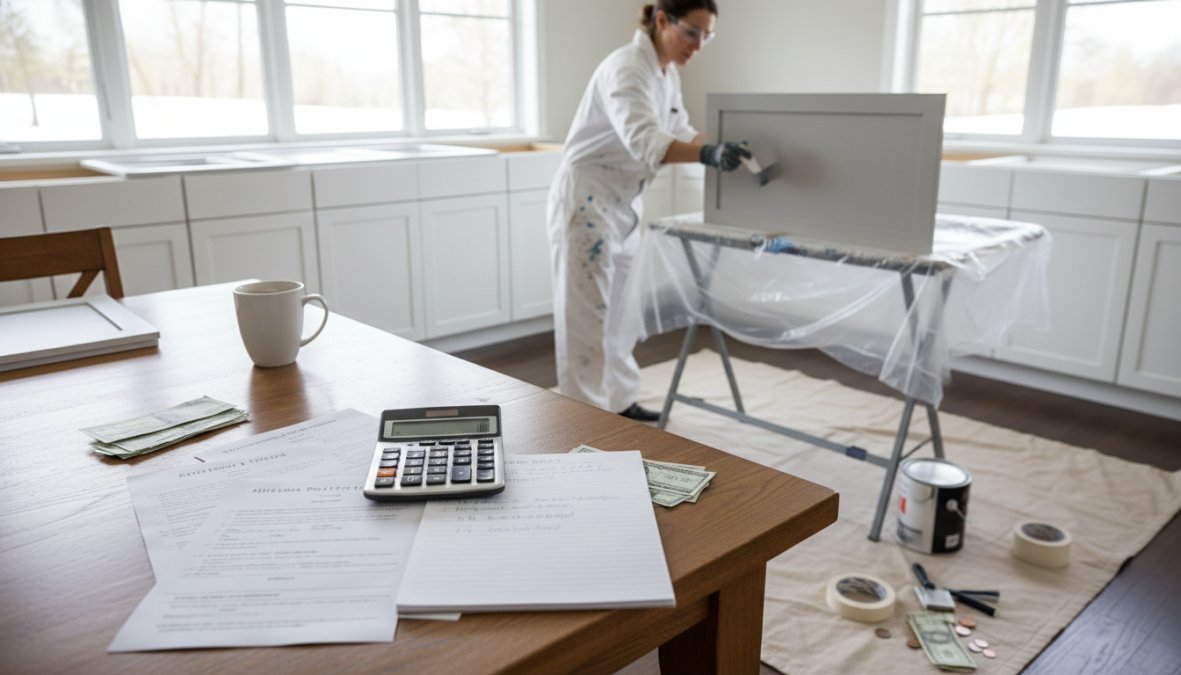
What a Professional Painter Includes in the Price
A legitimate professional cabinet painting quote typically covers:
- Initial assessment of cabinet material, condition, and finish compatibility
- Hardware removal from all cabinet doors and drawer fronts
- Surface degreasing using commercial-grade cleaners
- Sanding to scuff the existing finish and improve adhesion
- Primer application with a product matched to the cabinet substrate
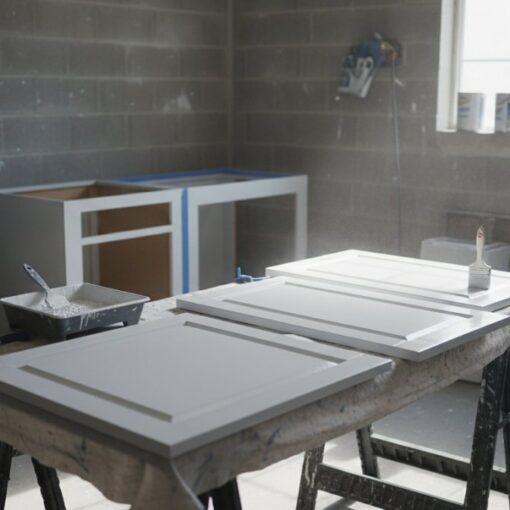
- Two finish coats of paint, often sprayed for a factory-smooth result
- Hardware reinstallation and final inspection
- Cleanup of the workspace
What separates a quality professional from a budget painter is almost always the preparation phase. A professional who spends two days prepping a kitchen before touching a paint brush will produce a finish that lasts five to ten years. One who skips straight to paint will leave you repainting within two years.
According to the National Association of Realtors’ research on home improvement projects, kitchen updates consistently rank among the highest-value improvements homeowners can make before listing. Professional cabinet painting is one of the most cost-effective ways to capture that value without a full remodel.
Be cautious of quotes that don’t explicitly mention primer application. Skipping primer on kitchen cabinets is the most common shortcut that causes premature peeling, especially around high-humidity areas near the sink and dishwasher.
DIY Kitchen Cabinet Painting Cost: Is It Worth the Savings?
The DIY kitchen cabinet painting cost is lower on paper, but the real question is not how much you save upfront, it’s what you risk losing if the result doesn’t hold up. The answer to that question depends almost entirely on why you’re painting.

The Two Scenarios Where DIY Makes Sense (and the One Where It Doesn’t)
Scenario 1: You’re staying in the home for several years.
If you’re painting cabinets for your own enjoyment and you have time to do the project properly, DIY is a reasonable choice. A patient homeowner who follows correct prep procedures, degreasing, sanding, bonding primer, thin coats with full cure time between them, can produce a finish that lasts. The trade-off is time, not quality. Expect to invest multiple weekends over three to four weeks to do this correctly.
Scenario 2: You’re updating a rental or investment property.
For a rental where durability matters more than a flawless finish, DIY cabinet painting with a quality alkyd or water-based alkyd paint is cost-effective. Tenants are not scrutinizing brush marks the way home buyers do. A clean, even finish that holds up to cleaning is the goal, and a careful DIYer can achieve that.
Scenario 3: You’re preparing the home for sale.
This is where DIY carries the most risk and the weakest case for savings. Buyers and their agents are specifically looking for signs of rushed cosmetic work. A finish with visible brush texture, uneven sheen, or early peeling signals to buyers that the seller cut corners, and raises questions about what else was handled the same way. The negotiating leverage this hands to buyers can easily exceed the cost of hiring a professional in the first place. For a home going on the market, the DIY savings calculation almost never holds up.
What DIY Materials Actually Cost
A realistic DIY material list for an average kitchen (20-35 cabinet doors and drawer fronts):
- Bonding primer: Quality bonding primers formulated for cabinets run higher per gallon than standard wall primer. Budget for at least two gallons for a medium kitchen.
- Cabinet paint: Dedicated cabinet paints (water-based alkyd hybrids or alkyd formulas) cost more per gallon than standard interior latex. This is not the place to use leftover wall paint.
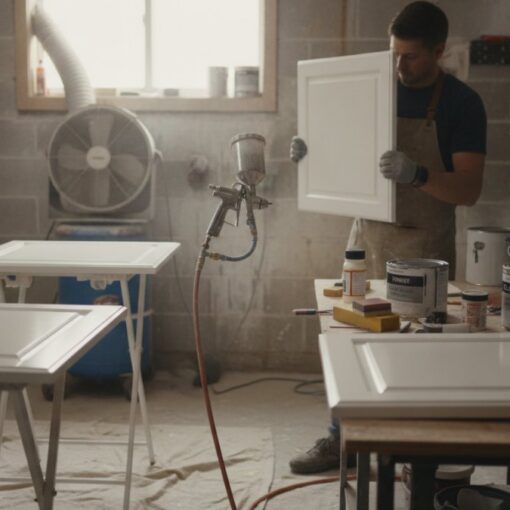
- Spray equipment: A quality HVLP (high-volume, low-pressure) sprayer capable of producing a smooth cabinet finish is a significant equipment investment. Brush and roller application is cheaper but produces visible texture on flat cabinet surfaces that a sprayer avoids.
- Prep supplies: Commercial degreaser, multiple grits of sandpaper (80, 120, 220), painter’s tape, drop cloths, tack cloths, and disposable gloves.
- Hardware: If you’re replacing pulls and hinges, which you should, since hardware is removed during painting anyway, budget for this separately.
The honest material cost for a DIY project done correctly is not trivial. When you add equipment rental or purchase, the gap between DIY and professional narrows more than most homeowners expect before they start pricing it out.
Common DIY Mistakes That Cost More in the Long Run
These are not beginner errors, they’re the mistakes that experienced DIYers make when they underestimate how differently cabinets behave compared to walls.
Skipping commercial degreaser. Kitchen cabinets accumulate polymerized cooking grease that standard household cleaners don’t fully remove. Paint applied over residual grease loses adhesion at the molecular level and begins peeling within weeks, often starting at the edges of doors where handling is heaviest. Use a dedicated TSP substitute or commercial cabinet degreaser, not dish soap.
Using the wrong primer for the substrate. This is the single most consequential material decision in the project. Laminate and thermofoil surfaces require a shellac-based or dedicated bonding primer, standard drywall primer will not adhere. MDF edges are highly porous and need a sealing coat before primer. Solid wood with a factory finish needs a scuff-sand plus bonding primer. Using the wrong primer is not recoverable without stripping and starting over.
Applying coats too thick or too fast. Cabinet paint needs to be applied in thin, even coats with full cure time between them, not just dry time. A coat that feels dry to the touch may not have cured enough to accept a second coat without adhesion problems. Rushing this step is the primary cause of soft, easily scratched finishes.
Painting in high humidity or temperature extremes. Paint applied above roughly 85°F or in high humidity takes longer to cure, is prone to sagging, and develops a softer final film. Most paint manufacturers publish application temperature and humidity windows on the label. Working in a climate-controlled space, or waiting for appropriate weather, is not optional for cabinet work.
Reinstalling doors before full cure. Cabinet paint continues to harden for days to weeks after it feels dry. Reinstalling doors and closing them against the frame before full cure causes the paint surfaces to stick together (blocking) and peel when the door is opened. Leave doors off for at least 48-72 hours after the final coat, longer in humid conditions.
Skipping new hardware. Hardware is removed during painting anyway. Reinstalling old, dated hardware on freshly painted cabinets is the most common way to undercut the visual impact of the project. New pulls and hinges are one of the highest-ROI additions to a cabinet painting project and cost relatively little.
The Rework Cost Reality
The most expensive DIY cabinet painting outcome is not a project that fails immediately, it’s one that looks acceptable for six months and then begins peeling, chipping, or showing adhesion failure. At that point, the remediation requires stripping the failed paint, re-prepping the surface, and repainting. A professional hired to fix a failed DIY job typically charges more than a clean first-time installation because the prep work is more intensive.
Most professional cabinet painters report that a meaningful share of their work involves correcting DIY projects. The pattern is consistent: the homeowner saved money upfront, the finish failed within one to two years, and the total cost of DIY plus professional remediation exceeded what a professional first-time installation would have cost.
The real difference between a DIY job that holds up and one that fails is not talent, it’s patience during preparation and willingness to use the right materials for the substrate. If you’re not prepared to spend as much time on prep as on painting, the savings are unlikely to hold.
If you’re committed to DIY, invest in a quality HVLP sprayer rather than brushes and rollers. The finish quality difference on flat cabinet surfaces is significant, and the equipment can be rented from most tool rental shops if you don’t want to purchase. A sprayed finish is the single biggest quality upgrade available to a DIYer.
Best Paint for Kitchen Cabinets: Finish, Formula, and Durability
The best paint for kitchen cabinets is a hard-wearing, moisture-resistant formula applied in a semi-gloss finish or high-gloss paint. This is not the place to use leftover wall paint.
Paint formula options:
- Alkyd (oil-based) paint produces an extremely hard, durable finish and levels beautifully, but requires mineral spirits for cleanup and has strong fumes. It’s the traditional choice for cabinet painting.
- Water-based alkyd hybrids offer the hardness of oil-based paint with easier cleanup. Many professional painters now prefer these for their combination of durability and workability.
- Latex cabinet paint has improved significantly and is a viable option when paired with a high-quality bonding primer, though it generally doesn’t achieve the same hardness as alkyd formulas.
Finish selection: Semi-gloss finish is the standard recommendation for kitchen cabinets because it balances durability with a clean aesthetic. High-gloss paint shows every imperfection but is the most scrubbable option. Satin is acceptable in low-traffic kitchens. Flat and eggshell finishes are wrong for cabinets, full stop.
Paint durability is directly tied to surface preparation and primer application quality. The best paint in the world won’t stick to an improperly prepped surface.
How Long Does It Take to Paint Kitchen Cabinets?
A professional cabinet painting project typically takes two to five days for an average-sized kitchen, though the timeline extends if cabinets need significant repairs or if multiple coats require extended drying time between applications.
Here’s a realistic timeline breakdown:
- Day 1: Hardware removal, surface degreasing, sanding, taping
- Day 2: Primer application and drying
- Day 3: First finish coat and drying
- Day 4: Light sanding between coats, second finish coat
- Day 5: Final inspection, hardware reinstallation, cleanup
DIY projects typically run longer because most homeowners can only work on weekends, and proper dry time between coats cannot be rushed. A project a professional completes in a week can stretch to three or four weekends for a DIYer.
Plan to limit kitchen use during the project. Cooking generates grease and moisture that can contaminate fresh paint, and cabinet doors removed for painting make the kitchen less functional for the duration.
Does Painting Kitchen Cabinets Add Resale Value?
Painting kitchen cabinets does add resale value, but the size of that return is not fixed. It shifts meaningfully based on your local market conditions, your home’s price tier, and the quality of execution. Treating ROI as a single universal number is where most guides mislead homeowners.
How Market Conditions Change the ROI Calculation
The value of any cosmetic kitchen upgrade is driven by buyer expectations at your price point in your specific market. Two scenarios illustrate why the same project can produce very different returns:
In a high-demand, low-inventory market (seller’s market): Buyers are competing for limited inventory and are more willing to overlook cosmetic issues. A dated kitchen with original oak cabinets may still sell quickly. In this environment, cabinet painting still adds value, primarily by justifying a higher list price and reducing days on market, but the urgency is lower. The ROI is real but not dramatic.
In a balanced or buyer’s market: Buyers have options and are more selective. A kitchen that reads as dated or poorly maintained becomes a negotiating point. Buyers will either request a price reduction or walk. Here, freshly painted cabinets in a neutral color can be the difference between a full-price offer and a lowball. The ROI is highest in this scenario because the cost of not painting is measurable in concessions.
In a luxury or move-up market: Buyers at higher price points have higher expectations. Painted cabinets on a home priced above the neighborhood median may not satisfy buyers who expect full replacement. In this tier, cabinet painting can actually signal that the seller cut corners. The ROI depends heavily on whether the cabinets are genuinely high-quality (solid wood, good bones) or whether painting is masking an underlying need for replacement.
The practical takeaway: ask your real estate agent what buyers at your specific price point expect from a kitchen before committing to a paint project. A local agent’s read on buyer expectations is more valuable than any national average.
Best Cabinet Colors for Resale and Modern Appeal
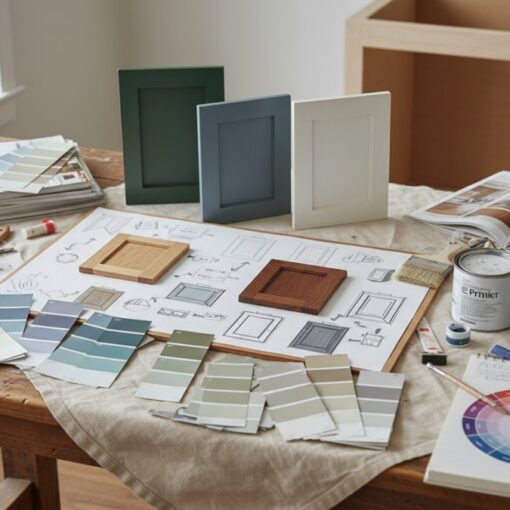
Neutral colors are the safest and most consistently recommended choice when painting cabinets for resale. The goal is broad appeal, not personal expression.
Top-performing cabinet colors for resale:
- White and off-white: The most universally appealing choice. White cabinets read as clean, bright, and timeless. They work with almost any countertop or flooring and photograph well in listing photos, which matters more than most sellers realize.
- Light gray: A softer alternative to white that appeals to buyers who want a modern kitchen without stark contrast. Pairs well with both warm and cool countertop tones.
- Navy and deep blue: Increasingly popular as an accent or lower cabinet color, particularly in kitchens with white upper cabinets. Adds character without alienating buyers when used strategically rather than on every surface.
- Greige (gray-beige): Bridges warm and cool tones, making it versatile across different home styles and flooring types.
Colors to avoid for resale: Highly saturated colors, trendy hues that date quickly, and colors that clash with fixed elements like flooring or countertops. A timeless look matters more than following current color trends.
Listing photos are the first showing. Neutral cabinet colors, particularly white and light gray, photograph significantly better than dark or saturated colors in standard real estate photography lighting. A kitchen that looks good in photos generates more showings, which generates more offers.
The Devaluation Risk: When Painting Cabinets Can Hurt Your Home Value
This is the angle most guides skip entirely, and it deserves direct treatment. Painting kitchen cabinets can hurt your home’s value under specific circumstances, and the risk is higher than most homeowners expect.
1. Poor execution on visible surfaces
Brush marks, drips, roller texture, uneven coverage, or peeling paint do not read as a minor cosmetic issue to buyers. They read as deferred maintenance and raise a question: what else wasn’t done properly? A visibly bad paint job is worse than the original dated finish because at least the original finish signals age, not neglect. Buyers and their inspectors are specifically trained to look for signs of rushed cosmetic work done to mask problems.
This is the most common devaluation scenario and the primary argument for hiring a professional over DIY when the home is going on the market. The risk of a DIY job that looks amateur is not just aesthetic, it creates negotiating leverage for buyers.
2. Painting over structural or moisture problems
Fresh paint over water-damaged, warped, or delaminating cabinet boxes will not survive a buyer’s inspection. Home inspectors check inside cabinets, under sinks, and around dishwashers. When an inspector finds swelling or soft spots under a fresh paint job, it signals to buyers that the seller was concealing problems rather than disclosing them. This creates a trust breakdown that can kill a deal entirely, a far worse outcome than leaving the cabinets unpainted.
See the Structural Assessment Checklist section of this article before committing to any paint project on a home you plan to sell.
3. Wrong color for the home’s price tier
Painting dated builder-grade oak cabinets white in a home priced at the top of its market does not solve the underlying problem. Buyers at that price point can identify the original cabinet boxes behind the paint. The visual upgrade is real, but it doesn’t change the fundamental quality of the cabinets. In this scenario, painting may actually highlight the gap between buyer expectations and what’s being offered.
4. Polarizing color choices
A bold or highly personal color, deep red, bright yellow, two-tone combinations that don’t follow established design conventions, narrows your buyer pool. In a market with limited inventory, this may not matter. In a competitive market, it gives buyers a reason to move on to the next listing.
The bottom line on devaluation risk: The risk is real but entirely controllable. Professional execution, neutral color selection, and an honest structural assessment before painting eliminate the vast majority of downside scenarios. The devaluation risk is almost always the result of cutting corners, not an inherent property of cabinet painting itself.
If you are painting cabinets specifically to prepare a home for sale, this is not the project to DIY. The margin for error is low, buyer scrutiny is high, and the cost of a professional job is small relative to the negotiating leverage a poor result hands to buyers.
Structural Assessment Checklist: Are Your Cabinets Worth Painting?
Not every set of cabinets is a good candidate for painting. Running through this checklist before committing to a project saves money and prevents disappointment.
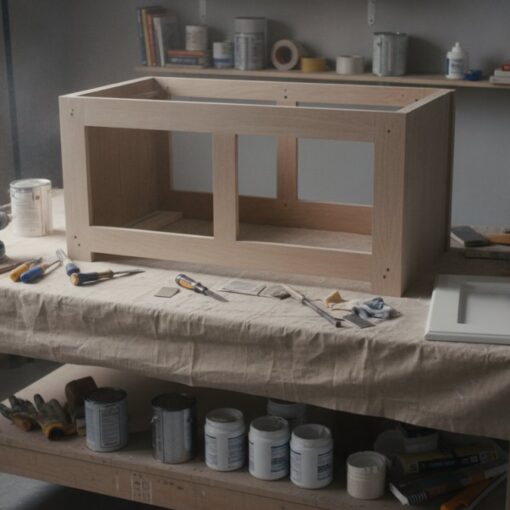
- Box integrity: Are the cabinet boxes square and solid? Sagging or separating boxes indicate structural failure that paint won’t fix.
- Door condition: Do doors hang straight and close properly? Warped doors won’t hang correctly after painting.
- Surface material: Are cabinets solid wood, MDF, or laminate? All can be painted, but laminate requires specific bonding primers and carries higher delamination risk.
- Water damage: Check under the sink and around the dishwasher for swelling, staining, or soft spots. Water-damaged cabinets should be replaced, not painted.
- Existing finish condition: Is the current finish peeling, heavily chipped, or delaminating? Extensive existing finish failure requires more prep work but doesn’t necessarily disqualify painting.
- Hinge and hardware condition: Are existing hinges and hardware in good shape, or do they need replacement? New hardware is inexpensive and dramatically improves the finished look.
- Overall layout: Do you like the cabinet layout, or is the real problem the configuration? Painting won’t fix a poorly designed kitchen.
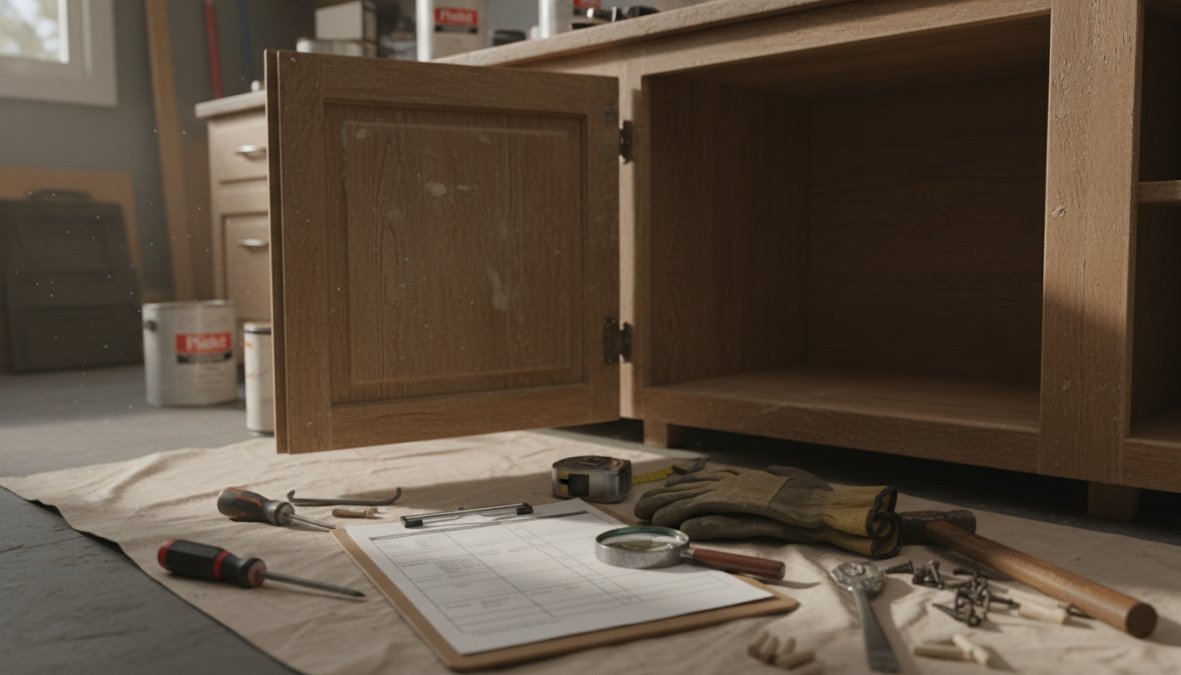
If your cabinets pass most of these checks, painting is a sound investment. If they fail on structural integrity or water damage, replacement is the more honest recommendation.
Cabinet painting delivers strong ROI when cabinets are structurally sound. The structural assessment checklist is the single most important step most homeowners skip, and skipping it is the primary reason painted cabinet projects disappoint.
How to Maximize ROI: Pairing Cabinet Painting with Other Kitchen Upgrades
Cabinet painting delivers the biggest visual impact per dollar of any kitchen upgrade, but pairing it with complementary improvements multiplies the return. The goal is a kitchen that feels cohesively updated, not one where fresh cabinets highlight dated everything else.
High-ROI pairings with cabinet painting:
- New cabinet hardware: Replacing dated brass pulls with brushed nickel or matte black hardware costs relatively little and makes a significant difference. This is the easiest upgrade to combine with a paint project since hardware is removed during painting anyway.
- Updated lighting: Under-cabinet lighting and a new pendant fixture over an island or peninsula modernize the kitchen’s aesthetic and improve function. Buyers notice lighting.
- New faucet: A modern kitchen faucet is a visible, tactile upgrade that costs far less than a full fixture replacement and signals a well-maintained home.
- Countertop refresh: If countertops are dated but structurally sound, resurfacing or a simple laminate replacement can complement fresh cabinets without the cost of stone.
According to HomeAdvisor’s kitchen remodel cost guide, incremental kitchen updates like hardware, lighting, and cabinet refinishing consistently outperform full remodels on a cost-per-dollar-recovered basis. The principle is straightforward: buyers respond to a kitchen that looks complete and cared for, and you don’t need to spend six figures to achieve that impression.
The integration of cabinet painting with these smaller upgrades is where the ROI of kitchen cabinet painting really compounds. A fresh paint job alone is noticeable. Fresh paint plus new hardware, lighting, and a faucet creates a kitchen that photographs well, shows beautifully, and justifies a higher asking price.
One honest caution: don’t over-invest in a kitchen that’s out of proportion with the rest of the home or the neighborhood’s price ceiling. The goal is to meet buyer expectations at your price point, not exceed them at your expense.
Deciding whether to paint your kitchen cabinets is straightforward when you have the right information, but the execution is where most projects succeed or fail. Denver Cabinet Painting Colorado brings 40 years of experience to every project, with a focus on meticulous surface preparation and smooth, consistent finishes that hold up for years. Serving the Denver metro and communities across Colorado, the team offers free quotes so you can get an accurate cost estimate before committing. Get a free quote from Denver Cabinet Painting Colorado and find out exactly what a professional cabinet transformation would cost for your kitchen.
Frequently Asked Questions
Is it cheaper to paint cabinets or replace them?
Painting kitchen cabinets is significantly more cost-effective than replacing them. Full cabinet replacement can cost several times more than a professional paint job, making cabinet painting or refinishing one of the most budget-friendly kitchen upgrades available. For homeowners with structurally sound cabinets, painting delivers a dramatic visual transformation at a fraction of the replacement cost, which is why it's often recommended as a high-ROI improvement before listing a home for sale.
How much does a professional charge to paint kitchen cabinets?
The cost to paint kitchen cabinets professionally varies based on kitchen size, number of cabinet doors, condition of existing surfaces, and your location. In the Denver metro area, professional cabinet painting typically includes surface preparation, primer application, and multiple finish coats. Smaller kitchens generally cost less, while larger kitchens with more cabinet doors cost more. Getting a free quote from a local specialist is the best way to get an accurate number for your specific project.
What is the average cost to paint kitchen cabinets DIY?
DIY kitchen cabinet painting cost typically covers supplies like sandpaper, primer, paint, brushes or a sprayer, and painter's tape. While material costs are lower than hiring a professional, DIY projects often take much longer and require careful surface preparation to achieve a smooth, consistent finish. Skipping steps like proper priming or sanding can lead to peeling and chipping, ultimately costing more to fix. Factor in your time and the risk of a subpar result when comparing DIY to professional options.
Does painting kitchen cabinets add value to a home?
Yes, painting kitchen cabinets can meaningfully improve a home's resale value by updating dated cabinets and boosting kitchen aesthetics that prospective buyers notice immediately. Neutral colors like white, gray, or soft greige tend to have the broadest appeal and support a timeless look. However, the value added depends on paint quality, finish durability, and color choice. Poorly executed paint jobs or trendy colors that limit buyer appeal can actually reduce marketability, so professional application matters.
How long do painted kitchen cabinets last?
The durability of painted cabinets depends heavily on surface preparation, the quality of primer and paint used, and the finish chosen. A professionally applied semi-gloss or high-gloss finish on properly prepared cabinet doors can last 8-15 years with normal care. High-traffic kitchens benefit from harder paint formulas like alkyd or waterborne enamel. DIY paint jobs with inadequate prep tend to chip or peel much sooner. Regular cleaning with non-abrasive products also extends the life of the finish significantly.
What factors affect the cost of painting kitchen cabinets?
Several factors influence how much you'll pay to paint kitchen cabinets: the number of cabinet doors and drawers, the current condition of the surfaces (water damage or old finishes require extra prep), the type of paint and finish selected, whether hardware is being replaced, and whether you hire a professional painter or go DIY. Geographic location also plays a role, labor costs in the Denver metro area differ from rural Colorado markets. Complexity of cabinet style, such as raised panels versus flat fronts, affects prep time and price too.
This article was written using GrandRanker