Table of Contents
- What Is Cabinet Refinishing?
- Cabinet Refinishing vs. Refacing vs. Replacing
- The Cabinet Refinishing Process: Step-by-Step
- Cost of Cabinet Refinishing: Pricing Breakdown
- DIY Cabinet Refinishing Steps vs. Professional Services
- How to Choose a Cabinet Refinishing Company
- Benefits of Cabinet Refinishing and Environmental Considerations
- Signs Your Cabinets Need Refinishing
What Is Cabinet Refinishing? A Complete Guide
Last Updated: June 26, 2026
Cabinet refinishing is a transformative, cost-effective alternative to full cabinet replacement. It involves restoring the finish on existing cabinet boxes, doors, and drawer fronts through careful preparation, sanding, and application of new paint or stain. Rather than removing and replacing cabinetry entirely, refinishing breathes new life into outdated or worn surfaces at a fraction of the cost of replacement.
What Is Cabinet Refinishing?
Cabinet refinishing restores worn or outdated cabinet surfaces by removing the existing finish, preparing the substrate, and applying new paint, stain, or clear coat. This work targets visible surfaces, cabinet doors, drawer fronts, cabinet boxes, and framework, while leaving the underlying structure intact. The goal is to achieve a smooth, consistent finish that looks freshly built while preserving the original cabinet skeleton.
The process differs fundamentally from simple cabinet cleaning or touch-ups. Refinishing involves sanding down to bare wood or a stable substrate, addressing dings and imperfections, and then applying primer and topcoats to create a durable, professional-grade finish. Most projects take between 7-14 days from start to finish.
How Cabinet Refinishing Works
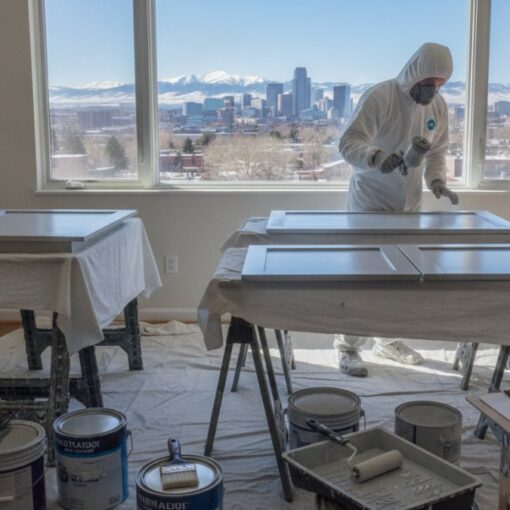
Cabinet refinishing relies on surface preparation as the foundation for success. Cabinet doors and hardware are removed, surfaces are degreased to eliminate cooking residue, and progressive sanding strips the old finish and creates a surface that accepts new paint or stain evenly. A bonding primer is applied next, followed by paint or stain, and finally a clear coat for protection.
Professional refinishing differs from DIY attempts through attention to detail at each stage. Professional contractors use commercial-grade materials, proper ventilation, and techniques that ensure finish durability. They understand how different wood types, veneers, and laminates respond to various primers and topcoats.
Cabinet Materials and Compatibility
Not all cabinet materials respond the same way to refinishing. Solid wood cabinets are ideal candidates, they sand smoothly and accept stain or paint evenly. Veneer cabinets can also be refinished but require care during sanding to avoid breaking through the thin veneer layer. Laminate cabinets require a bonding primer specifically designed to adhere to glossy plastic surfaces.
Understanding your cabinet material determines whether refinishing is viable and what finish approach works best. Solid wood allows for stain applications that show off wood grain, while veneer and laminate typically perform better with paint finishes.
Before committing to refinishing, identify your cabinet material by checking the interior or back edge. Solid wood shows consistent grain; veneer shows a thin layer over plywood; laminate appears as a solid plastic coating.
Cabinet Refinishing vs. Refacing vs. Replacing
These three approaches address outdated cabinetry at different price points and scope levels.
Cabinet refinishing involves sanding and repainting existing cabinet boxes, doors, and drawer fronts. The cabinet structure remains unchanged; only the visible finish is updated. This works when the cabinet framework is solid and the layout suits your needs.
Cabinet refacing replaces cabinet doors and drawer fronts while keeping the original cabinet boxes intact. New doors and fronts, often in different styles or colors, transform the aesthetic. Refacing typically costs 30-50% more than refinishing but offers more style flexibility.
Cabinet replacement removes the entire cabinet system and installs new cabinetry from scratch. This is the most expensive option but allows for complete layout changes and premium materials. Replacement makes sense when the existing cabinet structure is damaged or when you want to reconfigure the kitchen layout.
For most homeowners seeking a kitchen refresh without major structural changes, refinishing delivers the best value.
| Option | Cost Range | Timeframe | Best For |
|---|---|---|---|
| Refinishing | Low | 7-14 days | Budget-conscious updates |
| Refacing | Medium | 10-21 days | New style, same layout |
| Replacing | High | 14-30 days | Layout changes, premium finishes |
The Cabinet Refinishing Process: Step-by-Step
Professional cabinet refinishing follows a structured sequence that ensures durability and finish quality.
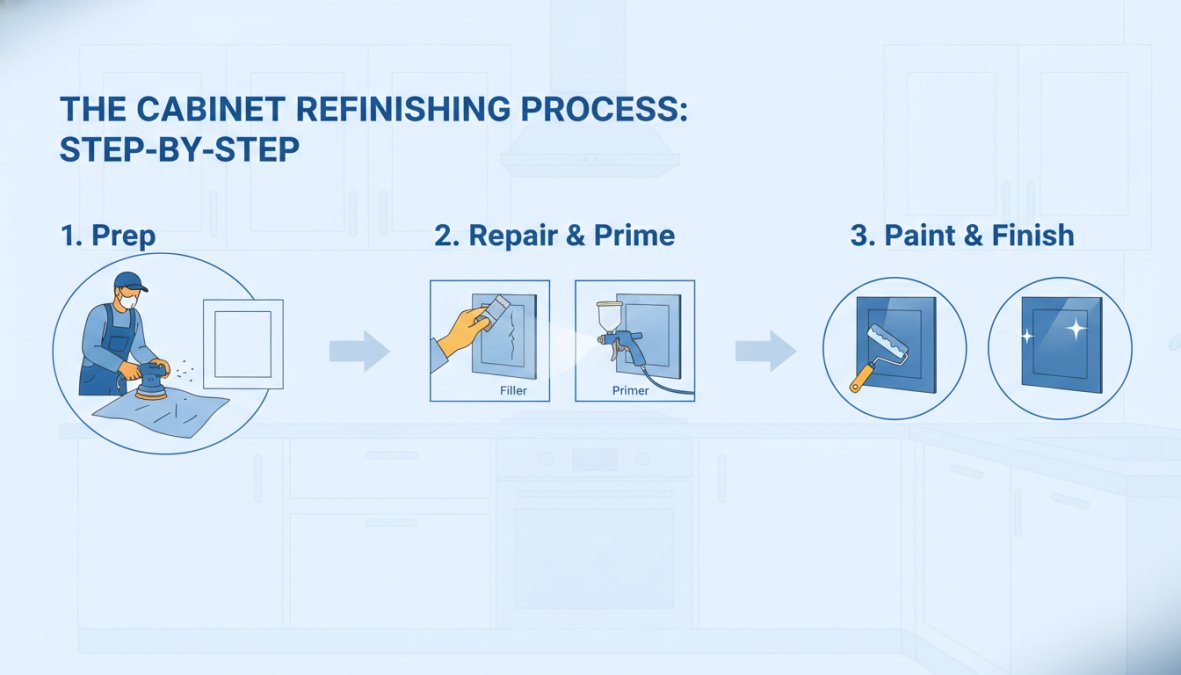
Surface Preparation and Degreasing
Cabinet doors, drawer fronts, and hardware are carefully removed and labeled for reinstallation. The cabinet boxes are then cleaned thoroughly using degreasing solutions to remove years of cooking residue and grime.
Degreasing is non-negotiable. Without it, primer and paint won’t adhere properly, leading to peeling within months. Professional contractors use commercial-grade degreasers and allow adequate drying time before sanding. This stage typically takes 1-2 days.
Sanding and Wood Restoration
Once surfaces are clean and dry, sanding begins using progressively finer grits: 80-120 grit to remove the old finish, 150-180 grit for smoothing, and 220 grit for a fine surface ready for primer. The goal is to create a uniform, dull surface that accepts primer evenly.
Sanding also addresses minor cabinet dings. Small imperfections are filled with wood filler, sanded smooth, and blended with the surrounding surface. Sanding typically takes 2-4 days depending on the number of cabinet doors and extent of damage.
Improper sanding can damage veneer or laminate cabinets. Sanding too aggressively breaks through veneer layers, and laminate doesn’t sand well at all. This is where professional expertise prevents costly mistakes.
Primer, Paint, and Clear Coat Application
After sanding, a bonding primer is applied to create a stable base for topcoats. For laminate or veneer cabinets, bonding primers are especially critical because they’re formulated to stick to surfaces that normally reject paint.
Once primer dries, the first coat of paint or stain is applied. Professional painters use paint-grade finishes for most cabinet work, delivering consistent color and durability. Two to three thin coats ensure full coverage and uniform color.
The final step is a clear coat, typically polyurethane or lacquer, that protects the paint and provides durability against kitchen wear. Clear coats also determine finish sheen: matte for a modern look, satin for versatility, or semi-gloss for easy cleaning. The entire painting and coating process takes 5-7 days, including drying time between coats.
Cost of Cabinet Refinishing: Pricing Breakdown
Cabinet refinishing costs vary based on kitchen size, cabinet material, finish complexity, and regional labor rates. A typical kitchen with 15-20 cabinet doors and drawer fronts costs between $2,500 and $5,000. Smaller bathrooms might run $1,200-$2,500, while large custom kitchens can exceed $7,000.

Factors that increase costs include high-end paint or specialty finishes, extensive wood restoration, complex kitchen layouts, glazing or multi-color finishes, and premium clear coat options. Factors that decrease costs include simple single-color finishes, cabinets in good condition, accessible kitchen layouts, and standard paint grades.
ROI and Resale Value Impact
Cabinet refinishing delivers strong return on investment. A $4,000 refinishing project typically increases home value by $6,000-$8,000, yielding a 150-200% ROI. This outpaces many kitchen renovations in terms of cost-to-value ratio.
The resale value benefit stems from the visual impact of updated cabinetry. Potential buyers see a refreshed, move-in-ready kitchen rather than dated cabinets. A kitchen with refinished cabinets in current colors signals that the home has been well-maintained.
Cabinet refinishing typically costs 40-60% less than replacement while delivering comparable visual transformation. For most homeowners, this cost advantage makes refinishing the logical first choice.
DIY Cabinet Refinishing Steps vs. Professional Services
The decision to refinish cabinets yourself or hire professionals depends on your skill level, available time, and tolerance for risk.
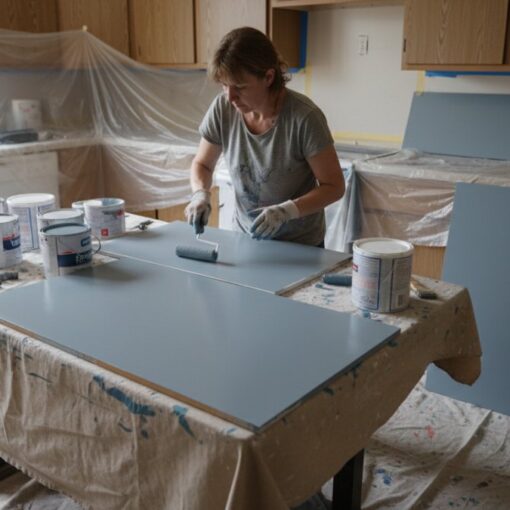
DIY cabinet refinishing requires patience, proper equipment, and attention to detail. The process mirrors professional work: remove doors and hardware, degrease, sand progressively, apply primer, paint in thin coats, and apply clear coat. Most DIY projects take 3-4 weeks of part-time work spread over 4-6 weeks.
The advantage of DIY is cost savings, materials might run $500-$1,200 compared to $2,500-$5,000 for professional labor. The disadvantage is execution risk. Improper sanding damages veneer, inadequate degreasing causes paint failure, and uneven paint application creates visible lap marks.
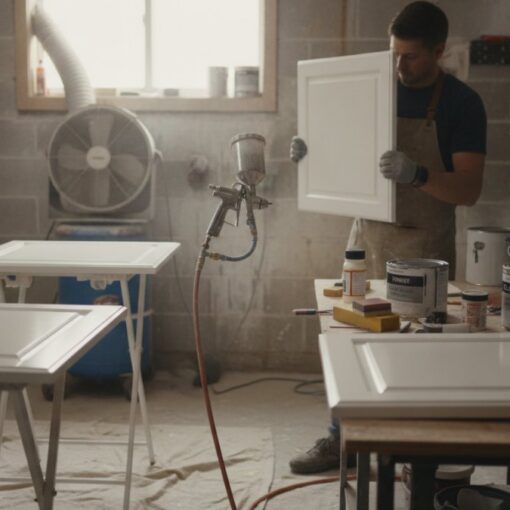
Professional refinishing guarantees quality through experience, proper equipment, and commercial-grade materials. Professional contractors complete projects faster, typically 7-14 days compared to 4-6 weeks for DIY, because they work systematically with specialized tools like spray equipment that produces smoother finishes.
Common Mistakes and Troubleshooting
Inadequate sanding is the most common error. Rushing through sanding leaves a surface that won’t hold paint. Paint peels within months because it never properly adhered. Fix: sand systematically with progressively finer grits, ending at 220 grit or higher.
Skipping degreasing leads to paint failure. Grease creates a barrier between primer and substrate. Fix: use commercial-grade degreasers and allow full drying time.
Applying thick paint coats instead of multiple thin coats causes drips and uneven drying. Fix: apply 2-3 thin coats rather than one heavy coat.
Inadequate primer on laminate or veneer cabinets results in poor adhesion. Fix: use bonding primer specifically formulated for laminate or veneer.
Improper ventilation creates dust contamination and incomplete curing. Fix: isolate the work area with plastic sheeting and run fans for air circulation.
Rushing drying time between coats compromises adhesion. Fix: follow paint manufacturer recommendations for drying time.
How to Choose a Cabinet Refinishing Company
Selecting the right contractor determines whether your refinishing project succeeds or disappoints.
Experience and specialization matter. Look for companies that focus specifically on cabinet refinishing. Specialized contractors understand cabinet materials, finish options, and kitchen-specific challenges. Ask how long the company has been refinishing cabinets and request examples of completed projects.
Check references and reviews. Request at least three references from recent projects and call them. Ask about finish quality, whether the project stayed on schedule, and how the contractor handled unexpected issues.
Verify credentials and insurance. Confirm that the contractor is licensed, bonded, and carries liability insurance. Ask about their process for protecting your home during refinishing.
Get detailed written estimates. A good estimate specifies the scope of work, materials, timeline, and warranty. It should break down costs by phase and explain what’s included and excluded.
Discuss finish options and durability. Different paints and clear coats offer different durability levels. Conversion varnish and catalyzed lacquers are more durable than standard polyurethane but cost more. The contractor should explain trade-offs and recommend finishes appropriate for your kitchen’s use level.
Confirm warranty coverage. Professional contractors typically warrant their work for 1-3 years against peeling, flaking, or color fading under normal conditions.
Benefits of Cabinet Refinishing and Environmental Considerations
Cabinet refinishing delivers multiple benefits beyond aesthetic transformation. Cost-effectiveness is the primary advantage, refinishing costs 40-60% less than replacement while achieving comparable visual impact. Speed of completion matters for busy households; refinishing typically takes 7-14 days compared to 3-6 weeks for replacement. Customization and style flexibility have expanded dramatically, with modern cabinet paints available in virtually any color. Preservation of existing layout appeals to homeowners satisfied with their kitchen’s configuration but tired of its appearance.
Environmental Impact and VOCs
Cabinet refinishing has lower environmental impact than replacement because it preserves existing cabinetry and avoids waste. However, finishing materials carry environmental considerations.
Traditional cabinet paints contain volatile organic compounds (VOCs), solvents that evaporate during application and curing. Professional contractors increasingly use low-VOC or zero-VOC paint options that minimize off-gassing while maintaining durability and appearance. Low-VOC paints perform comparably to traditional options and cost only slightly more.
If air quality concerns you, request low-VOC or zero-VOC paint options. These eliminate harsh chemical odors and are safer for families with children or pets.
Signs Your Cabinets Need Refinishing
Visible wear and fading signal that cabinet finishes are deteriorating. If cabinet doors look dull, faded, or uneven in color, refinishing restores a fresh appearance.
Peeling, flaking, or chipping paint indicates finish failure. When paint peels away, it’s a sign that the original finish is failing from poor application, inadequate preparation, or age. Refinishing addresses the root cause.
Sticky or difficult-to-open drawers often result from paint buildup or warping. Refinishing and proper hardware adjustment can restore function.
Outdated style or color is the most common reason homeowners refinish. If cabinets are structurally sound but visually dated, refinishing updates them to current styles.
Water damage or minor staining can sometimes be addressed through refinishing. Surface stains often disappear with sanding and repainting. However, if water damage has caused structural warping, cabinet replacement may be necessary.
The best time to refinish is when cabinets are structurally sound but visually tired. If the cabinet boxes are solid, hinges work smoothly, and there’s no water damage, refinishing delivers excellent results.
Cabinet refinishing transforms kitchens and bathrooms without the disruption and expense of full replacement. Whether you’re updating an outdated kitchen, preparing to sell your home, or simply refreshing a tired space, refinishing offers excellent value and dramatic visual impact.
Frequently Asked Questions
What is the difference between cabinet refinishing and refacing?
Cabinet refinishing involves sanding, priming, and repainting existing cabinet boxes and drawer fronts to refresh the finish and appearance. Cabinet refacing replaces cabinet doors and drawer fronts while keeping the cabinet framework intact. Refinishing is more cost-effective for cosmetic updates, while refacing works better when cabinet boxes are structurally sound but doors are damaged. Both are more affordable than full cabinet replacement.
How long does cabinet refinishing last?
Professional cabinet refinishing typically lasts 5-10 years with proper maintenance, depending on finish durability and kitchen use. High-quality polyurethane or lacquer topcoats provide better longevity than basic paint finishes. The lifespan depends on how well the surface preparation was done, the quality of primer and paint used, and how well you care for your cabinets. Regular cleaning and avoiding excessive moisture extends the life significantly.
Can you refinish any type of cabinet?
Most cabinet materials can be refinished, including solid wood, veneer, laminate, and paint-grade surfaces. However, laminate requires special bonding primer to ensure proper adhesion, and veneer needs careful sanding to avoid damage. Particle board and MDF cabinets can be refinished but are more prone to moisture damage. Material compatibility is crucial, your contractor should assess your specific cabinet type before recommending a refinishing approach.
Is cabinet refinishing worth the cost?
Cabinet refinishing offers excellent ROI, typically returning 50-80% of its cost in home resale value while transforming your kitchen's appearance. It costs significantly less than replacement, usually 25-50% of new cabinet costs, and eliminates the need for a full kitchen remodel. For homeowners wanting a cost-effective aesthetic update without the expense of replacement, refinishing is worth the investment, especially if your cabinets are structurally sound but outdated.
This article was written using GrandRanker