Table of Contents
- Why Finish Selection Matters for High-Traffic Kitchens
- How We Evaluated the 5 Best Cabinet Paint Finishes
- 1. Benjamin Moore Advance: The Factory-Finish Standard
- 2. Sherwin-Williams Emerald Urethane Trim Enamel: Maximum Durability
- 3. General Finishes Enduro White Poly: Professional-Grade Protection
- 4. PPG BREAK-THROUGH: Fast-Drying Acrylic Enamel for Quick Turnaround
- 5. Fine Paints of Europe Hollandlac: Ultra-Premium High-Gloss Option
- Satin vs. Semi-Gloss vs. Gloss: Sheen Levels Explained
Last Updated: June 27, 2026
When selecting cabinet paint for high-traffic kitchens, the difference between a finish that lasts five years and one that fails in two comes down to understanding specific performance characteristics. Most homeowners approach this decision backwards, starting with aesthetics and hoping durability follows. A finish that looks flawless on day one but can’t withstand daily hand oils, heat cycles, and aggressive cleaning becomes a frustration and expense. This guide walks you through the technical and practical differences between top performers, so you can make a choice backed by real performance data rather than marketing claims.
According to Sherwin-Williams professional cabinet finishing guidelines, cabinet finish durability depends equally on paint chemistry, surface preparation, and application technique. Most failures stem not from the paint itself but from skipped prep steps or unrealistic expectations about curing time.
Why Finish Selection Matters for High-Traffic Kitchens
Kitchens are combat zones for paint. Heat from cooking, moisture from dishwashing, grease from stovetops, and constant hand contact expose weaknesses in inferior finishes within months. Cabinet refinishing is expensive, a full kitchen typically costs several thousand dollars for professional work, and failure means either living with damaged cabinets or investing again.
The right finish resists thermal cycling without cracking, grease without softening, repeated cleaning without losing sheen, and hand oils without permanent marking. This is why waterborne alkyds, urethane-modified enamels, and conversion varnishes dominate professional cabinet shops.
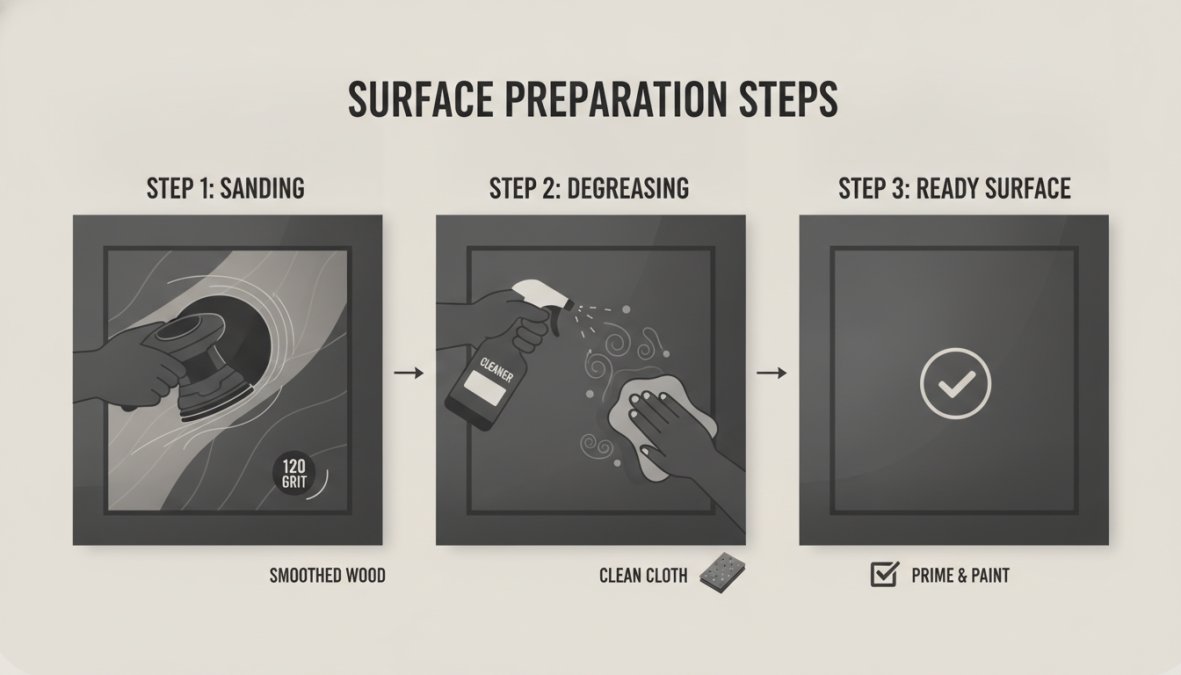
Surface preparation determines 70% of cabinet finish success. Even the best paint fails on poorly sanded or inadequately degreased wood. Most DIY failures aren’t paint failures, they’re prep failures.
How We Evaluated the 5 Best Cabinet Paint Finishes
Selecting top cabinet finishes requires weighing four critical factors beyond aesthetics.
Durability and Scrubbability Standards
Durability in kitchen cabinets means resistance to hand oils and fingerprints without permanent marking, the ability to withstand repeated scrubbing with household cleaners without losing gloss or color, and thermal stability through temperature swings. Professional finishes are tested using standardized methods: the Taber abrasion test measures resistance to wear, cross-hatch adhesion tests ensure proper bonding, and blocking resistance tests confirm the finish won’t stick to itself under heat and humidity.
VOC Safety and Environmental Impact
Water-based finishes have become the default for residential cabinet painting. Volatile organic compounds (VOCs) in oil-based paints off-gas into your kitchen for weeks or months after application. Modern waterborne alkyds and urethane enamels deliver the durability of traditional oil-based products with VOC levels low enough to be safe for occupied homes.
EPA guidelines on indoor air quality and paint products recommend finishes with less than 50 grams per liter of VOC for interior residential use.
Touch-Up Repairability and Cost-Per-Square-Foot
A finish is only as good as your ability to repair it when damage occurs. Waterborne alkyds like Benjamin Moore Advance are notoriously forgiving, you can touch up a year later and the repair is nearly invisible. A gallon of premium cabinet paint covers roughly 350-400 square feet per coat. Professional-grade products cost more per gallon but often require fewer coats due to better coverage and adhesion, offsetting the per-gallon price difference.
1. Benjamin Moore Advance: The Factory-Finish Standard
Benjamin Moore Advance is the closest match available to factory-applied paint. This waterborne alkyd formula delivers the flow and leveling characteristics of traditional oil-based enamels without the odor, cleanup hassles, or VOC concerns. Advance cures to a harder finish than most water-based acrylics because the alkyd resin component continues hardening for weeks after application. You must avoid heavy use for at least two weeks and wait a full month before the finish reaches maximum hardness. The finish resists yellowing and maintains its gloss level through repeated cleaning. Touch-ups blend remarkably well even months after the original application.
Why Waterborne Alkyd Outperforms Traditional Acrylics
Acrylic enamels are 100% acrylic resin suspended in water. When water evaporates, acrylic particles fuse together. They’re durable and low-VOC but remain slightly softer than alkyds.
Waterborne alkyds are alkyd resin dispersed in water. When water evaporates, the alkyd resin continues to oxidize and cross-link chemically, creating a harder, more durable film. For cabinets in high-traffic kitchens, this difference is measurable and real. The tradeoff is that Advance requires more careful application and has a longer open time, which requires patience and technique.
Benjamin Moore Advance is the best choice for homeowners prioritizing a factory-like finish and long-term durability. Plan for a 30-day cure period before heavy use.
2. Sherwin-Williams Emerald Urethane Trim Enamel: Maximum Durability
Sherwin-Williams Emerald Urethane Trim Enamel prioritizes extreme durability. This urethane-modified alkyd enamel is engineered for maximum hardness and scuff resistance. Emerald cures harder and faster than Advance, reaching usable hardness in about one week. It resists scuffs and scratches better than any water-based option and maintains its gloss even after aggressive cleaning. The finish is available in multiple sheen levels (satin, semi-gloss, gloss), giving you flexibility while maintaining the durability advantage.

Two-Component Polyurethane Advantages in High-Traffic Areas
Two-component polyurethanes represent the highest durability tier. Two separate components are mixed immediately before application, then begin a chemical reaction that creates an extremely hard, durable finish. They cure faster than single-component products and achieve higher hardness, the standard in commercial kitchens and high-end residential work. The tradeoff is complexity: you must measure and mix accurately, work quickly before the mixture hardens, and manage cleanup with specific solvents.
3. General Finishes Enduro White Poly: Professional-Grade Protection
General Finishes Enduro White Poly is a professional-grade, water-based topcoat designed specifically for cabinet and furniture finishing. It’s the choice of cabinet shops who prioritize consistency, durability, and finish quality. The product is engineered for spray application and flows beautifully when sprayed but is challenging to brush or roll smoothly.
Enduro Poly cures to an extremely hard, durable finish through urethane and acrylic chemistry. It resists chemicals, wear, and thermal cycling better than single-component products and is self-sealing, meaning you can often apply it directly to properly prepared wood without a separate primer.
Conversion Varnish Technology for Industrial Durability
Conversion varnishes cure through a chemical reaction between resin and catalyst, creating an extremely hard, durable finish. Pre-catalyzed lacquers and conversion varnishes are the gold standard in commercial and high-end residential cabinet finishing. They resist chemicals, moisture, and wear better than any other category. The disadvantage is application complexity and cost, they’re not practical for DIY work.
4. PPG BREAK-THROUGH: Fast-Drying Acrylic Enamel for Quick Turnaround
When speed is the priority, PPG BREAK-THROUGH delivers. This water-based acrylic enamel is engineered for rapid drying and early recoat time. It’s tack-free in about one hour and can be recoated after four hours, compared to Advance’s 16-hour recoat window. BREAK-THROUGH sacrifices some long-term hardness of alkyd-based products in exchange for speed, but it’s still durable and suitable for high-traffic kitchens.
The product excels at adhesion to difficult substrates, laminate, tile, and previously painted surfaces, where other products sometimes fail. If you’re painting over existing cabinets or non-ideal surfaces, BREAK-THROUGH’s adhesion advantage can be decisive.
5. Fine Paints of Europe Hollandlac: Ultra-Premium High-Gloss Option
Fine Paints of Europe Hollandlac Brilliant is for projects where appearance is paramount and budget is secondary. This premium oil-based enamel is known for an almost mirror-like gloss finish and exceptional depth of color. It cures to an extremely hard, durable finish and resists yellowing better than many traditional oil-based enamels.
The high-gloss finish (approximately 98 gloss units) is stunning but shows every fingerprint and dust particle, requiring frequent cleaning to maintain appearance. The product requires oil-based cleanup, proper ventilation, and careful application technique. It’s not practical for DIY work, but professional painters can achieve results that water-based finishes cannot match in terms of depth and gloss.
Satin vs. Semi-Gloss vs. Gloss: Sheen Levels Explained
The sheen level of your cabinet finish affects both appearance and practical performance.
Satin finishes (approximately 25-35 gloss units) offer a soft, elegant appearance that hides dust, fingerprints, and minor imperfections. They’re forgiving of application technique but slightly less durable and harder to clean than semi-gloss.
Semi-gloss finishes (approximately 50-70 gloss units) are the traditional choice for kitchen cabinets because they balance appearance with durability and cleanability. Most professional cabinet work uses semi-gloss.
Gloss finishes (approximately 85+ gloss units) deliver maximum visual impact and are easiest to clean, but they show every imperfection and require flawless application.
Matte finishes (approximately 0-10 gloss units) have become trendy but are problematic for kitchen cabinets. They’re extremely difficult to clean without showing marks and harder to touch up without visible repairs. Consider a satin finish instead for a soft, contemporary aesthetic while remaining practical for kitchen use.
| Sheen Level | Gloss Units | Best For | Durability | Cleanability | Touch-Up Visibility |
|---|---|---|---|---|---|
| Matte | 0-10 | Display kitchens only | Lower | Poor | Very visible |
| Satin | 25-35 | Secondary cabinets, formal settings | Good | Good | Somewhat visible |
| Semi-Gloss | 50-70 | Primary cabinets, high-traffic areas | Excellent | Excellent | Minimal |
| Gloss | 85+ | Statement pieces, formal kitchens | Excellent | Excellent | Minimal |
Surface Preparation: The Foundation of Cabinet Paint Durability
The best paint in the world fails on poorly prepared surfaces. Surface preparation determines whether your finish lasts five years or fifteen.
Proper preparation begins with degreasing. Kitchens accumulate grease and cooking residue on cabinet surfaces, and paint won’t adhere to grease. Professional cabinet painters use TSP (trisodium phosphate) or commercial degreaser to remove all grease and grime. After degreasing, surfaces must be sanded with 120-150 grit sandpaper, creating a surface texture that paint can grip. Finally, surfaces must be primed with a quality bonding primer to ensure paint adheres properly to wood, existing finishes, and difficult substrates.
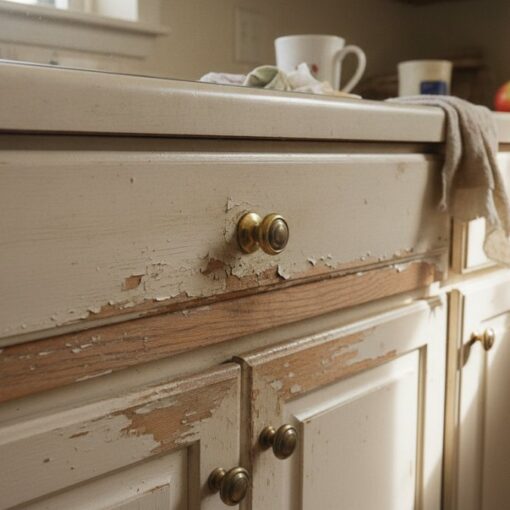
Skipping primer on previously painted cabinets or non-wood surfaces is the most common DIY mistake. Paint may appear to adhere initially but will peel within months when it encounters moisture or thermal stress.
Professional vs. DIY Cabinet Painting: Understanding the Cost-Per-Square-Foot Reality
A typical kitchen with 15 linear feet of cabinets includes approximately 300-400 square feet of paintable surface. Professional cabinet painting typically costs between $3,000 and $6,000, depending on location, complexity, and finish quality, approximately $8-15 per square foot for labor and materials.
DIY painting reduces labor cost to zero, but material costs remain similar. A gallon of quality cabinet paint costs $40-80 and covers 350-400 square feet per coat. For a typical kitchen, you’ll need 2-3 gallons total, costing $120-240 in materials. The real cost difference is time and skill. Professional painters achieve superior results because they have proper equipment, experience with application technique, and the ability to manage cure times and environmental conditions.
Environmental and VOC Safety: Why Kitchen Cabinets Demand Low-VOC Finishes
Volatile organic compounds off-gas from paint into your indoor air for weeks or months after application. In a kitchen where you prepare food, this matters. Modern waterborne cabinet finishes have VOC levels below 50 grams per liter, making them safe for occupied homes. Traditional oil-based enamels often exceed 400 grams per liter. If you choose an oil-based finish, plan for extended ventilation and temporary relocation during the curing period.
California Air Resources Board VOC standards for architectural coatings set the regulatory standard for low-VOC finishes. Any product meeting California’s VOC limits is safe for residential use.
Touch-Up Repairability: Which Finishes Blend Seamlessly
Not all cabinet finishes are equally easy to repair. Waterborne alkyds like Benjamin Moore Advance are the most forgiving. You can touch up a year later, and the repair is nearly invisible because the finish continues to cure and blend over time.
Two-component polyurethanes and conversion varnishes are less forgiving. Once they cure, they’re extremely hard and don’t blend as readily with fresh paint. Acrylic enamels like PPG BREAK-THROUGH fall in the middle: they’re reasonably blendable for touch-ups but not as forgiving as alkyds.
Selecting the right cabinet paint finish for a high-traffic kitchen requires balancing durability, appearance, VOC safety, and maintenance demands. The 5 best cabinet paint finishes, Benjamin Moore Advance, Sherwin-Williams Emerald, General Finishes Enduro, PPG BREAK-THROUGH, and Fine Paints of Europe Hollandlac, each excel in different priorities. For most homeowners, Benjamin Moore Advance or Sherwin-Williams Emerald deliver the best combination of durability, appearance, and practicality. If you’re uncertain about application technique or surface preparation, professional cabinet painting ensures results that last.
Frequently Asked Questions
What is the most durable paint finish for kitchen cabinets in high-traffic areas?
For maximum durability in high-traffic kitchens, waterborne alkyd enamels like Benjamin Moore Advance and Sherwin-Williams Emerald Urethane Trim Enamel lead the market. These finishes combine exceptional hardness, scuff resistance, and moisture resistance. Two-component polyurethane and conversion varnish systems offer even greater durability for professional applications. The finish's durability depends equally on surface preparation, curing time, and the topcoat application method, professional spray application typically outperforms brush or roller application.
Is semi-gloss or satin better for high-traffic kitchen cabinets?
Semi-gloss finishes offer superior scrubbability and grease resistance, making them ideal for high-traffic kitchens where frequent cleaning is necessary. Satin finishes provide a softer appearance while still delivering good durability and easier touch-up repairability. Semi-gloss shows fingerprints more readily but cleans more easily with household cleaners. For kitchens with children or heavy cooking, semi-gloss is typically the better choice; satin works well if you prioritize aesthetics over maximum cleanability.
How do you prep cabinets for painting to ensure the finish lasts?
Proper surface preparation is critical for cabinet paint longevity. Start by degreasing all surfaces with a TSP (trisodium phosphate) solution to remove kitchen oils and grime. Sand with 120-150 grit sandpaper to improve adhesion, then fill any gaps or imperfections. Apply a high-quality bonding primer, essential for laminate or previously painted cabinets. Ensure proper curing time between primer and topcoat applications. Meticulous preparation directly impacts how well the topcoat adheres and resists peeling or chipping in high-traffic areas.
Do I need a top coat over painted kitchen cabinets?
Most cabinet paints function as both base and topcoat, but adding a separate protective topcoat, such as a conversion varnish or water-based polyurethane, significantly extends durability in high-traffic kitchens. Professional finishers often apply multiple thin coats rather than a single thick coat. For DIY projects, premium single-component enamels like Benjamin Moore Advance provide adequate protection without an additional topcoat. However, a topcoat is recommended if cabinets will experience heavy use, frequent cleaning, or exposure to moisture.
What paint finish is best for kitchen cabinets that get heavy daily use?
For cabinets experiencing heavy daily use, waterborne alkyd enamels and urethane-modified products are the industry standard. Sherwin-Williams Emerald and Benjamin Moore Advance both deliver factory-like finishes with exceptional hardness and grease resistance. Professional-grade systems like General Finishes Enduro White Poly offer superior durability but require spray application. The sheen level matters too: semi-gloss provides maximum scrubbability for frequent cleaning, while satin offers a balance of durability and aesthetics. Budget-conscious options like Behr Premium Urethane Alkyd provide solid performance at lower cost.
This article was written using GrandRanker