Table of Contents
- How Long Does Cabinet Painting Last on Average?
- Key Factors That Determine How Long Cabinet Painting Lasts
- Best Paint for Kitchen Cabinets and Long-Term Durability
- Professional vs DIY Cabinet Painting Durability: What the Difference Really Costs You
- Signs It Is Time to Repaint Cabinets Before More Damage Sets In
- How to Clean Painted Cabinets to Maximize Their Lifespan
- Tips for Extending the Life of Your Cabinet Paint Finish
- Conclusion
Last Updated: June 8, 2026
Cabinet painting is one of the most cost-effective kitchen upgrades available, but the question of how long does cabinet painting last stops many homeowners before they even start. The answer depends heavily on preparation quality, paint selection, and how hard your kitchen works every day. At Denver Cabinet Painting Colorado, we have spent 40 years answering this exact question for homeowners and commercial clients across the Denver metro area. Below, we break down every factor that determines longevity, which paint types hold up longest, and what you can do starting today to get the most out of your finish.
How Long Does Cabinet Painting Last on Average?
Cabinet painting lasts between 8 and 15 years under typical residential conditions when done correctly. That range reflects the genuine spread between a professionally prepared, high-quality finish on low-traffic cabinets and a rushed DIY job on cabinets opened dozens of times a day.
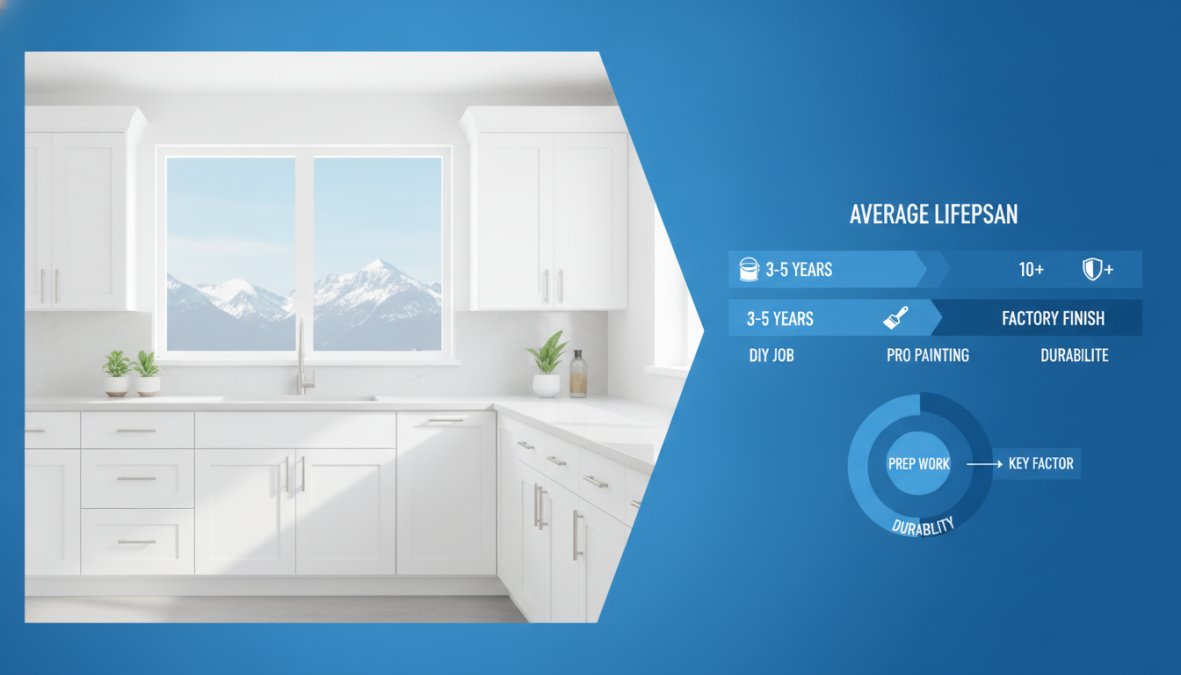
The 8-year floor assumes decent prep, a quality paint product, and normal use. The 15-year ceiling requires meticulous surface preparation, a durable topcoat, and a kitchen that does not double as a steam room. Many professionally painted cabinets fall in the 10-to-12-year range before needing anything more than a touch-up.
Cabinet painting lifespan is not a fixed value, it is the output of several variables working together. A beautifully applied finish on poorly cleaned wood will start peeling within two years. The same paint on properly sanded, primed, and degreased surfaces can look showroom-fresh for a decade.
The most important insight about cabinet paint lifespan: professional preparation matters more than the paint brand. A premium paint on poorly prepped cabinets will fail faster than a mid-grade paint on perfectly prepped ones.
According to guidance from the Paint Quality Institute, surface preparation accounts for the majority of a paint job’s long-term performance, a finding that aligns with everything we see in practice.
Key Factors That Determine How Long Cabinet Painting Lasts
Most homeowners focus on the paint. Professionals focus on everything that happens before the paint goes on.
Surface Preparation: The Single Biggest Variable
Surface preparation is the single most influential factor in how long a cabinet paint job lasts. It includes cleaning, degreasing, sanding, and priming. Miss any one of these steps and you introduce a failure point that no premium paint can overcome.
Kitchen cabinets accumulate grease, cooking residue, and cleaning product buildup over years of use. Paint applied over that contamination does not bond properly, resulting in peeling, chipping, or bubbling that starts at the edges and spreads inward. Proper degreasing with a TSP substitute removes that barrier and lets the primer grip the wood directly. Sanding scuffs the surface for mechanical adhesion and removes gloss from existing finishes. On previously painted or factory-finished cabinets, skipping this step is the fastest way to shorten your cabinet paint lifespan. A high-adhesion primer then seals the substrate, blocks tannin bleed, and gives the topcoat a uniform base to bond to.
- Clean with a degreaser, not just soap and water
- Sand with 120-150 grit, then 220 grit before topcoat
- Use a bonding or high-adhesion primer on all surfaces
- Allow each coat to cure fully before applying the next
Kitchen Environment and Daily Usage
The kitchen is one of the harshest environments in any home for a painted surface. Heat, steam, humidity fluctuations, airborne grease, and the mechanical stress of opening and closing doors dozens of times daily all degrade a finish faster than almost any other residential setting.
Cabinets near the stove or dishwasher face the most aggressive conditions. Steam and heat cycling cause paint to expand and contract repeatedly, eventually cracking joints and edges. A range hood that vents to the exterior, rather than recirculating air, is one of the best investments you can make for your cabinet finish. High-traffic kitchens with children or multiple daily users will see wear on the cabinet painting durability timeline two to three years faster than a similar finish in a low-traffic home.
Best Paint for Kitchen Cabinets and Long-Term Durability
Choosing the best paint for kitchen cabinets is where most DIYers make their second-biggest mistake, right after skipping prep.

Alkyd vs. Latex vs. Acrylic: Which Holds Up Longest?
The best paint for kitchen cabinets in terms of durability is a waterborne alkyd or a high-quality acrylic enamel.
| Paint Type | Durability | Dry Time | VOC Level | Best For |
|---|---|---|---|---|
| Waterborne Alkyd | Excellent | 16-24 hrs | Low-Medium | Kitchen cabinets, high traffic |
| Oil-Based Alkyd | Excellent | 24-48 hrs | High | Maximum hardness, ventilated spaces |
| Acrylic Enamel | Very Good | 4-6 hrs | Low | DIY-friendly, fast turnaround |
| Standard Latex | Fair | 2-4 hrs | Low | Walls, not ideal for cabinets |
Waterborne alkyd paints combine the hardness and leveling qualities of traditional oil-based paint with the low VOC profile and easy cleanup of water-based products. They cure to a very hard film that resists chipping, blocking, and yellowing, the professional standard for kitchen cabinets.
Acrylic enamel is a strong second choice, particularly for homeowners painting their own cabinets. Modern formulations offer good hardness, excellent adhesion, and faster recoat times, though they do not level quite as smoothly as alkyds.
Standard latex is the wrong choice for cabinets, full stop. It remains too flexible after curing, causing blocking and easy denting under normal use.
Ask for a paint product with a hardness rating specifically designed for trim and cabinetry, not interior walls. Cabinet-grade products contain harder resins that resist blocking and abrasion.
Professional vs DIY Cabinet Painting Durability: What the Difference Really Costs You
The gap between professional vs DIY cabinet painting durability is larger than most people expect, and it shows up within the first two years.
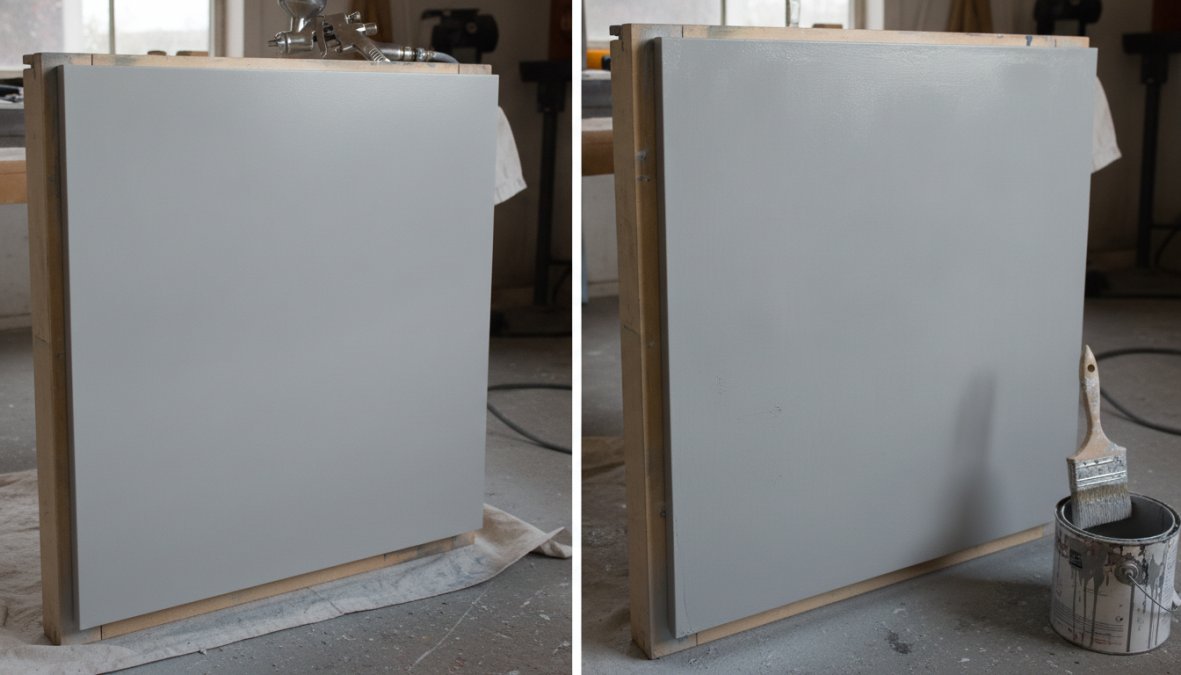
Professional results last longer for three reasons: commercial spray equipment applies paint in thinner, more uniform coats that cure harder; professionals control temperature, humidity, and dust during application; and experienced crews know exactly where shortcuts will fail. DIY cabinet painting can produce a good result, but common failure modes, brush marks, drips, peeling at edges, blocking, typically appear within 18 to 36 months rather than after a decade.
The cost difference is real, but a professional finish lasting 12 years versus a DIY finish needing redoing in four years changes the math entirely. Over a 12-year period, one professional job is almost always less expensive than three DIY attempts. According to the National Association of the Remodeling Industry’s cost vs. value data, kitchen updates that include cabinet refinishing consistently deliver strong returns on investment compared to full cabinet replacement.
Denver Cabinet Painting Colorado’s approach starts with the prep phase, which the team treats as the most critical part of the entire process. With 40 years of experience in Colorado kitchens, the difference between a finish that lasts and one that fails comes down to what happens before the first coat is applied.
Signs It Is Time to Repaint Cabinets Before More Damage Sets In
Knowing the signs it is time to repaint cabinets prevents a cosmetic issue from becoming a structural one. Paint is not just decorative, it seals and protects the wood substrate underneath.
Watch for these warning signs:
- Peeling or flaking paint, especially at door edges and corners, means the bond has broken down and moisture can reach the wood directly.
- Chipping that exposes bare wood or primer at high-contact areas like pulls and hinges indicates the topcoat has worn through.
- Yellowing or discoloration on white or light-colored cabinets near the stove signals heat and grease degradation.
- Blocking, where cabinet doors stick to frames, means the paint has not cured properly or has softened from heat exposure.
- Visible brush marks, orange peel texture, or uneven sheen suggest the original application was low quality.
- Water staining or dark spots under the sink or near the dishwasher indicate moisture intrusion that must be addressed before repainting.
Do not paint over peeling or chipping cabinet paint without removing all loose material first. Painting over existing failure points traps moisture and accelerates the underlying problem. The new coat will fail faster than the original.
The moment you notice peeling at edges, act quickly. Once moisture reaches the substrate, you are no longer dealing with a paint problem, you are dealing with wood swelling, potential mold, and a repair job that costs significantly more than a straightforward repaint.
How to Clean Painted Cabinets to Maximize Their Lifespan
Knowing how to clean painted cabinets properly is one of the most underrated factors in extending a finish’s life. The cleaning products most people use are actively damaging their cabinet paint.
The right approach: warm water and a few drops of mild dish soap on a soft microfiber cloth. Wipe in the direction of the wood grain, rinse with a clean damp cloth, and dry immediately. Do not let water sit on the surface.
What to avoid:
- Abrasive scrubbers scratch the topcoat and create micro-abrasions that trap grease
- All-purpose spray cleaners with ammonia or bleach degrade paint resins and cause discoloration
- Steam cleaners introduce concentrated heat and moisture directly into the paint film
- Citrus-based degreasers are too aggressive for regular use on painted surfaces
For grease buildup near the stove, a diluted solution of white vinegar and water works well without damaging the finish. Apply with a soft cloth, do not spray directly onto the surface, and dry thoroughly after cleaning.
As documented in guidance from the American Coatings Association on paint maintenance, painted surfaces last significantly longer when cleaned with pH-neutral products and kept dry between cleanings.
Tips for Extending the Life of Your Cabinet Paint Finish
The best way to extend the life of painted cabinets combines regular maintenance habits with a few targeted protective measures.
Control moisture aggressively. Run the exhaust fan every time you cook, especially when boiling water or using the dishwasher. Moisture is the primary accelerant of paint failure in kitchens.
Add soft-close hardware. The mechanical impact of cabinet doors slamming chips paint at edges faster than almost anything else. Soft-close hinges and drawer slides reduce that impact to near zero.
Touch up early. A small chip addressed within a few weeks requires a ten-minute fix. The same chip ignored for a year requires sanding, priming, and repainting the entire door. Keep a small jar of touch-up paint from your original project.
Use cabinet liners. Shelf liners inside lower cabinets protect interior paint from the abrasion of pots, pans, and cleaning products.
Inspect annually. Check edges, corners, and areas around hardware once a year. Early detection lets you address problems before they spread.
Avoid hanging wet towels or dish cloths on cabinet doors. Prolonged moisture contact at a single point reliably lifts paint from the substrate.
According to the Environmental Protection Agency’s guidance on indoor air quality and moisture control, maintaining consistent indoor humidity between 30 and 50 percent protects both building materials and interior finishes. The paint type you chose at the start matters here too, a harder, more durable finish resists the daily wear that these habits are designed to manage.
Cabinet paint longevity is not a lottery. It is the predictable result of preparation quality, paint selection, application method, and ongoing care. If your cabinets are showing wear, peeling edges, or a finish that no longer reflects the kitchen you want, the fix does not have to mean full replacement. Denver Cabinet Painting Colorado brings 40 years of experience to every project, with a process built around meticulous preparation and professional application that produces finishes lasting well over a decade. Get a free quote from Denver Cabinet Painting Colorado and find out what a professionally painted kitchen can look like in your home.
Frequently Asked Questions
How long does cabinet painting last with a professional finish?
A professionally painted cabinet finish typically lasts 8 to 15 years when applied with proper surface preparation, high-quality paint, and a durable topcoat. Professionals sand, prime, and apply multiple coats with commercial-grade equipment, which dramatically reduces the risk of peeling, chipping, or fading. Factors like kitchen humidity, cleaning habits, and how often cabinets are opened and closed will influence the upper end of that range. With routine care, many professional finishes remain attractive well beyond a decade.
Why is my cabinet paint peeling after a year?
Peeling within the first year almost always points to inadequate surface preparation. If grease, dust, or old finish wasn't fully removed before painting, the new coat has nothing solid to bond to. Using the wrong primer, skipping primer entirely, or applying paint in high-humidity conditions can produce the same result. Low-quality paint that lacks flexibility will also crack and peel under the expansion and contraction caused by heat and steam in a kitchen environment.
What is the most durable paint for kitchen cabinets?
For kitchen cabinets, water-based alkyd and 100% acrylic paints are widely regarded as the most durable options. Water-based alkyds cure to a hard, scrubbable finish similar to oil-based paint but with easier cleanup and lower VOCs. High-quality acrylic cabinet paints also resist moisture, grease, and daily wear well. Whichever formula you choose, pairing it with a dedicated cabinet primer and a clear protective topcoat will significantly extend the life of the best paint for kitchen cabinets.
How do you make painted cabinets last longer?
The most effective ways to extend cabinet paint life include cleaning spills immediately, using soft cloths instead of abrasive scrubbers, ensuring your kitchen is well-ventilated to reduce steam buildup, and avoiding harsh chemical cleaners. Knowing how to clean painted cabinets correctly, with mild dish soap and warm water, prevents surface degradation. Adding soft-close hinges reduces impact stress on door edges, and touching up small chips promptly stops moisture from working its way under the finish.
Is it better to paint or replace kitchen cabinets?
Painting is generally the more cost-effective choice when cabinet boxes are structurally sound and the layout works for your needs. A professional cabinet painting job can refresh the entire kitchen at a fraction of full replacement cost, and a quality finish can last a decade or more. Replacement makes more sense when cabinets are warped, water-damaged, or when you need a completely different layout. For most Colorado homeowners, professional cabinet painting delivers excellent long-term value without the disruption of a full renovation.
This article was written using GrandRanker