Table of Contents
- Why Cabinet Hardware Matters for Painted Cabinets
- Understanding Cabinet Hardware Types: Knobs vs. Pulls
- Durable Cabinet Hardware Materials for Painted Cabinets
- Best Cabinet Hardware for White Cabinets and Other Paint Colors
- Cabinet Hardware Styles for Painted Cabinets by Kitchen Design
- Cabinet Hardware Placement Guide: Doors, Drawers, and Proportions
- Maintenance and Cleaning Hardware on Newly Painted Cabinets
- Common Mistakes When Choosing Cabinet Hardware for Painted Cabinets
How to Choose Cabinet Hardware for Painted Cabinets
Last Updated: July 22, 2026
Selecting the right hardware for painted cabinets requires balancing aesthetics with durability and functionality. Homeowners investing in cabinet painting projects spend an average of 40% of their budget on finishing details like hardware. The wrong choice can undermine an otherwise flawless paint job. Below, we’ll show you exactly how to choose cabinet hardware for painted cabinets, covering everything from finishes that won’t chip to styles that complement your specific paint color.
Why Cabinet Hardware Matters for Painted Cabinets
Cabinet hardware is the functional anchor point that ties your entire kitchen aesthetic together while enduring daily use. When you paint cabinets, the hardware becomes exponentially more visible against fresh color, so any mismatch in style, finish, or proportion immediately stands out.
Painted cabinets are more vulnerable to wear around hardware than stained wood. The paint finish can chip or crack where screws meet the cabinet surface if the hardware installation isn’t precise or if you choose materials that create stress points. This is why finish selection matters far more for painted cabinetry than for natural wood.
When painting cabinets, always install hardware AFTER the final coat of paint has fully cured (typically 7-14 days). This prevents paint from being disturbed during installation and ensures a clean edge around each piece.
Understanding Cabinet Hardware Types: Knobs vs. Pulls
Cabinet hardware falls into two main categories: knobs and pulls. Each serves different purposes and suits different cabinet styles and user preferences.
Knobs: Style and Functionality
Knobs are single-point fasteners that protrude from the cabinet face. They work well for smaller cabinet doors and upper cabinets where grip strength isn’t the primary concern. Knobs offer a refined, traditional aesthetic and take up minimal visual space. However, they require more wrist rotation to open drawers and doors, which can be uncomfortable for people with arthritis or reduced hand strength. Ceramic knobs with vintage brass finishes anchor a farmhouse aesthetic instantly, while minimalist metal knobs in matte black complement modern painted cabinets beautifully.
Pulls and Handles: Ergonomics and Aesthetics
Pulls (also called handles) span the distance between two screw holes, distributing the opening force across a wider area. This design is more ergonomic, you use your whole hand rather than just fingers, which reduces strain and feels more natural. Bar pulls are the most common choice for modern and contemporary kitchens. For painted cabinets, pulls offer another advantage: they’re less likely to create stress concentrations around the screw holes, reducing the risk of paint chipping at the mounting points.
Avoid oversized pulls on small cabinet doors. A 4-inch pull on a 15-inch-wide door looks disproportionate. Stick to the 1/3 rule: hardware should be roughly one-third the width of the door or drawer face.
Durable Cabinet Hardware Materials for Painted Cabinets
Material selection is where many people make costly mistakes. Not all finishes perform equally on painted cabinets, and some combinations create problems you won’t see until months after installation.
Metal Finishes and Paint Compatibility
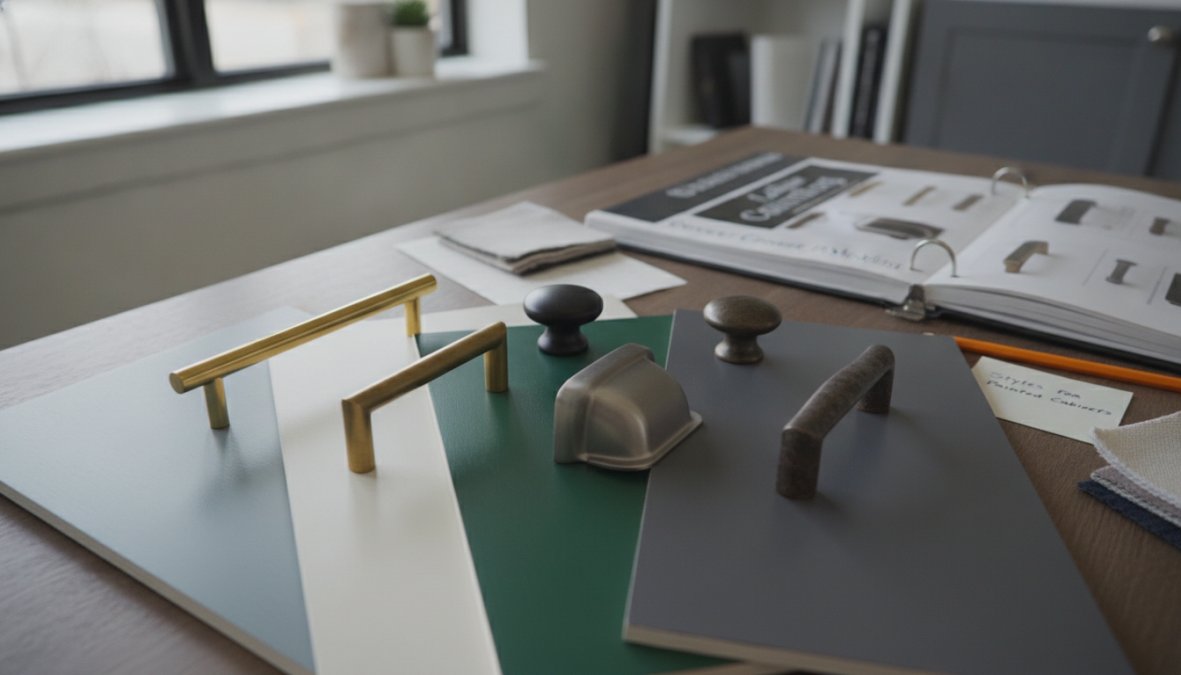
The finish of your hardware must harmonize with your paint color without creating visual tension. Brushed nickel and satin nickel finishes are forgiving choices for painted cabinets. They don’t show fingerprints as readily as polished chrome, they don’t tarnish like brass, and they complement nearly every paint color from white to navy to sage green. Matte black hardware has become increasingly popular for painted cabinets, particularly with white, gray, and navy paint colors, though it requires more frequent cleaning.
Oil-rubbed bronze and aged bronze finishes work beautifully with warm undertones in paint colors. Polished chrome and polished stainless steel finishes are durable but show every fingerprint and water spot, working best in modern kitchens where the reflective quality enhances the aesthetic.
For painted cabinets, brushed finishes (brushed nickel, brushed bronze, brushed stainless) outperform polished finishes because they hide fingerprints, water spots, and dust better while maintaining a contemporary look.
Resistance to Chipping and Wear
Paint chipping around hardware edges is one of the most common complaints about painted cabinets. The best hardware materials are solid brass, stainless steel, and zinc alloy with quality plating. Avoid thin-plated hardware or cheap pot metal, which corrode quickly and expose base metal underneath.
Installation technique matters as much as material quality. If screws are overtightened, they can crack the paint around the mounting hole. Hardware with backplates (decorative plates behind the handle) protect the painted surface around screw holes, concealing damage from installation or normal wear.
Best Cabinet Hardware for White Cabinets and Other Paint Colors
Hardware selection depends partly on your paint color. The relationship between hardware finish and cabinet color either creates harmony or visual discord.
Finishes That Complement White and Neutral Tones
White painted cabinets are the most forgiving for hardware selection. Nearly every finish works with white because white is neutral and reflects light. For crisp, bright whites, brushed nickel and polished chrome create a clean, contemporary look. Matte black hardware on white cabinets creates striking contrast and feels very modern. For warm whites (creams, off-whites), bronze or brass hardware creates visual warmth and sophistication.
Gray painted cabinets pair beautifully with brushed nickel, matte black, or brushed bronze.
Hardware for Bold Paint Colors: Navy, Sage, and Beyond
When you paint cabinets in bold colors, hardware becomes part of the color story. Navy painted cabinets demand hardware that either complements or contrasts deliberately. Brushed brass, polished brass, or warm bronze hardware bring out the richness in navy and prevent the color from feeling cold. Alternatively, matte black hardware creates high-contrast drama on navy.
Sage green painted cabinets pair exceptionally well with brushed brass or warm bronze hardware. The warm metal tones echo the warmth in sage, creating a cohesive, natural aesthetic. Blush, mauve, and other soft jewel-tone painted cabinets benefit from warm brass or rose gold hardware.
Navy painted cabinets with brushed brass or warm bronze hardware create the most sophisticated, timeless aesthetic. This combination works in traditional, transitional, and even modern kitchens depending on cabinet style.
Cabinet Hardware Styles for Painted Cabinets by Kitchen Design
Your kitchen’s overall design style should guide hardware selection. Hardware is one of the few elements visible on every cabinet, so it sets the tone for the entire space.
Modern and Transitional Styles
Modern kitchens demand minimalist hardware with clean lines and understated elegance. Bar pulls in brushed nickel, matte black, or stainless steel are the standard choice. Hardware size should be proportional but not oversized. A 3-4 inch pull on a standard 24-inch cabinet door feels right. Transitional kitchens blend traditional and modern elements, so hardware can be slightly more decorative. For both modern and transitional painted cabinets, consistency matters, use the same hardware style throughout the kitchen.
Traditional and Farmhouse Aesthetics
Traditional kitchens embrace ornamentation and period-appropriate details. Hardware should reflect this. Ceramic knobs with metal accents, decorative cup pulls, or ornate bar pulls suit traditional painted cabinets. Brass and bronze finishes feel most at home in traditional kitchens.
Farmhouse kitchens take a more relaxed approach to tradition. Hardware can be more whimsical: ceramic knobs with hand-painted details, bin pulls, or vintage-inspired hardware in aged finishes. White painted cabinets with ceramic knobs and aged brass accents is the quintessential farmhouse aesthetic.
Cabinet Hardware Placement Guide: Doors, Drawers, and Proportions
Where you place hardware matters as much as what you choose. Improper placement creates visual imbalance and can make cabinets feel awkward to use.
Applying the 1/3 Rule for Sizing
The 1/3 rule states hardware should be roughly one-third the width of the door or drawer face. For a standard 24-inch-wide cabinet door, a 3-4 inch pull is proportional. For a 36-inch door, a 4-6 inch pull works. For narrow doors (15-18 inches), a 2-3 inch pull or small knob is appropriate. Oversized hardware on small doors looks cartoonish, while tiny hardware on large doors gets lost and feels inadequate.
Upper vs. Lower Cabinet Placement Strategies
Centered placement on upper cabinet doors is standard and creates symmetry. For lower cabinets (drawers and doors), many designers place hardware slightly higher than center on drawer fronts, about 2-3 inches from the top. For cabinet doors that span from floor to counter (full-height doors), place hardware roughly 36-42 inches from the floor.
When installing hardware on painted cabinets, use painter’s tape and a pencil to mark screw hole locations. This prevents the drill bit from slipping and damaging the paint. Remove the tape immediately after drilling to prevent paint adhesion.
Maintenance and Cleaning Hardware on Newly Painted Cabinets
Different hardware finishes require different care routines. Understanding how to maintain your hardware prevents premature wear and keeps your painted cabinets looking fresh.
Brushed finishes (brushed nickel, brushed stainless, brushed bronze) are the easiest to maintain. They hide fingerprints and water spots naturally. Clean them monthly with a soft cloth and mild soap and water. For stubborn spots, white vinegar on a cloth removes mineral deposits without damaging the finish.
Polished finishes (polished chrome, polished brass, polished stainless) show every fingerprint and water spot and require weekly cleaning to maintain their shine. Matte black hardware needs regular cleaning to prevent dust accumulation. Oil-rubbed bronze and aged finishes develop patina over time, which is intentional and part of their charm.
For all hardware, avoid abrasive cleaners, scouring pads, and harsh chemicals. Stick to soft cloths, mild soap, water, and gentle commercial cleaners designed for your specific finish type. If paint chips around hardware edges during normal use, touch up the paint promptly with the same paint color and a small brush.
Common Mistakes When Choosing Cabinet Hardware for Painted Cabinets
Most hardware selection mistakes stem from overlooking how painted cabinets interact with hardware differently than stained wood or bare cabinetry.
Paint Chipping Around Hardware Edges
Paint chipping around hardware is frustrating and makes cabinets look worn prematurely. Cheap hardware with thin plating corrodes and expands, creating pressure that cracks surrounding paint. Investing in quality hardware with thick plating prevents this. Overtightening screws during installation is a common cause of chipping. Use a power drill with a clutch setting or hand-tighten screws to prevent this. If you’re updating hardware on previously painted cabinets without repainting, choose hardware with backplates to conceal old screw holes.
Mismatched Finishes and Styles
Mixing hardware finishes throughout the kitchen creates visual chaos, even if both finishes are attractive individually. Consistency doesn’t mean boring, you can use the same finish with different hardware styles, but the finish should be uniform throughout the kitchen. Oversized hardware on small cabinets and undersized hardware on large cabinets is another common error. The 1/3 rule prevents this.
Ignoring Ergonomics and Functionality
Choosing hardware based purely on appearance without considering how it feels to use is a mistake you’ll regret within weeks. Test hardware in person before ordering large quantities. Does it feel natural? Is the grip comfortable? If children or elderly family members use these cabinets frequently, ergonomics matter even more. Pulls are more accessible than knobs for people with reduced hand strength.
| Mistake | Prevention Strategy | Impact |
|---|---|---|
| Paint chipping around hardware | Use quality hardware with solid bases; avoid overtightening screws | Prevents premature wear and maintains cabinet appearance |
| Mismatched finishes | Commit to one finish throughout the kitchen | Creates visual cohesion and professional appearance |
| Wrong hardware size | Apply the 1/3 rule based on door/drawer width | Ensures proportional, balanced aesthetic |
| Poor ergonomics | Test hardware in person before ordering | Improves daily usability and user satisfaction |
| Cheap hardware that corrodes | Invest in brushed or satin finishes with quality plating | Extends hardware lifespan and prevents deterioration |
Choosing the right hardware for painted cabinets requires balancing aesthetics, durability, and functionality. Hardware is one of the most visible and frequently-touched elements of your kitchen, so it deserves careful consideration. Denver Cabinet Painting Colorado has completed hundreds of cabinet painting projects and understands how hardware interacts with fresh paint. Get a free quote from Denver Cabinet Painting Colorado today and let our experts help you select hardware that complements your specific paint color and kitchen style.
Frequently Asked Questions
What color hardware goes best with white painted cabinets?
White cabinets work beautifully with multiple finishes. Brushed nickel and satin nickel create a soft, cohesive look, while matte black or oil-rubbed bronze provides dramatic contrast. Polished chrome offers a classic, clean aesthetic. The best choice depends on your kitchen's overall style, modern kitchens often favor brushed or matte finishes, while traditional spaces suit polished metals. Consider your appliances and lighting fixtures for consistency.
How do I prevent paint chipping around cabinet hardware on painted cabinets?
Paint chipping commonly occurs when hardware is installed directly over fresh paint or when moisture penetrates edges. Ensure paint is fully cured (typically 2-4 weeks) before installation. Use a primer-sealer around mounting holes before final paint application. Apply a thin clear polyurethane around hardware edges for extra protection. When reinstalling hardware on previously painted cabinets, lightly sand around holes, prime, and repaint before securing new hardware to create a durable seal.
What's the best cabinet hardware material for durability on painted cabinets?
Stainless steel, brushed nickel, and oil-rubbed bronze are among the most durable options. Avoid plated finishes that may chip or fade over time. Solid brass and bronze resist corrosion better than lighter metals. For painted cabinets, choose hardware with quality construction and protective coatings. Test hardware compatibility with your specific paint type, some finishes interact differently with certain metals. Soft-close mechanisms add durability by reducing wear from repeated opening and closing.
Can I mix and match different cabinet hardware finishes on painted cabinets?
Yes, but with intention. Mixing finishes works best when you follow a cohesive strategy, for example, pairing brushed nickel pulls on drawers with matte black knobs on upper cabinets. Limit yourself to 2-3 complementary finishes maximum to avoid a cluttered look. Ensure your mixed hardware coordinates with your kitchen's undertones, appliances, and lighting. Modern and transitional kitchens are more forgiving of mixed finishes than traditional spaces. Always test hardware placement before final installation to confirm the aesthetic works with your painted cabinet color.
This article was written using GrandRanker