Table of Contents
- How to Save Money on Kitchen Cabinet Renovations: An Overview
- Refinishing and Painting Cabinets Instead of Replacing Them
- Refacing vs Replacing Kitchen Cabinets: Cost Comparison
- DIY Kitchen Cabinet Renovation Budget: What You Can Handle Yourself
- Affordable Kitchen Cabinet Solutions: Material and Style Choices
- Cheap Kitchen Cabinet Makeover Tips: Strategic Design Choices
- Long-Term Cost Analysis: Which Budget Strategy Actually Saves Money
- Shopping for Deals and Timing Your Cabinet Renovation
Save Money on Kitchen Cabinet Renovations: 7 Proven Strategies
Last Updated: July 21, 2026
How to Save Money on Kitchen Cabinet Renovations: An Overview
Kitchen cabinet renovations typically cost thousands to tens of thousands of dollars. At Denver Cabinet Painting Colorado, we’ve spent 40 years helping homeowners find ways to transform kitchens without breaking the bank. Most assume they must replace cabinets entirely, an assumption that costs thousands in unnecessary expenses. The reality is different: refinishing, refacing, and strategic material choices deliver stunning results at a fraction of replacement costs.
The single biggest cost savings opportunity is choosing the right strategy for your cabinet’s actual condition. Solid wood cabinets from the 1980s often respond beautifully to refinishing. Particle board cabinets might be better candidates for refacing or replacement with budget stock options.
Refinishing and Painting Cabinets Instead of Replacing Them
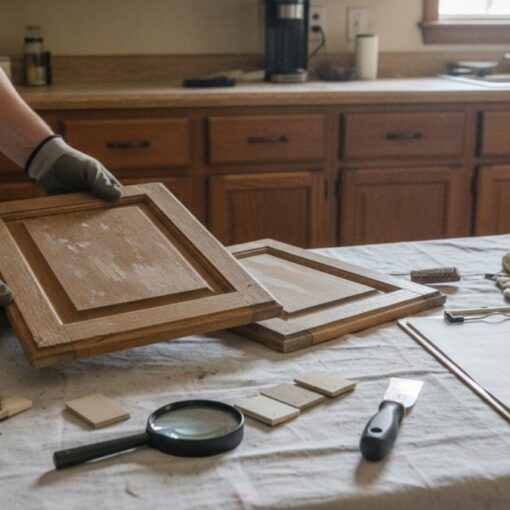
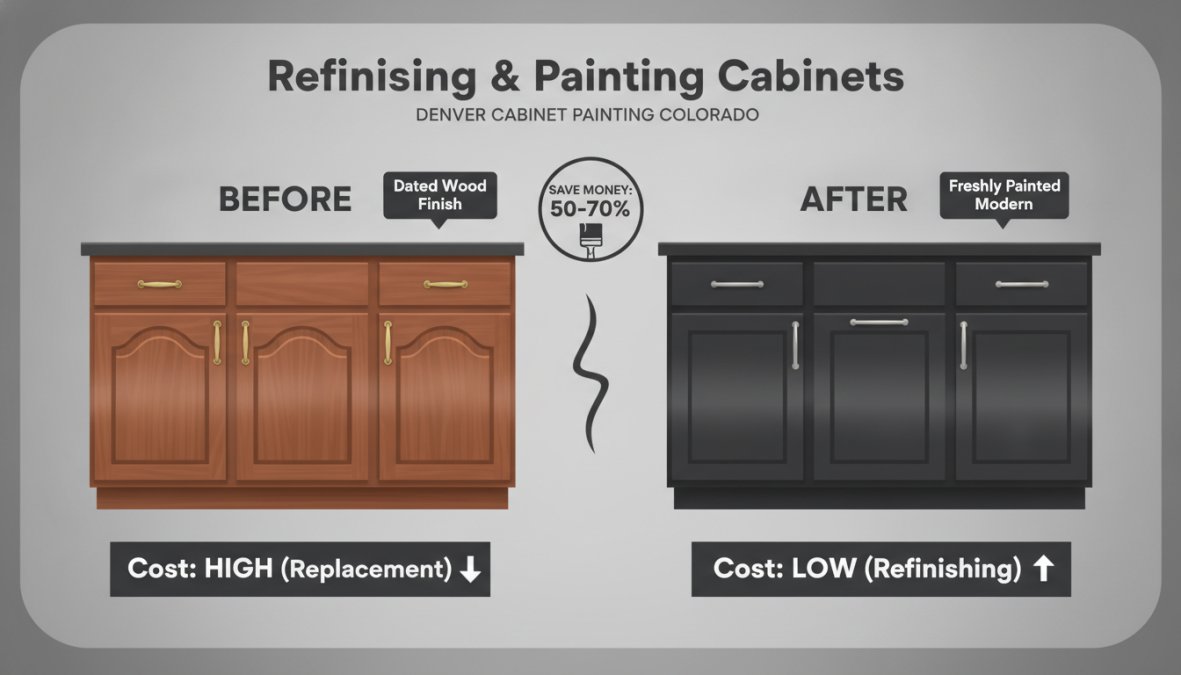
Refinishing existing cabinets costs 50-70% less than replacement while delivering dramatic transformations. The process starts with thorough preparation: doors are removed, hardware is set aside, and every surface gets cleaned and sanded. This preparation phase determines whether your finish lasts five years or fifteen.
After preparation, primer and paint are applied in thin, even coats. Quality matters here. Professional-grade cabinet paint creates a durable finish that withstands daily kitchen use, while cheap paint chips and peels within months.
Why Professional Refinishing Outperforms DIY Attempts
DIY cabinet painting often fails because homeowners underestimate preparation requirements. Skipping sanding or using inadequate primer results in paint peeling within months. Professional painters have equipment most homeowners lack: HVAC-controlled spray booths ensure even application without dust contamination, and professional-grade primers bond to existing finishes in ways brush-applied paint cannot.
We spend 40-50% of our time on prep work, sanding, filling gaps, cleaning, priming. The actual painting is the final 10% of the process. When preparation is thorough, the finish lasts.
DIY cabinet painting without proper ventilation creates dust that settles throughout your home, causing respiratory irritation and contaminating wet paint. Professional shops with controlled environments avoid this entirely.
Refacing vs Replacing Kitchen Cabinets: Cost Comparison
Cabinet refacing keeps your existing cabinet boxes and replaces doors, drawer fronts, and visible edges with new materials. This approach works when your cabinet structure is solid but the appearance is dated. Refacing costs significantly less than replacement but more than refinishing.
Replacement makes sense when cabinet boxes are damaged, when you want to change your kitchen layout, or when you need additional storage. The decision depends on your cabinet’s structural condition: if boxes are solid and layout works well, refinishing or refacing saves money. If boxes are damaged or you want a layout change, replacement becomes the better investment.
DIY Kitchen Cabinet Renovation Budget: What You Can Handle Yourself
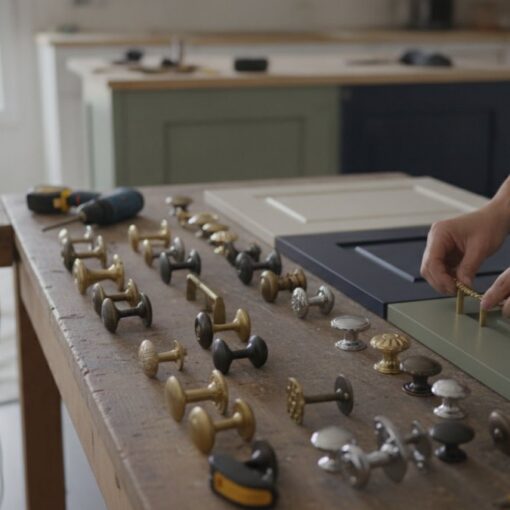
Some cabinet renovation tasks suit DIY work. Hardware replacement is straightforward, removing old knobs and handles and installing new hardware takes basic tools and moderate skill. This single upgrade transforms your cabinet appearance at minimal cost.
Cabinet door removal and reinstallation is manageable if you take photos and label everything carefully. Painting cabinets yourself is possible but risky. Most homeowners underestimate the preparation phase and rush the painting phase, leading to poor results.
Hardware Replacement and Simple Upgrades
Hardware changes deliver outsized visual impact relative to cost and effort. New knobs and pulls update dated cabinets dramatically. A kitchen with forty cabinet doors and drawers might need fifty pieces of hardware at a total cost under five hundred dollars.
Installation requires a drill, measuring tape, and basic carpentry skills. Most hardware comes with installation templates. Beyond hardware, consider adding crown molding to the top of your cabinets or open shelving in place of upper cabinet doors.
Common DIY Mistakes That Cost More in the Long Run
Skipping primer is the most expensive DIY mistake. Paint adheres poorly to existing finishes without primer, resulting in peeling within months. Using interior house paint instead of cabinet-specific paint is another common error, cabinet paint contains additives that improve adhesion, durability, and moisture resistance.
Inadequate ventilation creates dust-contaminated finishes and health hazards. Painting cabinets in a closed kitchen means dust settles in wet paint, creating a rough, unprofessional finish.
DIY cabinet projects work best for discrete tasks like hardware replacement. Painting and finishing require equipment, materials, and expertise most homeowners lack. Hybrid approaches, DIY hardware installation combined with professional painting, often deliver the best value.
Affordable Kitchen Cabinet Solutions: Material and Style Choices
Material selection dramatically impacts your renovation budget. Solid wood costs more than engineered options. Thermofoil and laminate finishes cost less than stain-grade wood.
Shaker-style doors represent the sweet spot between cost and visual appeal. The simple five-piece frame design manufactures easily and costs less than ornate raised-panel styles. Slab-front doors offer another budget-friendly option, a single flat panel with no frame or details.
Budget-Friendly Cabinet Styles and Materials
Flat-panel cabinets represent the most affordable option. Shaker-style cabinets offer timeless appeal at moderate cost and adapt to various kitchen styles. Thermofoil cabinets consist of medium-density fiberboard wrapped in vinyl, resisting moisture better than bare MDF. Laminate cabinets use plastic laminate over particleboard, costing less than solid wood but more than thermofoil.
Stock and RTA Cabinets vs Custom Options
Stock cabinets come in standard sizes and finishes, manufactured in high volume at reduced cost. RTA (Ready-to-Assemble) cabinets ship flat and assemble on-site, costing less than stock options. Custom cabinets are built to your exact specifications but cost significantly more.
For budget renovations, stock or RTA cabinets offer the best value, delivering quality results at prices significantly below custom work.
Cheap Kitchen Cabinet Makeover Tips: Strategic Design Choices
Strategic design choices reduce costs while maintaining visual impact. Keeping your existing layout avoids expensive plumbing and electrical changes. Mixing materials creates visual interest without uniform expense. Open shelving replaces some upper cabinets, reducing material and labor costs.
Open Shelving and Mixed Materials to Reduce Costs
Open shelving replaces upper cabinet doors with simple shelves, costing significantly less than cabinet doors and hardware. The trade-off: everything on open shelves is visible, requiring attractive dishware and organized storage.
Mixing materials creates visual interest while managing costs. You might refinish lower cabinets while replacing upper cabinet doors with budget-friendly stock options. Painting some cabinets and leaving others natural creates visual breaks that add design interest.
Keeping Your Layout to Avoid Hidden Plumbing and Electrical Costs
Kitchen layouts determine plumbing and electrical requirements. Moving the sink requires new water supply and drain lines. Relocating the stove might require new gas or electrical lines, changes that cost thousands of dollars. Keeping your existing layout eliminates these hidden costs and focuses your renovation on appearance and refinishing.
Budget kitchen cabinet renovations work best for homeowners who want visual transformation without layout changes, who have solid cabinet structures suitable for refinishing, and who can handle some DIY tasks like hardware installation.
Long-Term Cost Analysis: Which Budget Strategy Actually Saves Money
Different cabinet strategies have different lifespans and maintenance requirements. Refinishing costs less initially but requires maintenance, professional refinishes typically last 7-10 years. Refacing costs more initially but lasts longer, with new doors and drawer fronts typically lasting 15-20 years. Replacement costs the most initially but lasts the longest, with new cabinets lasting 20-30 years.
| Strategy | Initial Cost | Lifespan | Maintenance | Best For |
|---|---|---|---|---|
| Refinishing | Lowest | 7-10 years | Regular care needed | Tight budgets, solid cabinets |
| Refacing | Medium | 15-20 years | Minimal maintenance | Moderate budgets, good structures |
| Replacement | Highest | 20-30 years | Standard care | Long-term investment, layout changes |
Your decision depends on your timeline and budget. If you plan to stay in your home long-term, replacement might save money overall. If you’re renovating before selling, refinishing offers maximum visual impact at minimum cost.
Shopping for Deals and Timing Your Cabinet Renovation
Timing your renovation around sales and promotions reduces costs. Spring and early summer see increased cabinet sales, creating competitive pricing. End-of-year clearance sales offer discounts on remaining inventory. During slower seasons (winter, late fall), contractors often offer discounts to maintain steady work.
Bundling services saves money. Hiring one contractor for painting, hardware installation, and minor repairs costs less than hiring separate specialists. Getting multiple quotes reveals market pricing, three to five quotes show you the typical price range for your project.
Kitchen cabinet renovations don’t require full replacement to deliver impressive results. Strategic refinishing, smart material choices, and careful planning transform outdated kitchens into modern, functional spaces. Denver Cabinet Painting Colorado specializes in professional cabinet painting and refinishing with 40 years of experience across Colorado. Get a free quote today to explore which strategy works best for your specific kitchen and budget.
Frequently Asked Questions
Is it cheaper to reface or replace kitchen cabinets?
Refacing is typically significantly less expensive than full cabinet replacement. Refacing involves applying new veneer or paint to existing cabinet boxes and replacing doors and hardware, preserving the original structure. Replacement requires removing all cabinets and installing new ones, involving labor, disposal costs, and potential structural work. The cost difference depends on your cabinet quality, damage extent, and material choices, but refacing generally costs 40-50% less than replacement while still delivering a modern look.
What is the cheapest way to update kitchen cabinets?
Professional cabinet painting and refinishing is among the most affordable updates, especially compared to replacement or refacing. You can further reduce costs by handling simple DIY tasks like hardware replacement and door removal. Choosing budget-friendly styles like Shaker or slab front designs, selecting stock or RTA cabinets if refacing, and keeping your existing layout to avoid plumbing and electrical changes all help minimize expenses. Shopping during sales and promotions on materials also reduces overall cabinet renovation costs.
How can I make my kitchen cabinets look expensive on a budget?
Professional refinishing with quality paint and proper preparation creates a high-end appearance without replacement costs. Add visual interest through strategic hardware upgrades, modern handles and knobs transform cabinet aesthetics. Incorporate open shelving in select areas to break up solid cabinetry and add design depth. Consider mixing materials, such as combining painted lower cabinets with open shelving above, or adding crown molding to frame the installation. Proper finishing techniques that ensure smooth, consistent finishes are key to achieving an expensive, custom appearance affordably.
Why does DIY cabinet painting often fail, and how can I avoid peeling or poor finishes?
Most DIY cabinet painting fails due to inadequate surface preparation, the foundation for any lasting finish. Proper preparation requires thorough cleaning, sanding, and priming, which homeowners often rush or skip. Professional refinishing services invest significant time in these steps, ensuring paint adheres correctly and resists peeling. If attempting DIY, invest in quality primers and paints, follow manufacturer instructions precisely, allow proper drying time between coats, and ensure adequate ventilation. However, professional cabinet painting services offer durability guarantees and expertise that protect your investment long-term.
This article was written using GrandRanker