Table of Contents
- Understanding the Difference Between Painting and Staining Cabinets
- Painted Cabinets: Pros and Cons
- Stained Cabinets: Pros and Cons
- Durability: Painted vs. Stained Cabinets
- Cost to Paint vs. Stain Cabinets
- Aesthetic Impact: Grain Visibility vs. Solid Color
- Maintenance, Repairability, and Touch-Ups
- Environmental Impact and VOC Considerations
Last Updated: July 16, 2026
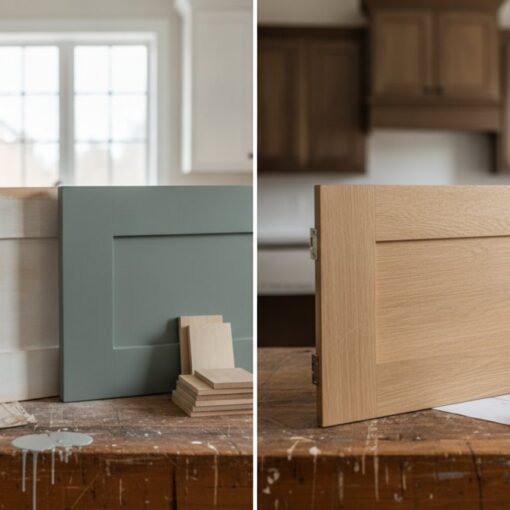
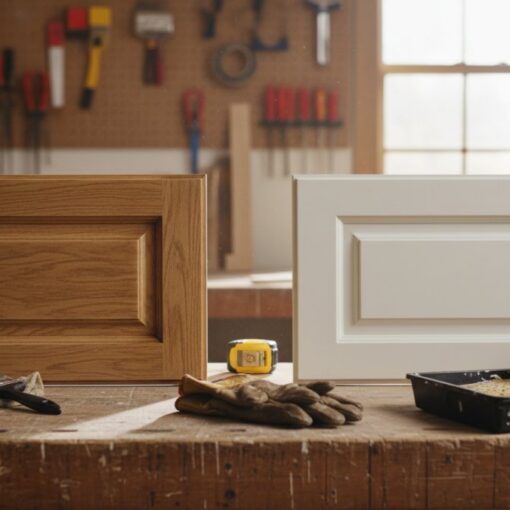
Understanding the difference between painting and staining cabinets is essential for homeowners planning a kitchen or bathroom renovation. The choice affects durability, maintenance, cost, and the overall character of your space. Below, we’ll show you how these two approaches differ and help you determine which is right for your project.
How Paint Works on Cabinets
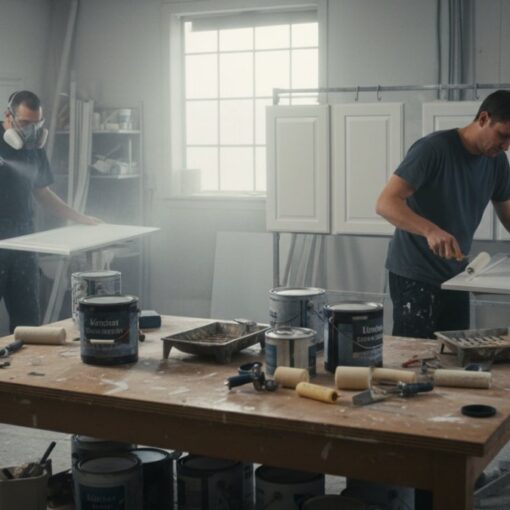
Paint creates a protective film that sits on top of the wood surface. When applied correctly, paint bonds through a primer layer, forming a solid, opaque barrier that masks the underlying wood grain. Professional cabinet painting requires meticulous surface preparation: sanding, cleaning, and priming before applying multiple thin coats (usually 2-3). Modern cabinet paints like Sherwin-Williams Emerald Urethane Trim Enamel combine water-based cleanup with urethane durability. Spray application delivers a smoother, more professional result than brush application, which is why many homeowners choose professional application.
How Stain Works on Cabinets
Stain penetrates into the wood’s cellular structure, coloring it from within while allowing the natural grain and texture to remain visible. Unlike paint, stain does not provide protection by itself. After staining, cabinets require a separate clear protective finish, typically polyurethane or polycrylic. Gel stains like General Finishes Gel Stain have become popular because their thicker consistency minimizes drips and provides more uniform color coverage, especially on challenging wood types.
| Characteristic | Paint | Stain |
|---|---|---|
| Surface Coverage | Opaque, masks wood grain | Transparent, shows wood grain |
| Application Method | Primer + 2-3 paint coats | Stain + protective topcoat |
| Surface Preparation | Sanding, cleaning, priming | Sanding, wood conditioning |
| Drying Time | 4-24 hours per coat | 4-48 hours depending on type |
| Protective Finish | Built into paint formula | Requires separate topcoat |
| Wood Species Visibility | Completely concealed | Fully visible |
Painted Cabinets: Pros and Cons
Painted cabinets offer significant advantages for homeowners seeking a modern, cohesive look. Paint comes in virtually unlimited colors, allowing you to match your kitchen design precisely. A solid paint color creates visual continuity and can make smaller kitchens feel larger.
Paint works exceptionally well for cabinets made from lower-grade wood, veneer, or MDF. It completely conceals imperfections, transforming them into a polished, unified appearance.
Modern cabinet paints resist chipping and scratching better than stain-and-topcoat systems and are easier to clean with a simple damp cloth. This makes painted cabinets ideal for busy kitchens where durability and hygiene are priorities.
However, paint can chip and scratch over time, particularly on high-traffic cabinet doors. Touch-ups are visible if the original paint color shifts. Paint can also yellow over time, especially oil-based formulas exposed to sunlight, which becomes noticeable on lighter colors.
If you choose a trendy paint color, you may face challenges if design preferences shift. Repainting requires the same extensive preparation as the original project.
Stained Cabinets: Pros and Cons
Stained cabinets celebrate the natural beauty of wood grain. The depth and richness of a quality stain finish cannot be replicated with paint. Stain highlights unique grain patterns of premium hardwoods like walnut, cherry, and oak, making each cabinet door subtly different.
Stain is typically less expensive than quality cabinet paint, and the application process can be faster. Stained cabinets also age gracefully; unlike paint, stain doesn’t chip or peel, instead developing a patina over years of use.
The drawbacks are significant. Stain does not hide wood imperfections or work on veneer or MDF. Color consistency can be challenging, especially when refinishing cabinets. Stained cabinets are more difficult to clean, as grease accumulates in the grain and harsh cleaners can damage the protective topcoat.
Changing the color of stained cabinets is substantially more difficult than repainting. The old stain must be stripped or sanded away, which is labor-intensive and expensive, making stain a long-term commitment to a specific color.
Durability: Painted vs. Stained Cabinets
Modern painted cabinets, especially those using urethane-modified water-based formulas, are exceptionally durable against daily wear. They resist moisture absorption better than stain, making them superior in humid kitchens or bathrooms. Paint creates a continuous protective barrier that prevents water from penetrating the wood.
Stained cabinets depend entirely on the quality of the topcoat. A well-applied, high-quality topcoat provides excellent protection, but it’s a separate layer that can be compromised if the application is uneven.
Chipping, Cracking, and Long-Term Wear
Paint can chip and crack over time, particularly on cabinet edges and door handles. High-traffic cabinets develop visible wear patterns, though these chips are localized and can be touched up.
Stained finishes don’t chip the same way, but the topcoat can scratch and wear through in high-contact areas. Once compromised, the stained wood becomes vulnerable to moisture and staining. Repairs require sanding and refinishing.
For maximum durability in high-use kitchens, painted cabinets with a quality urethane formula outperform stain. The continuous protective layer resists both moisture and mechanical wear more effectively.
Yellowing and Aging Over Time
Paint yellowing is a real concern, particularly with oil-based formulas. Exposure to sunlight causes the binder to oxidize, shifting lighter colors toward yellow or amber tones. Water-based urethane paints resist yellowing far better, making them superior for light colors.
Stained cabinets develop a patina over time, gradually darkening as the wood grain becomes more pronounced. This is often viewed as desirable aging. However, uneven sun exposure can create color variation across cabinets.
Cost to Paint vs. Stain Cabinets
The financial comparison depends on material quality, surface preparation, and whether you hire professionals or attempt DIY work.
Material and Product Costs
High-quality cabinet paints like Benjamin Moore Advance Interior Paint and Sherwin-Williams Emerald Urethane Trim Enamel represent premium options. General Finishes Gel Stain typically costs less per unit than premium cabinet paints. However, staining requires both stain and protective topcoat, which adds to overall expense.
For DIY projects, material costs favor staining, though the learning curve for professional-looking results is steeper.
Labor and Application Costs
Professional cabinet painting is labor-intensive due to surface preparation requirements. Labor costs typically exceed material costs significantly. Professional staining labor is often lower because application is faster and requires less preparation. However, if stripping and sanding are necessary, labor costs escalate dramatically.
For budget-conscious homeowners, painting existing cabinets professionally costs less than staining if the cabinets are already in reasonable condition.
Denver Cabinet Painting Colorado offers free quotes to help you understand the true cost of your specific project. Pricing depends on cabinet quantity, existing finish condition, desired color or stain tone, and service area within Colorado.
Aesthetic Impact: Grain Visibility vs. Solid Color
Painted cabinets create a clean, modern aesthetic with uniform color and no visible wood grain variation. This works well in contemporary kitchens and minimalist designs.
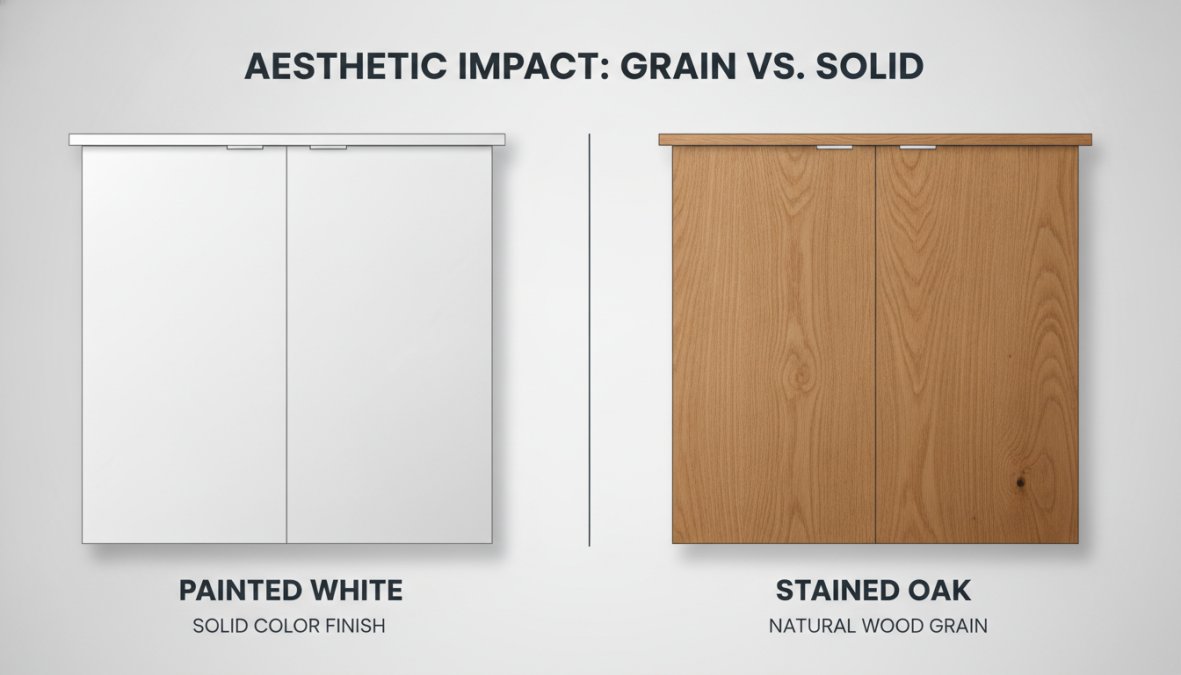
Stained cabinets showcase natural wood grain and character. A rich walnut stain highlights dramatic grain patterns, while a lighter honey stain on oak creates warmth and traditional appeal.
Painted cabinets pair well with modern hardware and sleek countertops. Stained cabinets complement traditional hardware and natural stone countertops. Color consistency also differs: painted cabinets provide uniform color across all doors, while stained cabinets naturally exhibit color variation due to wood grain differences.
Maintenance, Repairability, and Touch-Ups
Cleaning and Upkeep Requirements
Painted cabinets are straightforward to maintain. Regular cleaning with a damp cloth and mild soap removes grease and dust without damaging the finish. The non-porous surface resists staining.
Stained cabinets require more cautious cleaning. The wood grain traps grease and dust, requiring thorough cleaning to prevent buildup. Harsh chemical cleaners can damage the protective topcoat, so gentler, wood-specific cleaners are recommended.
Repairing Damage and Color Consistency
Paint touch-ups are visible but straightforward. A small brush and the original paint color allow you to repair chips and scratches. The challenge is matching the exact paint color if the original has faded.
Stain touch-ups are more complex. The wood must be sanded smooth, conditioned, and restained to match the surrounding finish. Even with careful work, the repair may be visible due to color variation.
The repairability advantage clearly favors paint.
Environmental Impact and VOC Considerations
The environmental impact depends on the specific products you choose. Volatile Organic Compounds (VOCs) are chemicals that evaporate during application and drying, contributing to indoor air quality concerns.
Water-based formulas, including water-based urethane paints and acrylic stains, have significantly lower VOC content while maintaining strong durability. Sherwin-Williams Emerald Urethane Trim Enamel and Benjamin Moore Advance Interior Paint are specifically formulated to reduce VOCs without compromising performance.
For environmentally conscious homeowners, water-based products are the clear choice. Choosing a durable finish that lasts 15-20 years without repainting or restaining is more environmentally responsible than choosing a finish requiring complete refinishing after 8-10 years.
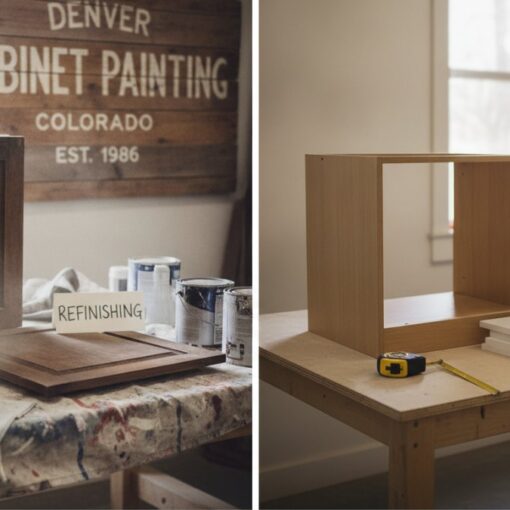
The difference between painting and staining cabinets ultimately comes down to your priorities: do you value modern aesthetics, durability, and easy maintenance (paint), or do you prefer showcasing natural wood beauty, accepting higher maintenance demands, and committing to a long-term color choice (stain)? For homeowners in the Denver metro area and throughout Colorado seeking professional guidance, Denver Cabinet Painting Colorado brings expertise in both cabinet painting and refinishing. Their team specializes in meticulous surface preparation and consistent finishes that transform outdated kitchens without the expense of full cabinet replacement. Get a free quote from Denver Cabinet Painting Colorado to explore how either painting or staining can revitalize your space.
Frequently Asked Questions
Is it better to paint or stain kitchen cabinets?
The choice depends on your priorities. Paint offers a solid color, modern aesthetic, and excellent durability for high-traffic kitchens, making it ideal for contemporary designs. Stain showcases natural wood grain and provides a traditional, warm look while enhancing the wood's natural beauty. Paint requires more maintenance for touch-ups, while stain can be easier to refresh. Consider your kitchen style, maintenance tolerance, and long-term vision when deciding between painting and staining cabinets.
Which is more durable: painted or stained cabinets?
Painted cabinets typically offer superior durability when properly applied with quality primer and topcoat systems. Paint creates a protective barrier that resists moisture absorption and wear. However, stained cabinets are also durable and can last decades with proper sealing. The key difference: painted finishes may chip or crack and require touch-ups, while stained finishes may fade or yellow over time. Both durability painted vs stained cabinets depends heavily on application quality, wood species, and maintenance practices.
What are the disadvantages of painted cabinets?
Painted cabinets can chip, crack, or peel with heavy use, especially in high-moisture areas like kitchens. Touch-ups may be visible and difficult to match perfectly due to color consistency issues. Paint hides the natural wood grain, which some homeowners prefer to showcase. Painted finishes require careful surface preparation, including sanding and primer application, for proper paint adhesion. Additionally, painted cabinets may require refinishing sooner than stained alternatives if the finish deteriorates.
Is painting cabinets cheaper than staining?
Generally, the cost to paint vs stain cabinets is comparable for materials, but labor costs vary significantly. Paint requires meticulous surface preparation, primer application, and multiple topcoats, which increases professional labor costs. Stain has simpler application but requires careful wood preparation to avoid blotching. Professional cabinet painting or staining typically involves similar upfront investment ranges, though DIY staining may be slightly more forgiving for beginners. For accurate pricing on your specific project, contact a local professional for a detailed quote.
Can you paint over stained cabinets or stain over painted ones?
Yes, but each requires different preparation. Painting over stained cabinets requires sanding the stained surface, applying primer for paint adhesion, and using quality paint systems. Staining over painted cabinets is more challenging, paint doesn't absorb stain, so you'd need to strip the paint first or use gel stain products designed to adhere over existing finishes. For best results and long-term durability, professional application ensures proper surface preparation and material compatibility, especially when transitioning between finishes.
This article was written using GrandRanker