Table of Contents
- Why Primer Is Essential for Kitchen Cabinets
- 7 Best Primers for Kitchen Cabinets: Quick Comparison
- 1. Zinsser B-I-N Shellac-Based Primer: Best for Stain Blocking
- 2. INSL-X Stix Waterborne Bonding Primer: Best for Difficult Surfaces
- 3. Sherwin-Williams Extreme Bond Primer: Best for Glossy Finishes
- 4. KILZ Adhesion Interior/Exterior Primer: Best for Laminate Cabinets
- 5. Benjamin Moore Fresh Start High-Hiding All Purpose Primer: Best for Color Coverage
- 6. Zinsser Bulls Eye 1-2-3 Plus: Best All-in-One Option
Last Updated: July 14, 2026
When preparing to paint kitchen cabinets, selecting the right primer is critical. The difference between a primer that bonds properly and one that fails determines whether your finish lasts for years or chips and peels within months. At Denver Cabinet Painting Colorado, we’ve spent 40 years perfecting cabinet preparation, and we can tell you that the 7 best primers for kitchen cabinets each serve distinct purposes based on your cabinet material and existing finish.
Below, we’ll show you how to evaluate primers for kitchen cabinets, compare the top options available in 2026, and walk you through the application process for professional results.
Why Primer Is Essential for Kitchen Cabinets
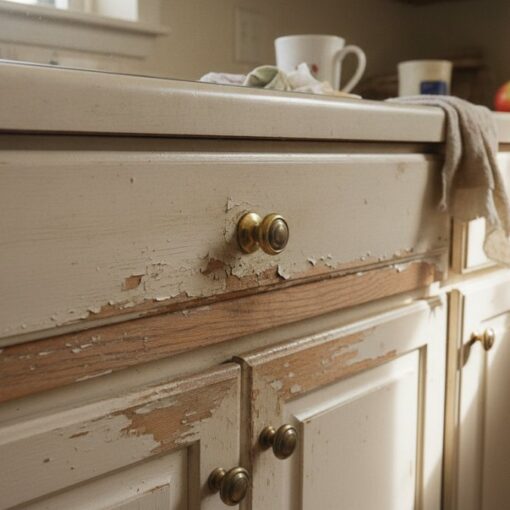
Kitchen cabinets face unique challenges that make primer non-negotiable. Unlike walls, cabinet surfaces endure constant exposure to moisture, grease, heat, and handling. Without proper priming, paint fails, adhesion breaks down, stains bleed through, and the finish becomes dull or uneven.
Primer serves three critical functions: it creates adhesion between the existing finish and your topcoat, blocks stains and tannins that would discolor your final finish, and seals porous surfaces so your topcoat applies evenly. The kitchen environment amplifies these needs, grease splatters, water exposure, and temperature fluctuations all stress the paint film. A quality primer prevents these issues before they start.
Many homeowners skip primer or use paint-and-primer-in-one products, assuming they’ll suffice. This approach fails on cabinets. Cabinet primers must bond to non-porous surfaces, block stubborn stains, and withstand moisture and heat. Generic primers simply aren’t formulated for these demands.
7 Best Primers for Kitchen Cabinets: Quick Comparison
| Primer | Type | Best For | Drying Time | Key Strength |
|---|---|---|---|---|
| Zinsser B-I-N Shellac-Based | Shellac | Stain blocking | 45 minutes | Unmatched stain-blocking power |
| INSL-X Stix Waterborne | Water-based | Difficult surfaces | 1 hour | Exceptional adhesion to glossy finishes |
| Sherwin-Williams Extreme Bond | Water-based | Glossy cabinets | 2-4 hours | Reduced sanding requirements |
| KILZ Adhesion | Water-based | Laminate cabinets | 1-2 hours | Bonds to challenging substrates |
| Benjamin Moore Fresh Start | Latex | Color coverage | 3-4 hours | High hiding power |
| Zinsser Bulls Eye 1-2-3 Plus | Water-based | All-purpose use | 1 hour | Versatile, widely available |
| PPG Seal Grip Gripper | Latex | Professional results | 2-4 hours | Strong stain blocking + adhesion |
1. Zinsser B-I-N Shellac-Based Primer: Best for Stain Blocking
If your cabinets show water stains, smoke damage, or tannin bleed from wood, Zinsser B-I-N is the gold standard. This shellac-based primer seals stains at the molecular level rather than just covering them. Grease stains, water rings, and tannins that would bleed through latex primers stay locked beneath shellac. The primer dries in 45 minutes, allowing topcoat application the same day.
The trade-off is ventilation. Shellac primers emit strong fumes requiring excellent air circulation, respiratory protection, and patience. Cleanup requires denatured alcohol rather than water.
If you choose shellac primer, open every window and door, use a respirator rated for organic vapors, and plan your project for mild weather when you can maintain airflow for 24 hours.
Zinsser B-I-N works on wood, laminate, thermofoil, and previously painted surfaces. One coat typically blocks even severe stains.
2. INSL-X Stix Waterborne Bonding Primer: Best for Difficult Surfaces
When you need adhesion benefits without shellac’s odor and ventilation demands, INSL-X Stix delivers exceptional performance on glossy cabinets, laminate, PVC, and other hard-to-paint surfaces without requiring aggressive sanding.
Stix creates chemical adhesion at the molecular level, bonding regardless of surface smoothness. This allows you to prime glossy cabinets with light sanding (120-150 grit) rather than heavy scuffing. Stix dries within one hour with low odor and water cleanup. One coat typically provides adequate adhesion and hiding.
The limitation is stain blocking. While Stix provides moderate stain resistance, it doesn’t match shellac primers for severe water stains or tannin bleed. If your cabinets show significant staining, pair Stix with a stain-blocking undercoat or choose shellac primer.
3. Sherwin-Williams Extreme Bond Primer: Best for Glossy Finishes
Sherwin-Williams engineered Extreme Bond specifically for high-gloss surfaces. This waterborne bonding primer cuts through glossy finishes without requiring heavy sanding. You can achieve adequate adhesion with 120-150 grit sanding and degreasing, rather than the 80-100 grit scuffing that many primers require.
Extreme Bond is tintable, reducing the number of paint coats needed for even coverage. The primer dries in 2-4 hours, allowing recoating within a single day. It works on tile, glass, PVC, and laminate as well as painted wood, and accepts latex or oil-based topcoats.
Extreme Bond requires meticulous surface preparation. The surface must be clean, dry, and properly degreased for effective bonding.

4. KILZ Adhesion Interior/Exterior Primer: Best for Laminate Cabinets
KILZ Adhesion is engineered to bond to thermofoil, laminate, vinyl, and Kynar-coated substrates. If your cabinets are laminate or thermofoil rather than solid wood, KILZ Adhesion often outperforms more expensive alternatives.
This modified-acrylic primer creates a flexible bond that accommodates laminate’s expansion and contraction. Standard primers crack and peel on laminate because they don’t flex with the material. The primer dries in 1-2 hours and accepts latex topcoats. It’s low-VOC and low-odor, making it practical for kitchens with limited ventilation.
5. Benjamin Moore Fresh Start High-Hiding All Purpose Primer: Best for Color Coverage
When your project prioritizes covering existing colors and achieving even topcoat coverage, Benjamin Moore Fresh Start delivers exceptional hiding power. This 100% acrylic latex primer is formulated with extra pigment to conceal dark cabinet colors and provide a uniform base for lighter topcoats.
Fresh Start works well on wood cabinets and previously painted surfaces where stain blocking isn’t the primary concern. The high-hiding formula reduces the number of topcoats needed, saving time and material costs. For projects transitioning from dark wood to white or light-colored cabinets, this primer’s coverage advantage is significant.
The primer dries in 3-4 hours and accepts latex topcoats. Water cleanup and low odor make it convenient for DIY projects.
6. Zinsser Bulls Eye 1-2-3 Plus: Best All-in-One Option
Zinsser Bulls Eye 1-2-3 Plus provides decent adhesion, moderate stain blocking, and versatility across multiple cabinet materials without excelling at any single function. For DIYers seeking a single primer that handles most situations adequately, this is practical.
This water-based primer traps grease stains, tannin bleed, and light water damage. It bonds to glossy enamels, laminate, and previously painted surfaces. The formula accepts both latex and oil-based topcoats with drying time of approximately one hour.
Bulls Eye 1-2-3 Plus is widely available at hardware stores with moderate pricing. For straightforward cabinet projects on wood with minimal staining, it performs adequately.
How to Prime Kitchen Cabinets: Step-by-Step Process
Primer application is only as good as the surface preparation that precedes it.
Step 1: Remove Cabinet Doors and Hardware (30-45 minutes)
Take cabinet doors off hinges and remove all hardware. This allows complete priming and prevents primer from gumming up moving parts. Label doors with painter’s tape for reassembly.
Step 2: Clean and Degrease Surfaces (45-60 minutes)
Kitchen cabinets accumulate grease, dust, and cooking residue. Primer won’t bond to dirty surfaces. Use a degreaser (TSP or equivalent) mixed with warm water. Scrub cabinet faces, edges, and insides thoroughly, paying special attention to areas near the stove. Rinse thoroughly with clean water and allow to dry completely, at least 2-4 hours.
Skipping the degreasing step is the single most common reason cabinet primers fail. Even if cabinets look clean, microscopic grease film prevents adhesion.
Step 3: Sand Glossy Surfaces (1-2 hours)
Glossy cabinet finishes repel primer. Use 120-150 grit sandpaper to scuff the surface, breaking the gloss and creating mechanical adhesion. After sanding, wipe surfaces with a tack cloth to remove dust.
Step 4: Fill Gaps and Imperfections (30-45 minutes)
Use paintable caulk or wood filler to seal gaps between cabinet panels and at joints. This prevents primer and paint from seeping into gaps and allows moisture infiltration. Allow filler to cure per manufacturer instructions, then sand smooth with 150-180 grit paper.
Step 5: Apply Primer (2-3 hours for first coat)
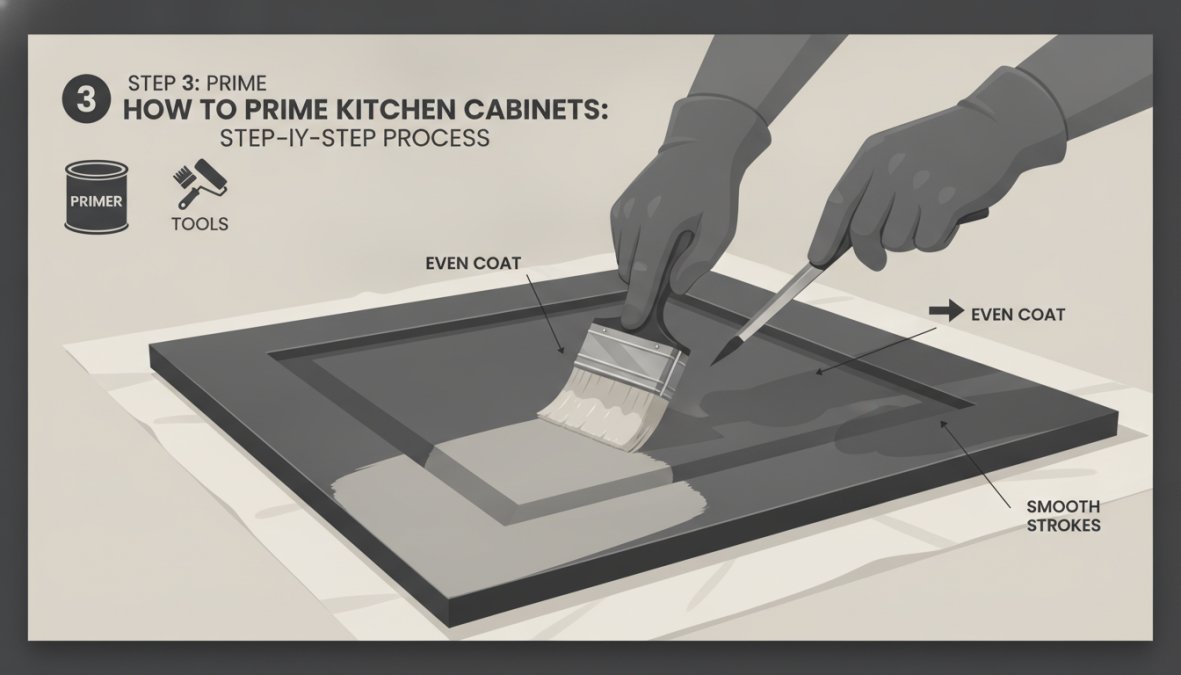
Pour primer into a clean container. Use a high-quality 2-3 inch angled brush or foam roller for even application. Apply thin, even coats rather than one thick coat. Work in sections, maintaining a wet edge to avoid lap marks. Prime both sides and all edges of cabinet doors.
Allow primer to dry per manufacturer recommendations. Most cabinet primers benefit from a second coat for maximum stain blocking and adhesion.
Step 6: Light Sanding Between Coats (30-45 minutes)
After the first coat dries, lightly sand with 150-180 grit paper. This removes dust nibs and improves adhesion for the second coat. Wipe with a tack cloth.
Step 7: Apply Second Coat (2-3 hours)
Apply the second primer coat using the same technique. Two coats provide maximum stain blocking and hide any color from the original cabinet finish. Allow the final coat to cure fully before sanding for topcoat application.
Oil-Based vs. Water-Based Primers: Which Should You Choose?
Oil-based primers (primarily shellac-based) offer superior stain blocking and create a hard, smooth surface that topcoats bond to beautifully. Drying is fast, 45 minutes to one hour. The downside is strong odor, ventilation demands, and cleanup complexity.
Water-based primers offer low odor, easy cleanup, and safety advantages. They work adequately on most cabinet surfaces when proper prep is done. Drying time is slightly longer, 1-4 hours depending on humidity. Stain blocking is moderate compared to oil-based options.
For kitchen cabinets, the choice depends on your situation. If stains are severe or ventilation is excellent, oil-based shellac primers deliver superior results. If you’re working in an occupied home with ventilation limitations, water-based bonding primers perform well.
The Role of Shellac-Based Primers in Cabinet Refinishing
Shellac primers excel when existing cabinets show water damage, smoke stains, tannin bleed, or grease staining that would bleed through latex primers. The shellac resin seals these stains completely, preventing them from migrating through topcoats.
However, shellac primers aren’t necessary for every project. If your cabinets are clean wood with no staining or previously painted surfaces in good condition, shellac primer adds expense and ventilation complexity without clear benefit. Reserve shellac primers for situations where stain blocking is genuinely necessary.
Stain-Blocking Capabilities: What Actually Blocks Stains
Water stains, grease stains, and tannin bleed each require different blocking mechanisms.
Water stains come from moisture exposure. Shellac primers seal these stains completely. Latex primers with stain-blocking additives provide moderate blocking, often sufficient for light water stains but inadequate for severe damage.
Grease stains from cooking contain oils that migrate through paint films. Shellac primers seal grease completely. Bonding primers like INSL-X Stix and Sherwin-Williams Extreme Bond provide moderate grease blocking.
Tannin bleed occurs in wood cabinets when tannins leach out and discolor paint. This is common in oak and cherry. Shellac primers seal tannins completely. Water-based primers cannot block tannin bleed effectively.
For kitchen cabinets, the most common staining is grease and light water damage. Quality water-based bonding primers provide adequate stain blocking. If you suspect tannin bleed or have heavy water damage, shellac primer is appropriate.
Adhesion Properties on Laminate and Wood: Material-Specific Considerations
Laminate and solid wood cabinets require different primer approaches.
Laminate Cabinets: Plastic laminate surfaces are non-porous and slightly flexible. Bonding primers like KILZ Adhesion and INSL-X Stix create adhesion through chemical bonding. Light sanding and thorough degreasing are essential. Laminate expands and contracts with temperature and humidity changes more than solid wood, so primers must flex with the material.
Solid Wood Cabinets: Wood is porous, allowing primer to soak slightly into the grain, creating mechanical adhesion. However, glossy wood finishes still require sanding to break the gloss. For wood cabinets with staining issues, shellac primer is particularly effective because it seals wood grain completely while blocking stains.
Drying and Recoat Times: Planning Your Project Timeline
Primer drying time varies significantly by type, humidity, and temperature.
Shellac-based primers dry in 45 minutes to one hour, allowing topcoat application the same day. Full cure takes 24 hours.
Water-based latex primers dry in 1-4 hours depending on humidity and temperature. Cool, humid conditions slow drying. For project planning, assume drying times on the longer end if working in cool, humid weather.
Safety Precautions and Ventilation: Protecting Yourself During Application
Cabinet priming creates fumes and dust requiring proper safety measures.
Shellac primers emit strong organic solvent fumes. Open every window and door. Use fans to create airflow, placing one fan in a window pointing outward to exhaust fumes and another pointing inward to bring fresh air. Wear a respirator rated for organic vapors (not just a dust mask).
Water-based primers emit fewer fumes, but adequate ventilation is still important. Respiratory protection is less critical but still recommended if you’re sensitive to odors.
Wear gloves to protect skin. Protect floors and adjacent surfaces with plastic sheeting and painter’s tape. Allow proper ventilation for 24 hours after application.
If working in an occupied home, schedule priming for mild weather when you can open windows and maintain airflow without affecting heating or cooling.
VOC-Free and Low-Odor Alternatives: Environmentally Conscious Priming
Environmental and health concerns drive many homeowners toward low-VOC (volatile organic compound) and low-odor primers.
Most modern water-based primers (INSL-X Stix, Sherwin-Williams Extreme Bond, KILZ Adhesion) are low-VOC formulations. They meet EPA VOC limits and emit significantly fewer fumes than shellac primers.
For the lowest odor, water-based acrylic bonding primers are ideal. They perform adequately on most cabinet surfaces while producing minimal odor. However, low-VOC primers sacrifice some stain-blocking capability. If your cabinets show severe staining, shellac primers provide superior results.
Compatibility Matrix: Primer and Paint Brand Combinations
Most quality primers accept both latex and oil-based topcoats. Shellac primers bond excellently to both. Water-based primers work well with latex topcoats from any brand.
Water-based primers can accept oil-based topcoats, but adhesion is less reliable than with latex. If using a water-based primer with oil-based topcoat, ensure the primer is fully cured (24-48 hours) before applying oil-based paint.
For simplicity, match primer and topcoat chemistry: water-based primer with water-based paint, oil-based primer with oil-based paint.
Priming Non-Wood Surfaces: Laminate, Thermofoil, and Metal Cabinets
Kitchen cabinets aren’t always solid wood.
Laminate Cabinets: Plastic laminate surfaces are non-porous and slippery. Bonding primers like KILZ Adhesion and INSL-X Stix create chemical adhesion. Light sanding and thorough degreasing are essential.
Thermofoil Cabinets: Thermofoil is a vinyl film applied to MDF substrate. It’s more flexible than laminate and requires bonding primers that accommodate the flexibility of the vinyl film. Rigid primers crack and peel as the thermofoil expands and contracts.
Metal Cabinets: Metal cabinet frames require primers that prevent rust and provide adhesion to slick metal surfaces. Rust-inhibiting primers are ideal, containing rust-preventative compounds that protect metal from oxidation.
For all non-wood surfaces, degreasing is essential because these surfaces accumulate grease easily. Light sanding helps create mechanical adhesion in addition to chemical bonding.
Environmental Impact and Disposal: Responsible Primer Use
Water-based primers have minimal environmental impact. They’re water-soluble and don’t contain hazardous solvents. Cleanup water can be disposed of safely.
Shellac and oil-based primers contain solvents that are hazardous waste. Cleanup requires denatured alcohol or mineral spirits, which must be disposed of properly. Unused primer should never be poured down drains. Solid waste disposal or hazardous waste collection is appropriate.
For environmental responsibility, water-based primers are the preferred choice. They perform adequately on most cabinet projects while avoiding hazardous waste concerns.
Transforming kitchen cabinets requires more than selecting paint color. The primer you choose determines whether your finish lasts for years or requires complete refinishing within months. At Denver Cabinet Painting Colorado, we’ve learned through 40 years of cabinet refinishing that proper primer selection and meticulous preparation are the foundation of professional results. Whether you’re working with water-based bonding primers for glossy finishes, shellac primers for severe staining, or specialized primers for laminate surfaces, the investment in quality primer and careful application delivers cabinets that look beautiful and perform reliably. Get a free quote from Denver Cabinet Painting Colorado and discover how professional-grade priming transforms your kitchen vision into reality.
Frequently Asked Questions
Do I really need to prime kitchen cabinets before painting?
Yes. Primer is essential for kitchen cabinets because it provides adhesion on glossy, non-porous surfaces, blocks stains like grease and tannin bleed, and creates a stable base for topcoat durability. Without primer, paint may peel or chip, especially in high-moisture kitchen environments. Quality primers seal wood grain, prevent wood tannins from bleeding through, and improve overall finish longevity.
What is the best type of primer for kitchen cabinets?
The best primer depends on your cabinet material and condition. Shellac-based primers like Zinsser B-I-N excel at stain blocking and wood sealing. Waterborne bonding primers like INSL-X Stix work best on difficult, glossy surfaces with minimal sanding. For laminate or thermofoil cabinets, KILZ Adhesion provides strong adhesion without heavy preparation. Consider your surface type, existing finish, and whether stain blocking is needed.
How long does cabinet primer take to dry before I can paint?
Drying times vary by primer type. Water-based primers typically dry in 1-3 hours, allowing recoating in 3-4 hours. Shellac-based primers dry faster, often ready for topcoat in 1-2 hours. However, full curing can take 24-48 hours depending on humidity and temperature. Always check the manufacturer's label for recoat windows and follow the longest recommended time for best results, especially in kitchens with moisture exposure.
Should I sand cabinets before priming?
Light sanding is recommended before priming to improve adhesion, especially on glossy or lacquered surfaces. Use 120-150 grit sandpaper to dull the finish without over-sanding. For heavily glossy cabinets, a deglosser can reduce the need for sanding. Modern bonding primers reduce sanding requirements, but some surface prep, even just degreasing with TSP, significantly improves primer adhesion and topcoat durability.
What is the difference between oil-based and water-based primers for cabinets?
Oil-based primers offer superior stain blocking and wood sealing but require solvent cleanup, produce strong odors, and have higher VOC levels. Water-based primers are low-odor, eco-friendly, and easy to clean, but may require two coats on heavily stained wood. For kitchen cabinets, modern water-based bonding primers often outperform oil-based options while offering better safety and ventilation advantages.
This article was written using GrandRanker