Table of Contents
- Cabinet Refinishing vs Replacement Cost: Understanding Your Options
- Cost Breakdown: Refinishing vs Refacing vs Replacement
- Factors Affecting Cabinet Refinishing Cost
- Factors Affecting Cabinet Replacement Cost
- Benefits of Cabinet Refinishing
- The Refacing vs New Price Paradox: Why Costs Converge
- Durability and Longevity: What Lasts Longer
- Cabinet Box Integrity Assessment: Know Before You Invest
Cabinet Refinishing vs Replacement Cost: A 2026 Guide
Last Updated: July 18, 2026
When homeowners face worn, outdated cabinets, they typically encounter the same decision: refinish the existing cabinets or replace them entirely. Understanding the cabinet refinishing vs replacement cost equation is crucial before committing to either path. At Denver Cabinet Painting Colorado, we’ve spent 40 years helping homeowners navigate this exact choice, and the answer depends on far more than just the sticker price.
Refinishing, Refacing, and Replacement Defined
These three terms get thrown around interchangeably, but they’re fundamentally different projects with vastly different price tags and outcomes.
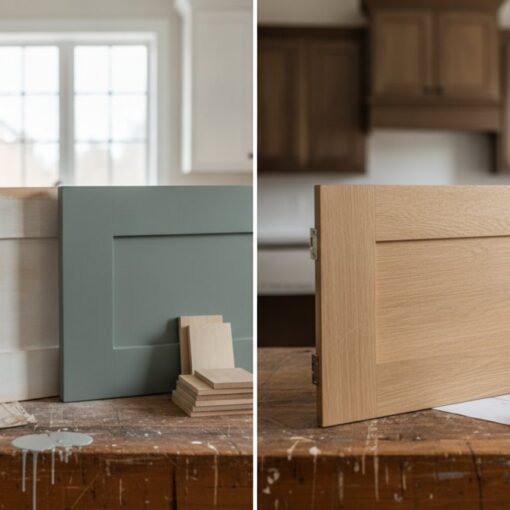
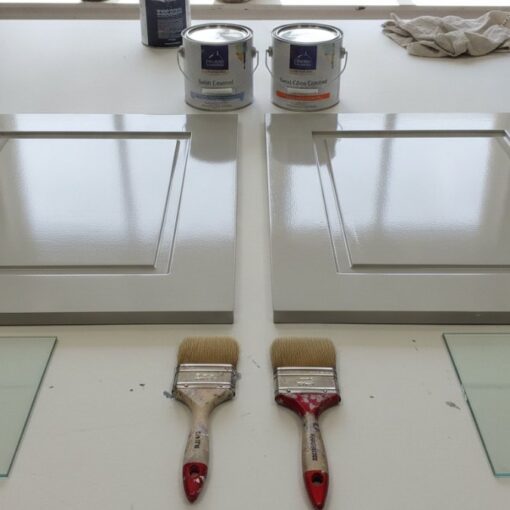
Cabinet refinishing involves sanding, stripping, and repainting or staining your existing cabinet boxes and doors. The cabinet structure stays intact; you’re only changing the surface finish. This is the most economical option and what Denver Cabinet Painting Colorado specializes in.
Cabinet refacing replaces the cabinet doors and drawer fronts while keeping the existing cabinet boxes. You might also add new hardware, hinges, and drawer slides. This sits in the middle price-wise between refinishing and full replacement.
Full cabinet replacement means removing all existing cabinets and installing brand-new ones. This is the most expensive option but offers the most flexibility and the longest warranty on new construction.
Many homeowners confuse refinishing with refacing. Refinishing works on your current doors and boxes, no structural changes. Refacing replaces doors and fronts but keeps the boxes. If your cabinet boxes are solid, refinishing delivers results at a fraction of refacing cost.
Cost Breakdown: Refinishing vs Refacing vs Replacement
Cabinet refinishing typically costs between $1,500 and $4,000 for an average kitchen (15-20 linear feet of cabinetry). Labor dominates this cost, with surface preparation accounting for 60-70% of the work.
Cabinet refacing ranges from $4,000 to $9,000 for the same kitchen size. You’re paying for new door and drawer front materials, plus installation labor.
Full cabinet replacement typically starts around $8,000 for semi-custom stock cabinets and can exceed $20,000 for custom options. This includes demolition, disposal, new cabinetry, and professional installation.
The paradox emerges here: refacing and replacement costs sometimes converge. A high-end refinishing project with premium paint and glazing might cost $5,000, while semi-custom cabinet replacement might also cost $8,000 to $10,000. The price overlap creates confusion about which option truly delivers better value.
Material and Labor Cost Comparison
Labor costs represent the largest expense across all three options. Professional cabinet painters charge $25-$75 per hour depending on location and experience. A 200-square-foot kitchen requiring 80-120 hours of work translates to $2,000-$9,000 in labor alone.
Material costs vary dramatically by choice. Basic latex paint costs $30-$60 per gallon. Premium furniture-grade finishes run $100-$200 per gallon. Stain finishes add complexity and drive material costs to $500-$1,500 for an average kitchen.
For refacing, door materials dominate costs. Stock cabinet doors cost $50-$150 each. Semi-custom doors run $150-$300. A 15-door kitchen refacing project shows the math quickly: 15 doors × $200 average = $3,000 in materials, plus $2,000-$4,000 in labor.
Replacement cabinets range from $2,500 to $8,000 for materials alone, depending on quality tier. Installation labor adds another $2,000-$4,000.
Hidden Costs of Replacement
Full cabinet replacement carries hidden expenses that don’t appear in initial quotes. Layout changes might require electrical rewiring, plumbing adjustments, or drywall patching, adding $1,000-$3,000. Cabinet removal and disposal costs $500-$1,500. Countertop adjustments often become necessary, requiring another $1,500-$3,000. Backsplash modifications, paint touch-ups, and flooring adjustments add another $500-$2,000.
Project disruption costs are real but rarely quantified. A full kitchen remodel typically takes 4-8 weeks. Eating out during this period costs $500-$1,500.
Homeowners often discover structural issues during cabinet removal: water damage, mold, or rotting subflooring. These discoveries can add $1,000-$5,000 to your final bill. Professional refinishing avoids this risk because the cabinet boxes stay in place.
Factors Affecting Cabinet Refinishing Cost
Refinishing costs depend heavily on your cabinet’s current condition and the finish you’re targeting.
Cabinet Condition and Surface Preparation
The condition of your existing cabinets determines how much prep work is necessary. Cabinets in good structural condition require 40-60 hours of work. Heavily damaged cabinets require 80-120 hours.
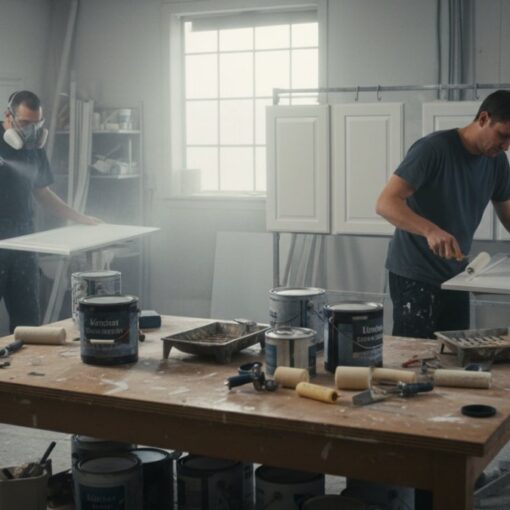
Surface preparation is where most of the work happens. Professional painters sand cabinets to bare wood, which removes old finishes, stains, and imperfections. This process alone takes 30-50 hours for an average kitchen. Improper sanding leads to uneven finishes, which is why DIY attempts often fail.
Cabinet box integrity matters significantly. If your cabinet boxes show signs of water damage, warping, or structural failure, refinishing becomes problematic. The finish will only last as long as the substrate beneath it.
Veneer-faced cabinets require different handling than solid wood. Veneered surfaces demand gentler sanding to avoid breaking through to the substrate, increasing labor costs by 20-30%.
Material Selection: Paint, Stain, and Finish Type
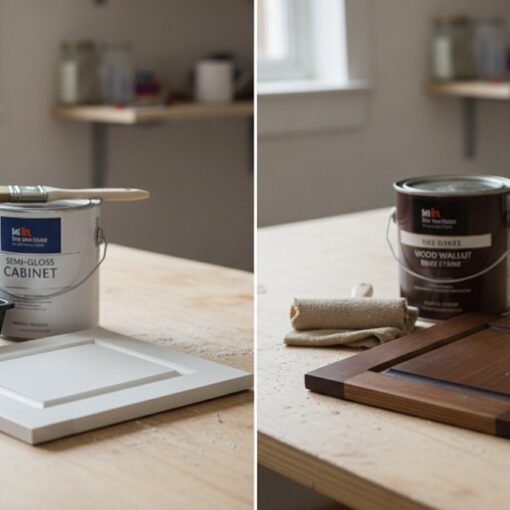
Your finish choice dramatically impacts both cost and longevity. Basic latex paint costs $30-$60 per gallon and delivers acceptable results. Furniture-grade acrylic paint costs $100-$200 per gallon and resists chipping and wear significantly better.
Stain finishes cost more than paint because they require multiple coats and intermediate sanding, typically 30-40% more than paint. Glazing adds depth and character but increases costs by 15-25%.
Topcoat selection affects durability and cost. Standard polyurethane topcoats cost $40-$80 per gallon. Water-based topcoats cost $60-$120 but dry faster and produce less odor. Conversion varnish and lacquer finishes cost $80-$150 per gallon and deliver superior durability.
Regional Labor Variance and Project Scope
Labor rates vary dramatically by geography. Denver area painters charge $35-$55 per hour. Major metropolitan areas like New York or San Francisco see rates of $60-$100 per hour. Your location directly impacts refinishing costs.
Project scope affects pricing in non-linear ways. A 100-square-foot kitchen costs less per square foot than a 200-square-foot kitchen because certain fixed costs distribute across more cabinetry. Accessibility matters too; cabinets that are easy to remove cost less to refinish than built-in cabinetry requiring in-place work.
Factors Affecting Cabinet Replacement Cost
Replacement costs hinge on cabinet quality tier, customization level, and installation complexity.
Cabinet Type: Stock, Semi-Custom, and Custom Options
Stock cabinets are pre-built in standard sizes and finishes, typically $100-$300 per linear foot installed. Your layout options are limited to standard configurations.
Semi-custom cabinets offer more flexibility than stock but less than full custom, costing $200-$500 per linear foot installed. Lead times are 4-8 weeks.
Custom cabinets are built specifically for your kitchen, costing $400-$1,200+ per linear foot installed. Lead times extend to 8-16 weeks. Custom work justifies its premium when you have unusual dimensions or specific design requirements.
Installation Labor and Structural Considerations
Installation labor typically costs $1,500-$4,000 for an average kitchen, depending on complexity. If your existing cabinet openings don’t align perfectly with new cabinet dimensions, you might need drywall patching, electrical outlet relocation, or plumbing adjustments, adding $500-$2,000.
Demolition and disposal of old cabinets costs $500-$1,500.
Benefits of Cabinet Refinishing
Refinishing delivers specific advantages that replacement cannot match, particularly for homeowners with solid cabinet structures and limited budgets.
Speed, Durability, and Aesthetic Appeal
Refinishing completes in 2-4 weeks for most kitchens. Replacement takes 4-8 weeks minimum, often longer with custom cabinets. You can typically use your kitchen within 24-48 hours of completion if the painter uses fast-drying finishes.
Professional refinishing with proper surface preparation and quality materials lasts 7-10 years before needing touch-ups. Some refinished cabinets have lasted 15+ years with minimal maintenance.
Aesthetic transformation rivals replacement in many cases. A well-executed refinishing project completely changes your kitchen’s appearance. Worn oak cabinets become modern white or gray. Glazing adds sophistication and depth.
The environmental benefit matters to many homeowners. Refinishing keeps existing cabinetry out of landfills, extending the life of functional furniture rather than replacing it.
Professional refinishing produces results that last 7-10 years when done correctly. The difference between professional and DIY work is dramatic; professional jobs hold up, while DIY projects typically fail within months due to inadequate surface preparation.
The Refacing vs New Price Paradox: Why Costs Converge
In 2026, refacing and replacement costs have converged to the point where the decision isn’t purely financial anymore. A high-end refinishing project with premium paint and glazing might cost $5,000-$6,000. Semi-custom cabinet replacement with basic installation might cost $6,000-$8,000. The price difference shrinks to negligible levels.
When costs are similar, the decision shifts to other factors: Do your cabinet boxes have structural integrity? Can you accept your existing kitchen layout, or do you need to reconfigure? Do you want a warranty on new construction? How much kitchen downtime can you tolerate?
The real paradox is this: refinishing offers better value if your cabinet boxes are solid and your layout works. Replacement offers better value if your boxes are compromised, your layout needs reconfiguring, or you want the longest possible warranty. Price alone doesn’t determine the winner.
Durability and Longevity: What Lasts Longer
Professional refinishing and new cabinet replacement have different longevity profiles. Understanding these differences helps you evaluate true value over time.
Professional Refinishing vs DIY Paint Solutions
Professional refinishing with quality materials lasts 7-10 years under normal kitchen use. Some professional jobs last 15+ years with proper maintenance.
DIY cabinet painting using consumer-grade products typically fails within 12-18 months because homeowners skip surface preparation. Most DIY attempts involve light sanding or no sanding, followed by paint application directly over existing finishes. Paint adheres poorly to glossy surfaces and peels or chips within months.
Professional painters use conversion varnish, lacquer, or water-based topcoats that adhere far better than consumer paint. They apply multiple thin coats and sand between coats, creating mechanical adhesion that consumer-grade products cannot achieve.
The cost difference between DIY and professional work seems significant upfront ($500-$1,500 for DIY versus $3,000-$5,000 for professional). However, when you factor in redoing the project after DIY failure, professional work becomes financially competitive over a 10-year timeline.
Cabinet Box Integrity Assessment: Know Before You Invest
Before committing to either refinishing or replacement, assess your cabinet boxes honestly. This assessment determines which option makes sense for your situation.
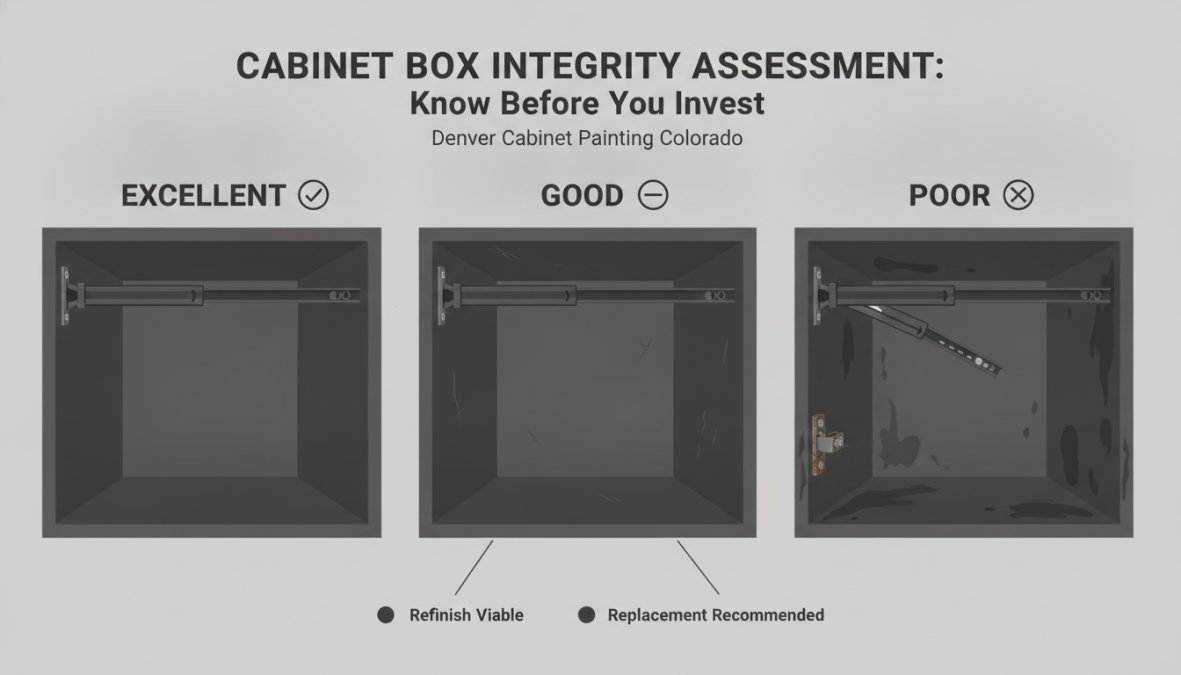
Solid wood boxes with no visible damage, no soft spots, and no water staining are ideal candidates for refinishing. Press on the wood with your fingernail or a screwdriver; it should feel hard and solid. If the wood feels soft or spongy, water damage has compromised the structure.
Check for veneer separation or delamination. Run your hand along cabinet edges and surfaces. If veneer is lifting or separating from the substrate, the cabinet has failed.
Examine drawer slides and hinges. If they function smoothly and show no significant rust or damage, the cabinet structure is likely sound. Look inside cabinets for water stains, discoloration, or mold growth. These indicate past or ongoing moisture issues.
Check the cabinet box bottom for soft spots or deterioration. Press your finger on the bottom inside surface. Solid wood should feel hard. If it feels soft or squishy, the cabinet is compromised.
If your assessment reveals solid structure with no major damage, refinishing makes financial sense. If you find significant structural issues, replacement becomes the better choice.
Factors That Tip the Decision Toward Refinishing
Your cabinet boxes are solid and structurally sound. This is the primary factor. If the underlying structure is good, refinishing delivers excellent value.
Your kitchen layout works well. If your current cabinet arrangement serves your needs, refinishing preserves that functionality while updating the appearance.
Your budget is constrained. Refinishing costs 40-60% less than replacement for most kitchens.
You want minimal kitchen disruption. Refinishing takes 2-4 weeks. Replacement takes 4-8+ weeks.
You value environmental sustainability. Refinishing keeps existing cabinetry in use rather than sending it to landfills.
Factors That Tip the Decision Toward Replacement
Your cabinet boxes show structural damage, water stains, soft spots, veneer separation, or mold growth. Refinishing a compromised box is temporary at best.
Your kitchen layout needs reconfiguration. If you want to relocate appliances, add an island, or change traffic flow, replacement accommodates these changes.
You want maximum warranty coverage. New cabinets come with manufacturer warranties (typically 5-10 years). Refinished cabinets carry only the painter’s warranty on the finish.
You’re planning long-term occupancy. If you’re staying in your home for 15+ years, replacement’s longer lifespan justifies its higher upfront cost.
You want to maximize resale value. New cabinets appeal to home buyers more than refinished ones.
When cabinet refinishing vs replacement cost becomes the central question in your kitchen renovation, the answer depends on your cabinet’s condition, your layout needs, and your budget. Denver Cabinet Painting Colorado has helped hundreds of Colorado homeowners navigate this exact decision over 40 years. Our team assesses cabinet structure, discusses your goals, and recommends the option that delivers the best value for your specific situation. Get a free quote today and discover whether professional refinishing transforms your kitchen or whether replacement makes more sense for your home.
| Option | Typical Cost | Timeline | Best For | Durability |
|---|---|---|---|---|
| Refinishing | $1,500-$4,000 | 2-4 weeks | Solid boxes, tight budget, quick turnaround | 7-10 years |
| Refacing | $4,000-$9,000 | 3-5 weeks | Layout works, want new doors/hardware | 10-12 years |
| Replacement | $8,000-$20,000+ | 4-8+ weeks | Damaged boxes, layout changes, long-term value | 15-20 years |
Frequently Asked Questions
Is it cheaper to refinish or replace kitchen cabinets?
Cabinet refinishing is typically more affordable upfront than full replacement. However, the price gap has narrowed significantly. Refinishing costs depend on surface preparation, material selection, and labor in your region. Replacement costs vary widely based on cabinet type, stock cabinets are budget-friendly, while semi-custom and custom options approach refinishing costs when labor is factored in. Request quotes from local contractors to compare cabinet refinishing vs replacement cost for your specific situation.
What factors influence the cost of cabinet refinishing?
Key factors affecting cabinet refinishing cost include: cabinet condition (damage requires extensive prep), surface material (laminate vs solid wood), finish type (paint, stain, or glaze), hardware upgrades, and regional labor rates. Surface preparation, sanding, cleaning, and priming, is critical for durability and affects timeline and cost. Kitchen size, accessibility, and whether you need custom colors also impact pricing. Professional refinishing commands higher costs than DIY kits but delivers superior longevity and finish quality.
How long does professional cabinet refinishing last compared to replacement?
Professional cabinet refinishing, when properly executed with quality materials and meticulous preparation, typically lasts 7-10+ years with proper care. Full cabinet replacement offers longer-term durability, new cabinets last 15-20+ years depending on construction quality and usage. However, refinishing doesn't address underlying structural issues. If your cabinet boxes are solid, refinishing provides excellent value. If boxes are damaged, replacement becomes the better long-term investment despite higher upfront cost.
When should I choose cabinet refinishing instead of replacement?
Choose refinishing when: your cabinet structure and boxes are sound, you want a faster project timeline (days to weeks vs months), your budget is tight, or you like your current layout. Refinishing works well for cosmetic updates, new paint, stain, hardware, and drawer fronts transform appearance without disruption. Choose replacement when: boxes are damaged, you need layout changes, you want modern features (soft-close hinges, pull-out shelves), or you're planning long-term. Assess cabinet box integrity first, it's the deciding factor.
This article was written using GrandRanker