Table of Contents
- Kitchen Cabinet Painting vs Full Replacement: Quick Comparison
- Cost of Painting Kitchen Cabinets vs New Cabinets
- Pros and Cons of Cabinet Painting
- Pros and Cons of Cabinet Replacement
- How Long Does It Take to Paint Kitchen Cabinets?
- Durability of Professional Cabinet Painting
- Is Cabinet Painting a DIY Project?
- Impact on Home Resale Value and ROI Analysis
Last Updated: June 29, 2026
Kitchen Cabinet Painting vs Full Replacement: Quick Comparison
When deciding between kitchen cabinet painting and full replacement, homeowners face a consequential choice that affects budget, longevity, aesthetics, and long-term satisfaction. Cabinet painting refreshes existing cabinet boxes with professional-grade paint, while full replacement removes and installs entirely new cabinetry. Understanding the real costs, timelines, durability expectations, and ROI analysis will guide your decision.
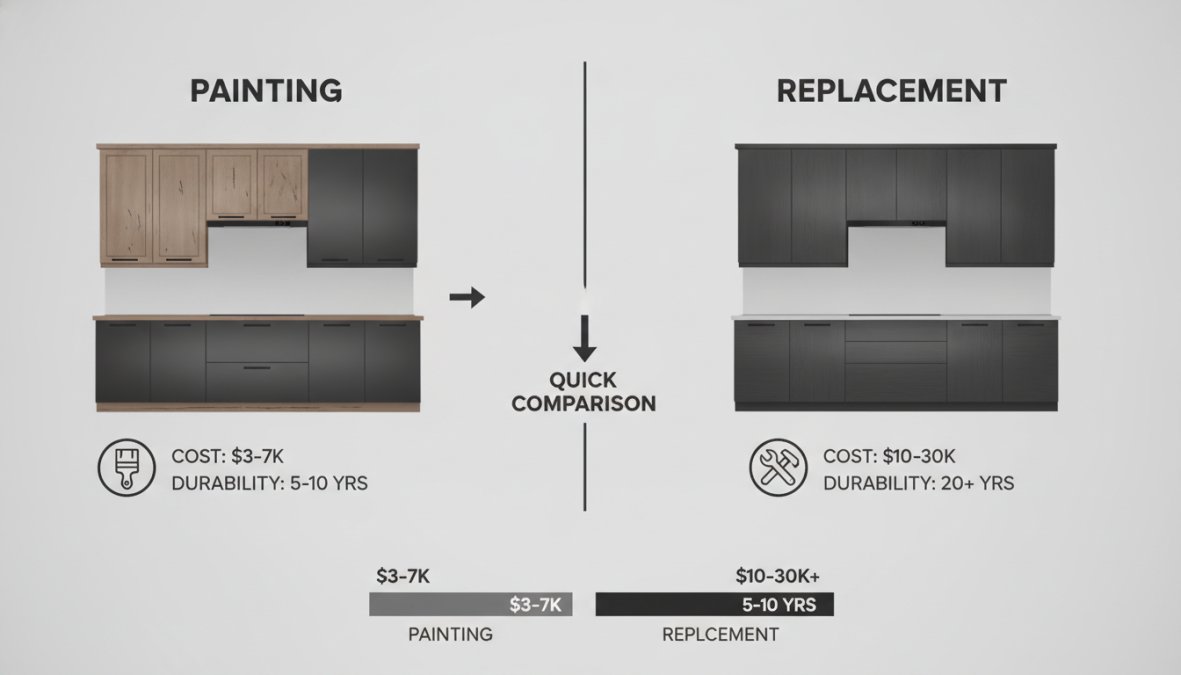
| Aspect | Cabinet Painting | Full Replacement |
|---|---|---|
| Typical Cost Range | $3,000-$8,000 | $15,000-$40,000+ |
| Project Duration | 2-4 weeks | 4-8 weeks |
| Disruption to Kitchen | Moderate (limited use) | Severe (kitchen unusable) |
| Lifespan of Finish | 7-10 years | 20-30 years |
| Best For | Budget-conscious, timeline-tight | Long-term investment, major style change |
| DIY Feasibility | Possible with care | Requires professional installation |
| Resale Value Impact | Moderate improvement | Significant improvement |
Cost of Painting Kitchen Cabinets vs New Cabinets
The cost gap between these options is dramatic and often shapes the initial decision.
Material and Labor Costs for Cabinet Painting
Professional cabinet painting typically costs $3,000-$8,000 for an average kitchen. Material costs are modest: high-quality cabinet paint like Benjamin Moore Advance runs $75-$90 per gallon, with most kitchens requiring 2-3 gallons. Primer and prep materials add $200-$400.
Labor comprises the bulk of the expense. Professional painters charge $50-$150 per hour, with most kitchens requiring 40-80 hours of labor. The preparation phase, sanding, degreasing, and masking, determines finish quality and consumes the majority of time.
The cheapest cabinet painting job often becomes the most expensive mistake. Rushed preparation leads to peeling paint and premature failure within 3-5 years instead of 7-10. Quality preparation is where durability is built.
Material and Labor Costs for Cabinet Replacement
Full cabinet replacement costs $15,000-$40,000 or more, depending on material choices:
- Stock cabinetry: $15,000-$20,000
- Semi-custom cabinetry: $20,000-$35,000
- Custom cabinetry: $35,000-$60,000+
These costs include cabinets, hardware, installation labor, and disposal of old cabinetry. Installation typically takes 2-4 weeks, with additional costs for electrical or plumbing adjustments.
Pros and Cons of Cabinet Painting
Advantages of Professional Cabinet Painting
Cabinet painting offers cost and speed advantages. A kitchen can be refreshed in 2-4 weeks for a fraction of replacement costs. When done professionally with quality materials and proper technique, painted cabinets can look remarkably similar to new cabinetry.
Painted cabinets preserve structurally sound cabinet boxes while transforming appearance. This is particularly valuable for builder-grade cabinets from the 1990s and 2000s with good bones but dated finishes.
Limitations and Durability Concerns
Cabinet paint is not as durable as factory finishes on new cabinetry. Painted finishes typically last 7-10 years before requiring touch-ups or repainting, while new cabinetry carries 20-30 year finishes.
Paint cannot fix underlying structural problems. Warped, water-damaged, or failing cabinet boxes are masked rather than solved. Laminate or veneer cabinets that are peeling cannot be reliably painted.
You also cannot dramatically change cabinet style with paint alone. You’re limited to color and finish changes, not structural redesign.
The most common cabinet painting failure occurs when homeowners skip proper surface preparation. Painting over glossy factory finishes without adequate sanding and degreasing leads to peeling within 2-3 years.
Pros and Cons of Cabinet Replacement
Advantages of Cabinet Replacement
New cabinetry carries a 20-30 year lifespan, making it a genuine long-term investment. Factory finishes resist chipping, fading, and wear far better than painted surfaces.
Replacement allows complete style transformation, switching from flat-panel modern to traditional raised-panel doors, or from laminate to solid wood. You can redesign kitchen layout, add soft-close hinges, and choose from thousands of options.
Replacement solves structural and functional problems simultaneously. Sagging drawers, failing hinges, and water-damaged boxes are eliminated entirely. For home resale, new cabinetry typically delivers stronger returns than painted cabinets.
Limitations and Trade-offs
The primary drawbacks are cost and disruption. Replacement costs 3-5 times more than painting and renders your kitchen unusable for 4-8 weeks. For large families or work-from-home situations, this disruption is significant.
Cabinet replacement also locks you into a specific design for decades. Painted cabinets can be repainted to a new color relatively affordably, allowing style evolution without major expense.
There’s also environmental impact. Removing and disposing of old cabinetry generates significant waste, while painting preserves existing cabinets and extends their useful life.
How Long Does It Take to Paint Kitchen Cabinets?
Professional Timeline vs DIY Duration
A professional cabinet painting project typically spans 2-4 weeks: 3-5 days for surface preparation, 5-7 days for priming and base coats, 3-5 days for topcoats, and 2-3 days for hardware reinstallation. The preparation phase is longest and most critical, as surface quality determines finish quality.
DIY cabinet painting takes 4-8 weeks for the same kitchen. Most homeowners underestimate time requirements and work evenings and weekends. They often discover prep issues that extend the timeline further.
The difference between a 2-week professional project and an 8-week DIY project is focus and full-time effort. Professionals dedicate 8-10 hours daily; homeowners typically manage 2-3 hours on weeknights.
Durability of Professional Cabinet Painting
Paint Quality and Surface Preparation Impact
Cabinet paint lifespan depends on paint quality and preparation depth. High-quality cabinet paints like Benjamin Moore Advance or professional lacquers last 10+ years when applied over properly prepared surfaces. Budget paint products fail within 3-5 years.
Proper sanding, degreasing, and priming ensure adhesion and finish smoothness. Professional applications include a primer coat plus 2-3 topcoats, building a finish thick enough to withstand daily kitchen use.
Long-Term Maintenance Costs and Cabinet Lifespan
Painted cabinets require ongoing maintenance: annual touch-ups ($500-$1,500 every 2-3 years) and full repainting ($3,000-$8,000 every 7-10 years). Over 20 years, total cabinet finish maintenance costs $15,000-$25,000, still less than replacement but significantly more than the initial investment.
New cabinetry requires minimal maintenance beyond regular cleaning. The factory finish typically doesn’t require refinishing for 20-30 years.
Is Cabinet Painting a DIY Project?
Skills and Tools Required
Cabinet painting requires specific skills most homeowners lack: proper sanding without damaging veneer, thorough degreasing, precise masking, and paint application without visible brush marks. Tools required include orbital sander, degreaser, masking supplies, quality brushes and rollers, and adequate ventilation. A basic setup costs $200-$400.
Dust control is another consideration. Sanding generates fine dust that settles throughout your home. Professional painters use dust containment systems; most DIYers do not.
Common DIY Mistakes to Avoid
The most frequent error is inadequate surface preparation. Homeowners sand lightly, skip degreasing, or apply paint directly over glossy finishes, resulting in failure within 2-3 years.
Applying too much paint in a single coat leads to runs and drips. Multiple thin coats produce better results but require patience.
Paint selection matters. Standard interior latex paint isn’t formulated for cabinet durability. Cabinet-specific paints like Benjamin Moore Advance are designed to cure hard and resist chipping.
Inadequate drying time between coats results in poor adhesion and finish failure. Quality cabinet paint requires 24-48 hours between coats.
Impact on Home Resale Value and ROI Analysis
ROI by Kitchen Style and Market
Cabinet painting typically recovers 50-70% of its cost in resale value. A $5,000 project might add $2,500-$3,500 to home value.
Cabinet replacement typically recovers 60-80% of its cost. A $25,000 project might add $15,000-$20,000 to home value. For higher-end homes, this percentage can reach 80-90%.
If you’re planning to sell within 5 years, painting may make more financial sense. If you’re staying 15+ years, replacement’s durability advantage often justifies the higher cost.
Cabinet painting is the smart choice for: homeowners staying 5-10 years, those on tight budgets, kitchens with solid cabinet bones, and anyone valuing quick turnaround.
Cabinet replacement is the smart choice for: long-term homeowners (15+ years), those planning to sell soon in competitive markets, kitchens requiring style transformation, and situations where cabinet boxes are structurally compromised.
Environmental Impact Comparison
Cabinet painting is more environmentally responsible. It preserves existing cabinetry, extending the useful life of materials already manufactured. Painting requires minimal new materials and generates no construction waste.
Cabinet replacement generates significant waste, though some materials can be salvaged or recycled. Manufacturing new cabinetry consumes resources in lumber or MDF production, finish application, and transportation.
The decision between kitchen cabinet painting and full replacement depends on your timeline, budget, and long-term plans. For quick, affordable transformation, professional cabinet painting delivers exceptional value. For long-term investment with decades of durability, replacement justifies its cost.
Denver Cabinet Painting Colorado specializes in transforming kitchens through professional cabinet painting with meticulous surface preparation ensuring durability. With 40 years of experience across the Denver metro area, their team delivers smooth, consistent finishes. They offer free quotes to help determine whether painting is right for your kitchen.
Frequently Asked Questions
Is it cheaper to paint or replace kitchen cabinets?
Cabinet painting is significantly more affordable upfront. Professional cabinet painting typically costs $3,000-$9,000 for a full kitchen, while full cabinet replacement ranges from $15,000-$30,000+. Painting offers immediate savings, though replacement provides longer-term durability. The cost of painting kitchen cabinets vs new depends on your kitchen size, cabinet material, and whether you hire professionals or DIY.
How long does a painted cabinet finish last?
The durability of professional cabinet painting depends heavily on surface preparation and paint quality. With premium products like Benjamin Moore Advance and proper application, painted cabinets can last 7-10 years or longer in typical kitchens. However, high-traffic kitchens may see wear within 5-7 years. Maintenance, regular cleaning and touch-ups, extends longevity significantly compared to neglected surfaces.
Does painting kitchen cabinets add value to your home?
Yes, cabinet painting improves kitchen aesthetics and can increase perceived home value, though ROI varies by kitchen style and market. Modern or transitional kitchens typically see better returns than traditional styles. While painting won't recoup 100% of costs like full replacement might, it delivers strong ROI, often 50-70%, relative to its low investment, making it ideal for budget-conscious sellers.
What makes cabinet painting better than replacement in some situations?
Cabinet painting excels when your cabinet boxes are structurally sound and you want a quick, affordable refresh. Painting preserves existing storage layout, avoids weeks of kitchen disruption, and works on solid wood, MDF, and laminate surfaces. It's ideal for rental properties, quick home sales, or when you love your cabinet design but hate the color. Replacement suits situations requiring style changes, damaged boxes, or when you need maximum durability.
This article was written using GrandRanker