Table of Contents
- 10 Signs Your Kitchen Cabinets Need Refinishing
- Refinishing vs. Replacing Kitchen Cabinets: When to Choose Each
- Cost to Refinish Kitchen Cabinets: DIY vs. Professional
- How Long Does It Take to Refinish Kitchen Cabinets?
- Best Tools for Cabinet Refinishing: Material Suitability Guide
- Steps to Inspect Your Cabinets for Refinishing Needs
- Common Cabinet Damage Signs You Shouldn’t Ignore
- Benefits of Professional Cabinet Refinishing
Signs Your Kitchen Cabinets Need Refinishing
Last Updated: June 29, 2026
Knowing the signs your kitchen cabinets need refinishing can save you thousands of dollars compared to full replacement. At Denver Cabinet Painting Colorado, we’ve worked with hundreds of homeowners who discovered their cabinets weren’t beyond repair, they simply needed professional refinishing to restore that showroom finish.
This guide covers the specific warning signs that indicate your kitchen cabinets are candidates for refinishing rather than replacement, the cost implications of different approaches, and what to expect from the refinishing process.
10 Signs Your Kitchen Cabinets Need Refinishing
Your kitchen cabinets send clear signals when they’re ready for refinishing.
Surface Flaws and Finish Deterioration
Peeling paint and flaking finish are the most obvious indicators that cabinet refinishing is needed. When the topcoat begins to separate from the underlying wood, moisture can seep underneath and cause accelerated deterioration. You’ll notice paint lifting at edges and corners, where movement and stress are greatest.
Scratches and scuffs that expose bare wood or primer underneath signal that the protective finish has been compromised. Dull, faded finishes that no longer reflect light evenly indicate the clear coat has oxidized and lost its protective properties.
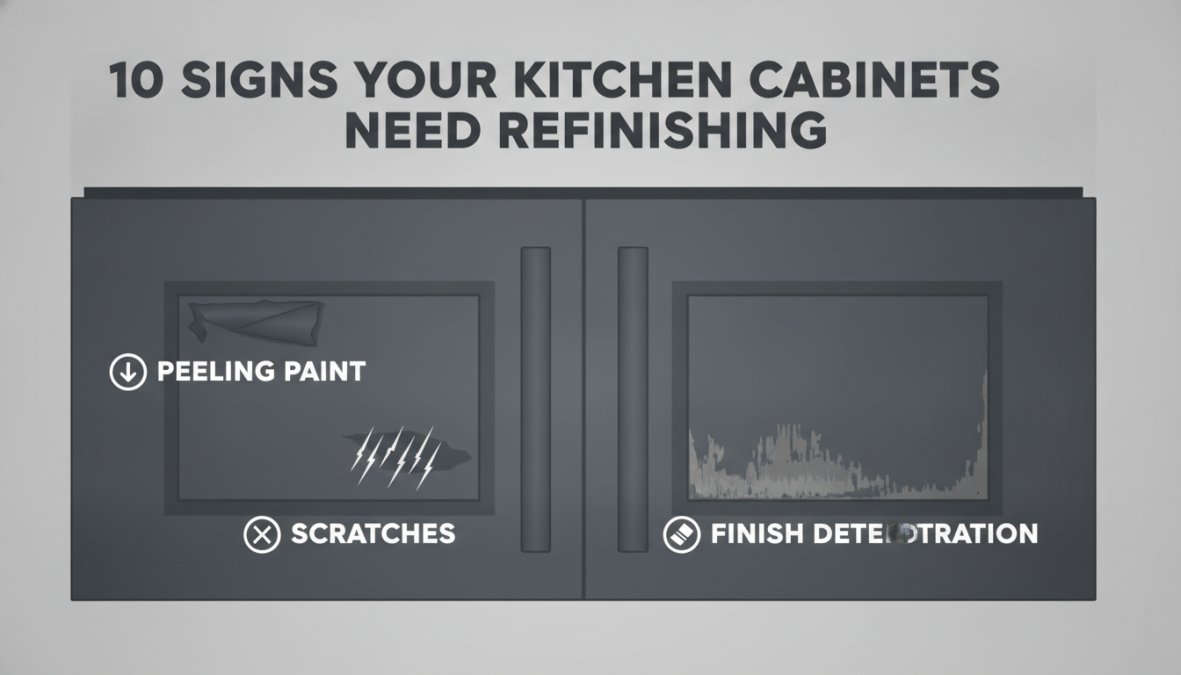
Discoloration and staining, particularly around handles and near the stovetop, suggest the finish can no longer protect the underlying material. Water rings, heat marks, or dark spots mean moisture has penetrated the finish layer.
Moisture Damage and Water Sources
Swelling around cabinet doors and drawer fronts happens when wood absorbs moisture. If cabinet doors don’t close evenly or stick in humid weather, moisture damage is likely the culprit. Check the bottoms of lower cabinets and areas near the sink first.
White spots or bloom on the finish suggest moisture is trapped between the paint and the wood. This hazy discoloration indicates the finish is failing to protect the material beneath and requires urgent attention.
Cabinet hardware that’s rusted or corroded, or wood around the hardware that’s darkened or soft to the touch, signals water intrusion. If the wood feels spongy when pressed, structural damage has begun.
Structural and Aesthetic Issues
Warping or bowing of cabinet doors and drawer fronts means the wood has absorbed enough moisture to change shape. Refinishing can prevent further water damage if done promptly.
An outdated look is one of the most common reasons homeowners refinish cabinets. Wood grain that’s yellowed with age or finishes that no longer match your kitchen’s aesthetic point to refinishing as a cost-effective refresh.
Hardware that’s worn, broken, or mismatched detracts from overall appearance. Replacing knobs and pulls during refinishing gives your kitchen an immediate upgrade.
Refinishing vs. Replacing Kitchen Cabinets: When to Choose Each
The decision between refinishing and replacing depends on the extent of damage and your budget.
Refinishing is the best choice when:
- Cabinets are structurally sound with no rot or severe warping
- Damage is primarily cosmetic or affects only the finish
- The cabinet layout and style work for your kitchen
- You want to update the look without a major renovation
- Budget constraints make replacement prohibitive
Refinishing costs a fraction of replacement and can be completed in 1-3 weeks. The underlying cabinet structure remains unchanged, which means your kitchen’s workflow and storage stay exactly the same.
Replacement makes sense when:
- Cabinets have structural damage, rot, or severe warping
- You want to change the kitchen layout or add storage
- Existing cabinets are damaged beyond cosmetic repair
- You’re planning a complete kitchen overhaul anyway
- The cost of refinishing approaches 50% or more of replacement cost
Replacement gives you the opportunity to redesign your kitchen completely. However, replacement typically takes 4-8 weeks and costs significantly more than refinishing.
Have a professional assess your cabinets. Many companies, including Denver Cabinet Painting Colorado, offer free consultations to evaluate whether refinishing or replacement is the better investment for your situation.
Cost to Refinish Kitchen Cabinets: DIY vs. Professional
The cost difference between DIY refinishing and professional service is substantial.
DIY Cost-Benefit Analysis
DIY cabinet refinishing kits range from $80-$200 and cover approximately 100 square feet. For a standard kitchen, you might need 2-3 kits, bringing material costs to $150-$450. Additional supplies like sandpaper, drop cloths, brushes, and protective equipment add another $50-$100.
Time investment is the largest DIY cost. Cabinet refinishing requires meticulous surface preparation, sanding, cleaning, and priming before finish coats are applied. Most DIYers spend 40-80 hours on a kitchen’s worth of cabinets. At a modest $25/hour value for your time, that’s $1,000-$2,000 in labor.
Common DIY mistakes include uneven paint application, brush marks visible in the final finish, inadequate surface prep leading to peeling paint, and poor color matching. Many DIYers find the finished product doesn’t match expectations, and professional correction becomes necessary anyway.
The most expensive DIY mistake is skipping proper surface preparation. Rushing through sanding and cleaning almost always results in peeling paint within 6-12 months.
Professional Refinishing Investment
Professional cabinet refinishing typically costs $2,500-$8,000 for a standard kitchen, or roughly $80-$200 per linear foot. This includes expert surface preparation, professional-grade materials, spray application for a factory-smooth finish, and a warranty on the work.
A professionally refinished cabinet finish typically lasts 7-10 years with normal kitchen use, compared to 2-4 years for many DIY finishes. The cost per year of durability often favors professional work.
Denver Cabinet Painting Colorado offers free quotes to help you understand the investment required for your specific kitchen.
How Long Does It Take to Refinish Kitchen Cabinets?
A typical professional refinishing project takes 1-3 weeks from start to finish. This includes the initial assessment, surface preparation (2-5 days), primer application (1-2 days), and finish coat application (2-4 days). Most cabinets are ready for light use within 3-5 days and full use within 7 days.
DIY refinishing typically requires 2-4 weeks of elapsed time, though actual hands-on work might only be 40-80 hours spread across that period. You can’t compress the drying time between coats.
Factors that extend the timeline include extensive damage requiring wood repair, custom color matching, and weather conditions affecting drying time. Professional painters usually handle these constraints more efficiently than DIYers.
Best Tools for Cabinet Refinishing: Material Suitability Guide
Different cabinet materials require different approaches to refinishing.
Essential Tools for Different Cabinet Materials
Wood cabinets respond best to traditional sanding and staining. Orbital sanders with 120-150 grit sandpaper effectively remove old finish. Water-based primers and paints work well on wood and dry quickly, though oil-based products provide superior durability for high-traffic areas.
Laminate cabinets can’t be sanded aggressively without damaging the thin veneer. Use a deglosser or light sanding with 220+ grit paper. Specialty primers designed for laminate are essential; standard primers won’t bond properly.
Thermofoil cabinets (vinyl-wrapped MDF) are challenging because the vinyl coating is delicate. A deglosser followed by a flexible primer and paint designed for vinyl surfaces works best. Many professionals recommend replacement rather than refinishing for thermofoil.
Metal cabinets require rust removal and a rust-inhibiting primer before painting. Steel wool or a wire brush removes surface rust, then a metal primer prevents future corrosion.
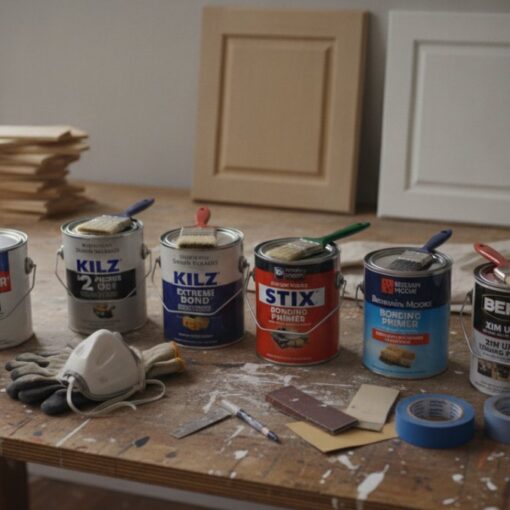
Match your primer and paint to your cabinet material. Using a primer designed for wood on laminate cabinets is one of the most common reasons for refinishing failure.
Eco-Friendly Refinishing Options
Water-based cabinet paints have advanced significantly and now rival oil-based products for durability while emitting fewer volatile organic compounds (VOCs). Brands like Sherwin-Williams Emerald and Benjamin Moore Advance provide excellent durability with water-based formulations.
Natural stains derived from plant materials offer an eco-conscious alternative to petroleum-based stains. Low-VOC primers and sealers reduce harmful fumes during application while maintaining performance standards.
Steps to Inspect Your Cabinets for Refinishing Needs
A systematic inspection reveals whether your cabinets are candidates for refinishing.
Step 1: Visual assessment from normal viewing distance. Stand back and look at your cabinets from across the room. Note the overall color, sheen, and any obvious damage.
Step 2: Close inspection of paint and finish condition. Run your hand across cabinet surfaces to feel for peeling, flaking, or rough spots. Open and close doors and drawers; do they move smoothly? Check corners and edges where finish typically deteriorates first.
Step 3: Check for moisture damage. Feel the wood around the sink area and on the bottoms of lower cabinets. Soft, spongy wood indicates water damage. Look for discoloration, swelling, or warping.
Step 4: Assess hardware condition. Examine cabinet knobs, pulls, and hinges. Are they rusty, loose, or broken? Does hardware match across the kitchen?
Step 5: Evaluate the cabinet structure. Check that doors hang evenly and don’t gap at corners. Look for warping or bowing of door panels and drawer fronts.
Step 6: Document problem areas. Take photos of specific damage, peeling, stains, or wear. These photos help a professional painter provide accurate quotes.
| Inspection Area | What to Look For | Refinishing Candidate? |
|---|---|---|
| Paint/finish | Peeling, flaking, dull sheen | Yes, if minor |
| Moisture damage | Soft wood, swelling, discoloration | Yes, if caught early |
| Hardware | Rust, mismatches, breakage | Yes, easy to replace |
| Structure | Warping, gaps, uneven doors | Maybe, depends on severity |
| Overall appearance | Yellowing, outdated color, worn look | Yes, always |
Common Cabinet Damage Signs You Shouldn’t Ignore
Some cabinet damage escalates quickly if not addressed.
Water damage progresses faster than any other cabinet problem. A small water ring near the sink that you ignore for six months can become soft, rotting wood requiring cabinet replacement. The moment you notice water damage, act to prevent further moisture intrusion.
Mold or mildew growth inside cabinets indicates sustained moisture problems requiring professional remediation beyond simple refinishing. Musty odors or black spots signal that moisture control is the underlying issue.
Severe warping where doors no longer close properly usually can’t be fixed by refinishing alone. However, catching warping early and refinishing to seal the wood can prevent it from worsening.
Pest damage, small holes, or sawdust suggests structural compromise. Address the pest problem first, then refinish to seal the wood and prevent future infestation.
Loose or separating cabinet joints indicate the underlying structure is failing. Refinishing won’t restore structural integrity; replacement might be more practical.
Benefits of Professional Cabinet Refinishing
Professional refinishing delivers benefits beyond what DIY approaches can achieve.
A smooth, consistent finish is the most obvious advantage. Professional spray application eliminates brush marks and roller texture that plague DIY attempts. The result looks factory-finished rather than hand-painted.
Durability is another major benefit. Professional-grade materials and proper application create finishes lasting 7-10 years with normal kitchen use, justifying the higher upfront cost.
Minimal kitchen disruption is a practical advantage. Professional painters can usually work around your schedule, completing cabinets in sections so you maintain access to essential storage and appliances.
Color expertise helps you choose finishes that complement your kitchen’s lighting and décor. Professional painters understand how different sheens and colors interact with natural and artificial light.
Warranty protection gives you peace of mind. Most professional refinishing comes with a warranty covering peeling, flaking, or adhesion failure. If problems develop within the warranty period, the painter corrects them at no cost.
Denver Cabinet Painting Colorado brings 40 years of experience to every refinishing project. Their team understands the specific challenges of Colorado kitchens, the dry climate, temperature fluctuations, and altitude, and applies techniques proven to deliver durable results. Their emphasis on meticulous preparation ensures the finish will last, and their free quote process lets you understand the investment before committing.
Kitchen cabinets showing signs of wear don’t necessarily mean replacement is your only option. Refinishing can restore that showroom appearance and protect your investment for years to come. If you’re noticing peeling paint, water damage, or simply an outdated look, professional refinishing offers a cost-effective solution that transforms your kitchen without the expense and disruption of full replacement. Denver Cabinet Painting Colorado specializes in identifying which cabinets benefit most from refinishing and delivering results that make your kitchen feel brand new. Reach out for a free quote and discover how refinishing can revitalize your space.
Frequently Asked Questions
How do I know if my cabinets should be painted or refinished?
If your cabinets have surface-level damage like peeling paint, scratches, or fading finish, refinishing is ideal. Cabinet refinishing involves sanding and reapplying a new finish to restore the wood grain or apply fresh paint. If cabinets have structural damage, severe water damage, or you want a completely different material or style, replacement may be better. Refinishing typically costs 25-50% of replacement and preserves your existing cabinet structure.
What is the cost to refinish kitchen cabinets professionally?
Professional cabinet refinishing typically ranges from $1,500 to $5,000+ depending on kitchen size, cabinet condition, and finish type. DIY kits like Rust-Oleum Cabinet Transformations cost $80-$150, but require significant time and labor. Professional refinishing includes expert surface preparation, sanding, staining or painting, and protective topcoat application, ensuring smooth, consistent finishes that last 7-10 years or more.
How long does it take to refinish kitchen cabinets?
DIY refinishing typically takes 2-4 weeks when working on weekends, including prep, application, and drying time between coats. Professional cabinet refinishing usually takes 1-3 weeks depending on the scope and number of doors. Most professionals complete the work in phases: prep and sanding (3-5 days), staining or painting (5-7 days), topcoat application (3-5 days), and curing time before reinstallation.
Can peeling or damaged cabinet finishes be refinished?
Yes, peeling paint, scratches, dents, and surface flaws are ideal candidates for cabinet refinishing. The refinishing process includes thorough sanding to remove old finish and damage, filling gaps or imperfections, and applying new stain or paint with a protective topcoat. However, if wood swelling from moisture damage is severe or structural issues are present, replacement may be necessary. Professional painters can assess whether refinishing or replacement is best for your situation.
This article was written using GrandRanker