Table of Contents
- Best Color Trends for Kitchen Cabinets in 2026
- Warm Neutrals and Cream Tones Lead the Way
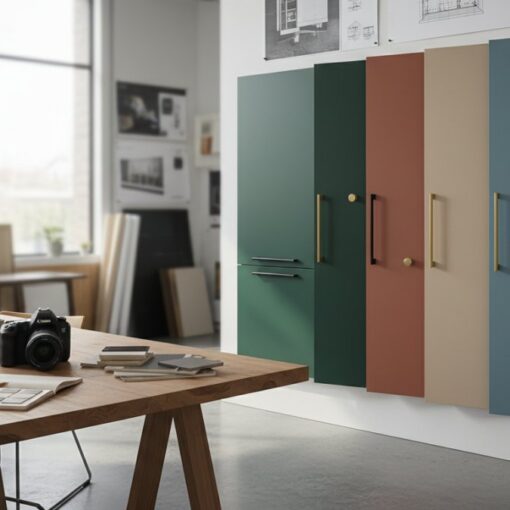
- Deep and Moody Greens: Dusty Sage to Forest Hues
- Navy and Inky Blue Cabinets for Modern Kitchens
- Charcoal Gray and Soft Black Finishes
- Two-Tone Kitchen Cabinet Ideas That Add Visual Interest
- How to Choose Kitchen Cabinet Paint Colors That Last
- Kitchen Cabinet Color Resale Value: What Buyers Actually Want
Best Color Trends for Kitchen Cabinets 2026
Last Updated: June 29, 2026
Kitchen cabinet colors have shifted dramatically from the all-white kitchens that dominated the 2010s. Today’s trends reflect a desire for personality, warmth, and sophistication. At Denver Cabinet Painting Colorado, we’ve helped hundreds of homeowners transform their kitchens with colors that feel both current and timeless. Understanding the best color trends matters because your cabinet choice will define your kitchen’s aesthetic for years to come.
Homeowners increasingly view kitchen cabinetry as a personal investment rather than a generic necessity. The shift toward deeper tones, warm neutrals, and two-tone combinations represents a maturation in how people approach kitchen design. Below, we’ll walk you through the color palettes defining kitchens in 2026 and show you how to choose colors that will look great for decades.
Why Cabinet Color Matters More Than You Think
Your cabinet color is the dominant visual element in any kitchen, covering roughly 40-50% of visible surfaces. It sets the tone for everything else, countertops, backsplash, hardware, and flooring must work in harmony with your chosen hue.
Cabinet color has significant psychological impact. Warm neutrals create comfort and timelessness. Deep greens and blues evoke sophistication and calm. Charcoal grays feel modern and sleek. Choosing intentionally, rather than defaulting to white, makes a statement about how you want to live in your space.
The best cabinet colors align with three criteria: they complement your home’s lighting and architecture, they reflect your personal style without being overly trendy, and they hold up well over time without showing wear or discoloration.
Warm Neutrals and Cream Tones Lead the Way
Warm neutrals, soft creams, warm beiges, pale taupes, and greige tones, remain the safest bet for longevity. Unlike stark whites, which feel cold and clinical, warm neutrals feel inviting and grounded because they’re rooted in natural materials and light.
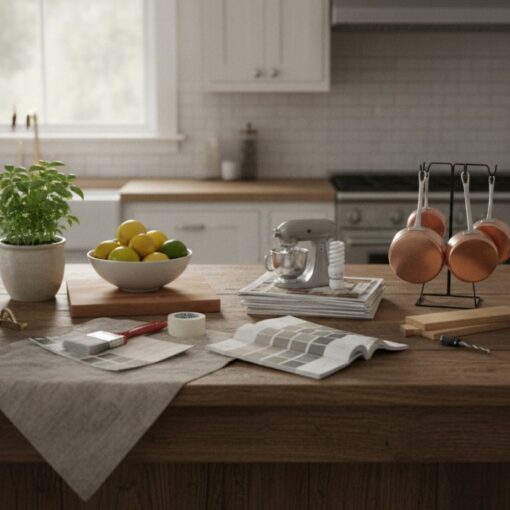
The key is understanding undertones. A cream with yellow undertones feels warm and honey-like, while a cream with gray undertones feels more sophisticated and muted. Sample paint colors in your actual kitchen under different lighting conditions, morning, afternoon, and artificial light all affect how a color reads on your cabinets.
Mushroom Gray and Warm Stone: The New Classics
Mushroom gray has emerged as the neutral of choice for design-conscious homeowners in 2026. It’s warmer than traditional grays, with subtle brown and taupe undertones that prevent it from feeling cold or institutional. Mushroom gray pairs beautifully with natural wood tones, stainless steel hardware, and both warm and cool countertop materials.
Warm stone colors, soft tans with warm gray undertones, offer another sophisticated option, evoking natural limestone while maintaining a refined aesthetic. These colors hide dust, fingerprints, and minor scuffs better than whites or very light tones, and they age gracefully.
When choosing a warm neutral, apply paint samples to foam boards and place them in your kitchen at different times of day. The best warm neutrals will feel consistent across morning, afternoon, and evening lighting.
Deep and Moody Greens: Dusty Sage to Forest Hues
Green cabinets have transitioned from niche to mainstream. Instead of bright, saturated greens, today’s best color trends feature muted, sophisticated green tones that feel like natural materials rather than painted surfaces.
Dusty sage green is the most popular green shade for 2026. It’s soft enough to feel calming yet deep enough to provide visual interest and anchor a kitchen design. Sage green works especially well with warm wood tones, brass hardware, and marble or granite countertops, creating a sophisticated, slightly vintage aesthetic.
Forest green and deep hunter green represent the bolder end of the spectrum. These darker shades work best in kitchens with ample natural light and high ceilings. When used as a two-tone combination, forest green lower cabinets with cream or white uppers, the effect is dramatic and highly desirable.
Green is associated with nature, growth, and calm. Kitchens painted in green tones consistently report higher satisfaction rates among homeowners, likely because the color creates a sense of wellness.
Green cabinets are becoming a classic choice. If considering green, lean toward muted, dusty tones rather than bright or saturated versions.
Navy and Inky Blue Cabinets for Modern Kitchens
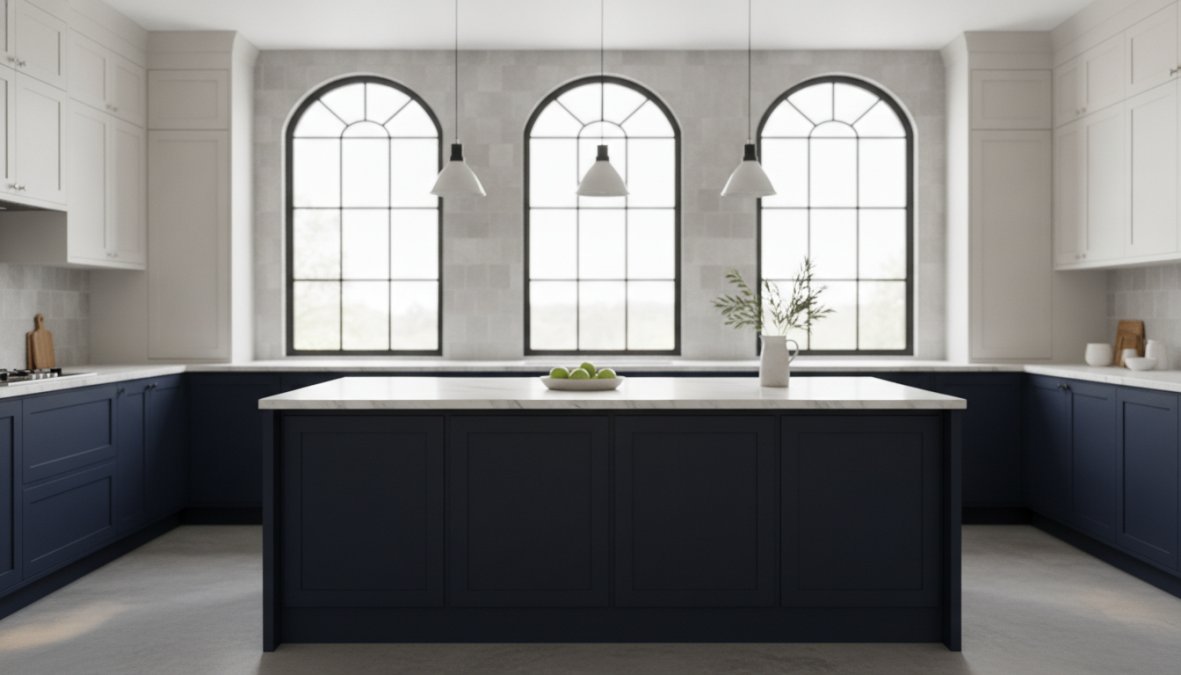
Navy blue represents the intersection of sophistication and timelessness. Unlike trendy colors that fade from favor, navy has remained constant in interior design for over a century. In 2026, navy cabinets are experiencing renewed popularity, particularly when paired with brass or bronze hardware and warm-toned countertops.
Select navy with the right undertone: navy with gray undertones feels cool and modern, while navy with purple undertones feels richer and more elegant. Inky blues, navy shades so dark they’re nearly black, create maximum visual impact and work best in kitchens with significant natural light.
Navy pairs exceptionally well with white or cream countertops, creating a nautical aesthetic, and works beautifully with warm wood tones for a more traditional look. One consideration: navy shows fingerprints and dust more readily than lighter neutrals, though most homeowners find this acceptable given the visual sophistication it provides.
Charcoal Gray and Soft Black Finishes
Charcoal gray occupies the space between gray and black, offering drama without the intensity of true black. Charcoal gray cabinets feel modern and sophisticated, working particularly well in contemporary kitchens with clean lines.
Soft black finishes, true black with very slight gray or brown undertones, represent the boldest choice. Black cabinets work best in kitchens with ample natural light, light-colored countertops and backsplash for contrast, and minimalist design aesthetics. Dark cabinets require adequate artificial lighting to brighten the space in evening hours.
Charcoal and soft black finishes age exceptionally well. These colors don’t show water spots or fingerprints as readily as lighter colors, and they develop a subtle patina over time that enhances their appearance.
Two-Tone Kitchen Cabinet Ideas That Add Visual Interest
Two-tone cabinetry, using one color for upper cabinets and a different color for lower cabinets, has become one of the most popular kitchen design strategies of 2026. This approach allows homeowners to enjoy multiple colors while maintaining visual coherence.
Contrast Combinations That Work
The most successful two-tone combinations follow these principles: contrast should be significant enough to create visual interest but not so extreme that colors clash. A cream upper with navy lower creates strong contrast. Light uppers with dark lowers is the most popular formula because it makes the kitchen feel taller and more open.
Dark uppers with light lowers is a bolder choice that works well in kitchens with significant natural light and high ceilings. Complementary color combinations, like navy and sage green, or charcoal and cream, add sophistication while maintaining visual harmony.
Avoid pairing colors with conflicting undertones. A warm cream upper with a cool gray lower will feel discordant. Always verify that your two colors have compatible undertones by viewing them together in your actual kitchen lighting.
Island as Design Statement
The kitchen island presents a unique opportunity in two-tone design. Many homeowners use the island as a third color or bold statement piece. A cream kitchen with navy lower cabinets and a charcoal island creates visual interest without overwhelming the space. Alternatively, the island can match one of the primary cabinet colors, creating balance and intentional design.
How to Choose Kitchen Cabinet Paint Colors That Last
Choosing a cabinet color is both an aesthetic and financial decision. Start by identifying your home’s overall aesthetic, traditional, transitional, contemporary, or eclectic. Your cabinet color should align with this aesthetic rather than fighting against it.
Next, consider your kitchen’s natural light. Kitchens with abundant southern or western exposure can handle darker colors. Kitchens with limited natural light benefit from lighter colors that reflect available light. North-facing kitchens need warm-toned colors to prevent the space from feeling cold.
Assessing Natural Light and Undertones
The relationship between natural light and cabinet color is critical. A color that looks beautiful in the paint store might appear entirely different in your kitchen. Paint stores typically use bright fluorescent or LED lighting, which doesn’t replicate natural light in your home.
Purchase sample quarts of your top color choices and paint them on foam boards or directly on cabinet doors. Observe these samples throughout the day, early morning, midday, and evening. The best cabinet colors will feel consistent across different times of day, with subtle shifts in warmth rather than dramatic changes in hue.
Undertones are the hidden colors within a paint color. A "gray" might have blue, green, brown, or purple undertones. Understanding undertones is essential because they determine how a color will interact with other kitchen elements. Test your color choices against existing countertops, flooring, and hardware.
Request paint samples in multiple sheens from the same color family. A warm cream in matte finish will look slightly different from the same color in semi-gloss or satin.
Matte vs. Glossy Finishes: Durability and Maintenance
Matte finishes provide a modern, sophisticated appearance and hide dust and fingerprints effectively, but are more susceptible to staining. Satin finishes offer a middle ground with subtle sheen, easier to clean than matte while maintaining sophistication. Satin is the most popular finish choice for kitchen cabinets.
Semi-gloss and high-gloss finishes provide maximum durability and are easiest to clean, but show every fingerprint and dust particle. For cabinet painting, professional-grade paints like Benjamin Moore Advance Waterborne Alkyd or Sherwin-Williams Emerald Urethane Trim Enamel provide superior durability compared to standard household paints.
| Finish Type | Appearance | Durability | Maintenance | Best For |
|---|---|---|---|---|
| Matte | Modern, sophisticated | Moderate | Requires careful cleaning | Contemporary kitchens, hiding imperfections |
| Satin | Subtle sheen, elegant | High | Easy to clean | Most kitchen applications |
| Semi-Gloss | Noticeable shine, bright | Very high | Requires frequent cleaning | High-traffic kitchens, maximum durability |
| High-Gloss | Reflective, dramatic | Very high | Requires frequent cleaning | Contemporary spaces, maximum impact |
Kitchen Cabinet Color Resale Value: What Buyers Actually Want
Neutral colors, creams, warm grays, and greige tones, consistently rank as the safest choices for resale value. These colors appeal to the broadest range of buyers and don’t require costly updates. Well-executed two-tone designs with one neutral color and one accent color also perform well in the resale market.
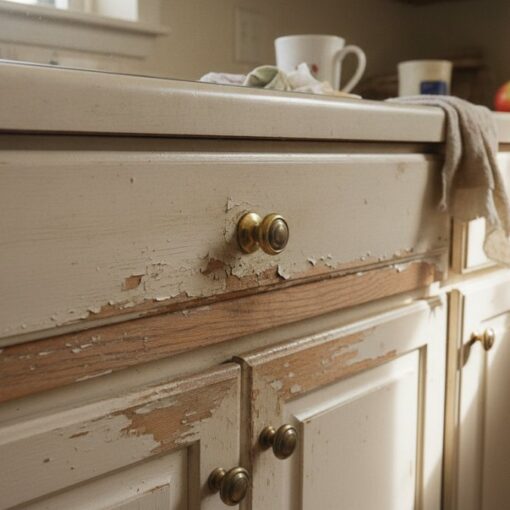
Colors that perform poorly in resale include very trendy shades that feel dated within years, extremely bold colors that appeal to narrow aesthetic preferences, and colors that clash with the home’s architectural style.
Timeless Kitchen Cabinet Colors That Protect Your Investment
The most resale-friendly cabinet colors are those that have remained popular for decades. Navy blue has been classic since the 1920s. Cream and warm white have been popular even longer. These colors aren’t trendy, they’re timeless.
If you want to incorporate trend colors while protecting your investment, use them as accents. An island in trendy sage green with cream upper and lower cabinets allows you to enjoy current trends while maintaining a timeless foundation.
Research indicates that kitchens with thoughtfully chosen, well-executed cabinet colors see higher resale premiums. The most important factor isn’t the specific color, but rather the quality of execution. Professionally painted cabinets with professional-grade materials will maintain their appearance far better than budget painting jobs.
Selecting the perfect cabinet color can feel overwhelming with thousands of options. The best color is one that makes you happy every time you walk into the space while standing the test of time. Whether you choose a warm neutral, sophisticated green, classic navy, or bold charcoal, the key is understanding how that color interacts with your specific kitchen’s light, architecture, and style. Denver Cabinet Painting Colorado specializes in helping homeowners navigate these decisions and executing flawless cabinet finishes that look beautiful for decades. Ready to discover how the right cabinet color can elevate your kitchen? Get a free quote from Denver Cabinet Painting Colorado today.
Frequently Asked Questions
What are the best color trends for kitchen cabinets in 2026?
The leading best color trends for kitchen cabinets in 2026 include warm neutrals like mushroom gray and warm stone tones, deep moody greens (especially dusty sage), navy and inky blue finishes, and charcoal gray. Two-tone kitchen cabinet combinations are also trending strongly. These colors offer both modern appeal and timeless elegance, working well with various interior design styles and kitchen aesthetics.
How do timeless kitchen cabinet colors affect resale value?
Timeless kitchen cabinet colors, such as white, soft creams, warm grays, and navy, tend to have the strongest kitchen cabinet color resale value. Neutral earth tones and classic blues appeal to broader buyer demographics and reduce the risk of the kitchen feeling dated. Avoid overly trendy or highly saturated colors that may limit buyer appeal. Professional cabinet refinishing in these timeless shades can significantly enhance your home's market value without the expense of full replacement.
Should I choose matte or glossy finishes for kitchen cabinets?
Matte finishes offer a modern, sophisticated look and hide fingerprints better, making them ideal for high-traffic kitchens. Glossy finishes provide superior durability, easier cleaning, and a more formal aesthetic. Your choice depends on your kitchen aesthetic and maintenance preferences. Matte finishes require more careful cleaning to avoid streaking, while glossy finishes show dust more readily but resist stains better. Professional cabinet painters can help you select the finish that balances your desired look with practical durability needs.
What's the difference between DIY and professional cabinet refinishing costs?
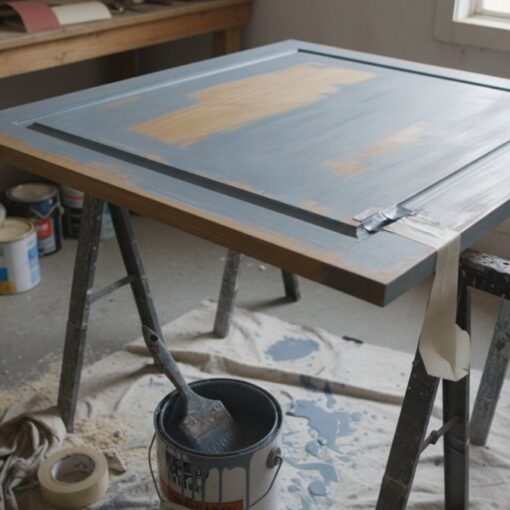
DIY cabinet refinishing typically costs $200-$500 in materials but requires significant time investment and carries risk of uneven finishes or adhesion issues. Professional cabinet refinishing averages $1,500-$3,500 depending on kitchen size and complexity, but guarantees smooth, consistent finishes with proper preparation and premium paints. Professionals use high-quality materials like Benjamin Moore Advance or Sherwin-Williams Emerald, ensuring durability and longevity that justifies the investment for most homeowners seeking lasting results.
This article was written using GrandRanker