Table of Contents
- Satin vs Semi-Gloss Paint for Kitchen Cabinets: Key Differences
- Durability and Moisture Resistance Comparison
- Aesthetics and Light Reflection: Visual Impact
- Ease of Cleaning and Maintenance
- Best Paint Finish for Kitchen Cabinets: Professional Recommendations
- How to Prep Cabinets for Painting: Foundation for Durability
- Environmental Impact and Cost Considerations
- Pros and Cons: Satin vs Semi-Gloss for Kitchen Cabinets
Last Updated: June 25, 2026
Choosing the right finish for your kitchen cabinets involves more than aesthetics. The debate around satin vs semi gloss paint for kitchen cabinets durability comes down to moisture resistance, cleaning demands, and how well your cabinet substrate was prepped. At Denver Cabinet Painting Colorado, we’ve spent 40 years helping homeowners across the Denver metro navigate this choice. Below, we’ll break down every meaningful difference so you can make a decision you won’t regret in two years.
Sheen level directly controls how much moisture the paint film repels, how easily grease wipes off, and how visible every brush mark becomes under your kitchen lighting. Get this wrong, and you’re repainting inside 18 months.
Satin vs Semi-Gloss Paint for Kitchen Cabinets: Key Differences
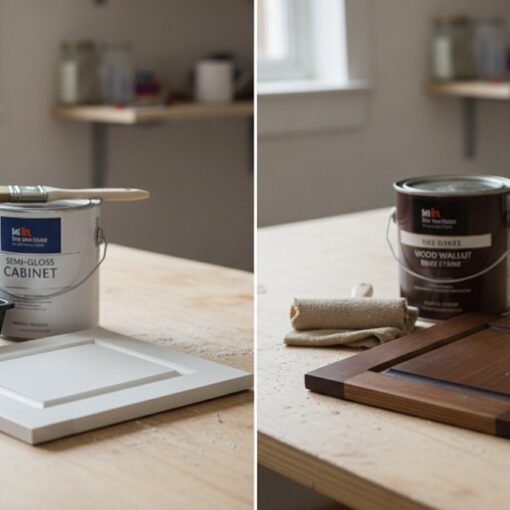
Satin finish and semi-gloss finish are two distinct sheen levels defined by their light reflectance value and binder-to-pigment ratio. Satin sits in the low-to-mid sheen range, while semi-gloss occupies the upper-mid range just below high gloss.
What is Satin Finish?
Satin finish is a paint sheen with a soft, velvety appearance that reflects light gently without producing strong glare. For cabinetry, satin delivers a warm, furniture-like quality that minimizes the appearance of surface imperfections, crucial for older cabinet doors with minor dents or grain variation. The trade-off is scrubbability: satin films are slightly softer than semi-gloss when fully cured, meaning aggressive scrubbing can dull the finish over time.
What is Semi-Gloss Finish?
Semi-gloss finish is a paint sheen with noticeably higher reflective properties, producing a shinier, harder surface film that resists moisture and grease more aggressively. Semi-gloss has long been the standard recommendation for kitchen cabinetry in high-traffic areas because of its scrubbability and moisture resistance. The drawback: those reflective properties amplify every brush mark and surface imperfection. If prep work is rushed, semi-gloss will expose it.
Durability and Moisture Resistance Comparison
Semi-gloss wins on raw durability metrics, but satin is more durable than most people expect when paired with the right formula.
How Sheen Level Affects Cabinet Longevity
Sheen level correlates directly with the density of the paint’s binder layer. A denser binder layer means a harder cured film, which translates to better resistance against scuffs, scratches, and wear. Semi-gloss films cure harder than satin films across virtually all paint chemistries.
The gap between satin and semi-gloss durability has narrowed significantly with modern cabinet-specific paints. Products like Sherwin-Williams Emerald Urethane Trim Enamel, available in both satin and semi-gloss, use urethane-modified resin that delivers exceptional hardness regardless of sheen. Most water-based enamels reach full hardness after 21 to 28 days, so cabinets should be treated gently during that window.
Always check the curing time on your specific paint product before returning cabinets to heavy use. Many homeowners damage their finish in the first two weeks by cleaning too aggressively before the topcoat has fully hardened.
Moisture and Grease Resistance in High-Traffic Areas
Kitchens are harsh environments. Steam from cooking, grease splatter near the range, and constant handprints test any paint film. Semi-gloss holds a clear advantage. The denser, more reflective surface film is inherently more moisture-resistant and easier to wipe clean without penetrating the paint layer.
Satin finishes in high-traffic areas around the sink and range require more careful maintenance. For cabinets directly above the cooktop or flanking the sink, semi-gloss is the professional recommendation. For upper cabinets and pantry doors away from moisture zones, satin performs reliably and often looks better.
Aesthetics and Light Reflection: Visual Impact
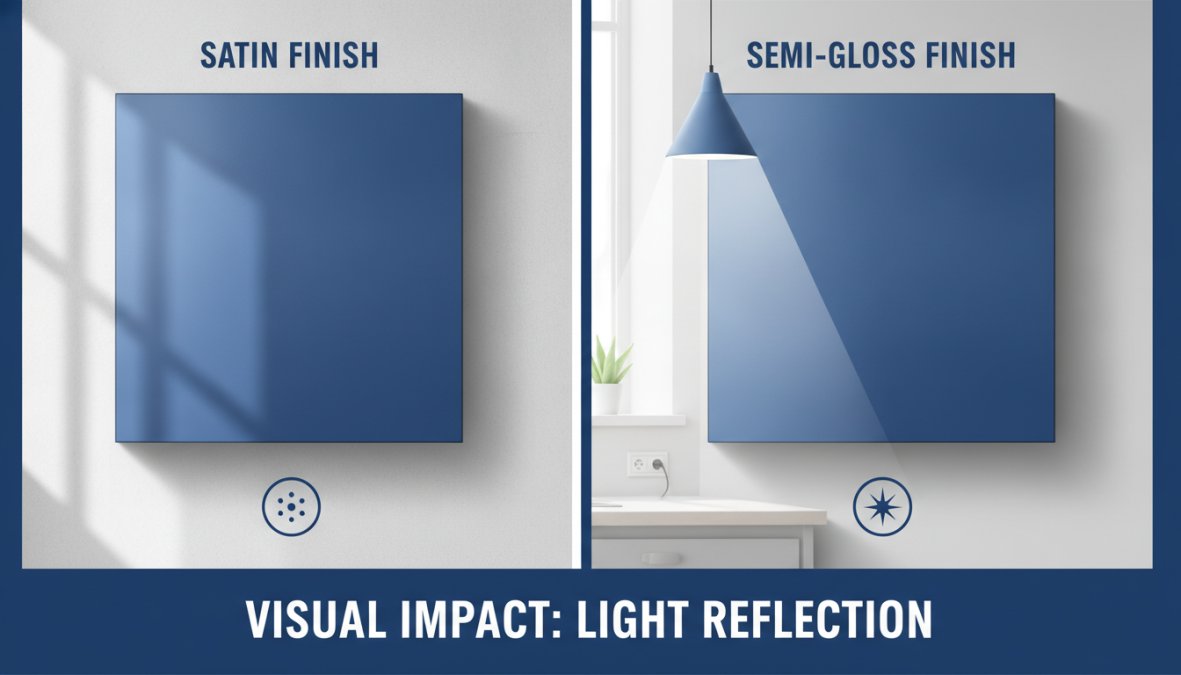
The visual difference between satin and semi-gloss is stark under kitchen lighting.
Reflective Properties and Light Diffusion
Semi-gloss reflects light sharply and directionally, producing distinct highlights under recessed lighting or natural sunlight. On raised-panel or shaker-style doors, those reflections can look busy and visually distracting. Satin diffuses light softly across the surface, producing a more even, matte-adjacent appearance that tends to photograph better and feel warmer in person.
Hiding Surface Imperfections and Brush Marks
Satin wins this category without debate. The lower reflectivity means brush marks, roller stipple, and minor surface irregularities are far less visible than under semi-gloss. This is especially relevant for DIY projects or cabinets with previous paint layers.
Semi-gloss amplifies everything. A surface that looks smooth under satin can show every lap mark and brush stroke under semi-gloss. This is why professional prep work is non-negotiable when using semi-gloss.
Skipping primer before applying semi-gloss on previously painted cabinets is the single most common mistake. Without proper priming, semi-gloss adhesion is compromised and the finish will chip and peel within months.
Ease of Cleaning and Maintenance
Cleaning frequency and method differ significantly between the two finishes.

How to Clean Satin Painted Cabinets Effectively
Use a soft, damp microfiber cloth with a mild dish soap solution, and avoid abrasive scrubbing pads. For grease buildup, a diluted solution of dish soap and warm water applied with light pressure removes most residue without stressing the finish. Avoid ammonia-based cleaners and solvent-heavy sprays, which can strip the sheen over time. Dry the surface immediately after cleaning.
Scrubbability and Stain Resistance Differences
Semi-gloss is genuinely more scrubbable than satin. The harder, denser film tolerates repeated wiping with more pressure and more aggressive cleaning solutions without losing its sheen. For households with children, frequent cooking, or pets, this practical advantage is real.
Stain resistance follows the same pattern: semi-gloss resists staining from coffee, cooking oils, and tomato-based sauces better than satin because the denser film prevents penetration. The practical middle ground many professionals recommend: use semi-gloss on lower cabinets near cooking and sink zones, and satin on upper cabinets where cleaning demands are lower.
| Feature | Satin Finish | Semi-Gloss Finish | Best For |
|---|---|---|---|
| Sheen Level | Low-mid | Mid-high | Semi-gloss: high-traffic zones |
| Moisture Resistance | Moderate | High | Semi-gloss: near sink/range |
| Scrubbability | Moderate | High | Semi-gloss: families with kids |
| Hides Imperfections | Yes | No | Satin: older or textured doors |
| Brush Mark Visibility | Low | High | Satin: DIY projects |
| Light Reflection | Soft/diffused | Sharp/directional | Depends on lighting |
| Touch-Up Repairability | Easier | Harder | Satin: easier blending |
Best Paint Finish for Kitchen Cabinets: Professional Recommendations
The best paint finish is not universal. It’s a decision matrix based on your specific kitchen conditions, cabinet style, and tolerance for maintenance.
When Satin Works Best
Satin is the right choice when your cabinets have surface imperfections you’d rather not highlight, when your kitchen has warm or lower-intensity lighting that would make semi-gloss look harsh, or when you’re painting raised-panel doors where reflective properties would look cluttered. Satin also performs better for touch-up repairability: blending a touch-up coat into an existing satin surface is far easier than matching semi-gloss, where sheen inconsistency is immediately visible.
For white cabinets in a traditional or transitional kitchen, satin produces a softer, more classic result. Many modern water-based satin formulas meet low-VOC thresholds that make them safer for indoor air quality.
When Semi-Gloss Wins
Semi-gloss is correct for modern or contemporary kitchens where the crisp, clean look is part of the design intent. It’s also better for flat-panel cabinet doors with no surface variation, where the reflective properties read as intentional. Any cabinet adjacent to a sink or cooktop should receive semi-gloss for moisture and grease resistance.
For white cabinets in a modern kitchen, semi-gloss produces a bright, almost lacquered appearance that pairs well with chrome hardware. The tradeoff is that future touch-up work will require careful sheen matching.
How to Prep Cabinets for Painting: Foundation for Durability
Prep work determines 80 percent of the final result. No paint finish will perform well on a poorly prepared substrate.
Cabinet Substrate Preparation and Priming
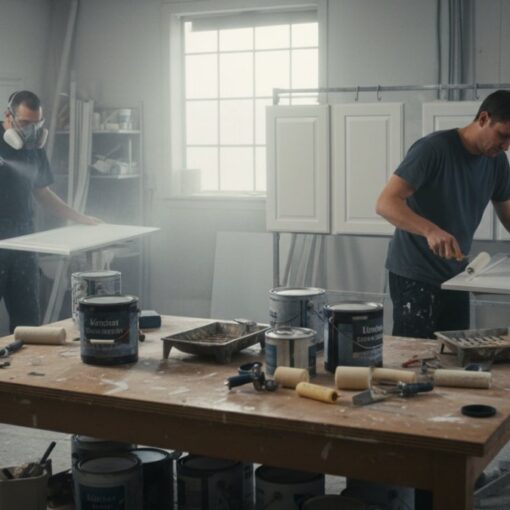
Remove all cabinet doors and hardware before beginning. Clean every surface thoroughly with a degreaser to remove cooking oils. Sand all surfaces with 120-grit sandpaper to create mechanical adhesion, then follow with 220-grit for smoothness.
Primer selection matters. For bare wood or MDF substrate, a high-adhesion water-based primer creates the foundation the topcoat needs. For previously painted surfaces, a bonding primer prevents delamination. Benjamin Moore ADVANCE Interior Paint, a premium waterborne alkyd enamel, is formulated to deliver superior flow and leveling that minimizes brush marks. Allow each primer coat to cure fully before sanding and applying the topcoat.
Topcoat Application for Maximum Durability
A high-volume low-pressure (HVLP) sprayer delivers the smoothest finish with minimal brush marks, especially important for semi-gloss topcoats. Brush and roller application works well for satin finishes where the lower sheen is more forgiving.
Apply two topcoats minimum, sanding lightly between coats with 220-grit. Allow full curing time before rehanging doors. Sherwin-Williams Emerald Urethane Trim Enamel, available in both satin and semi-gloss, uses urethane-modified resin for exceptional hardness and adhesion.
For the smoothest semi-gloss result, back-roll or back-brush immediately after spraying to eliminate overspray texture. This technique produces the factory-quality finish that spray-only application sometimes misses on vertical surfaces.
Environmental Impact and Cost Considerations
Two angles most guides skip: the environmental footprint of your paint choice and the real cost of touch-up work over time.
VOC Emissions and Water-Based vs Alkyd Options
Traditional alkyd paint produces high VOC emissions during application and drying, creating indoor air quality concerns. Modern water-based enamel formulas have closed most of the performance gap while dramatically reducing VOC output. The BEHR PREMIUM Urethane Alkyd Enamel carries GREENGUARD Gold certification for low chemical emissions.
Waterborne alkyd hybrids like Benjamin Moore ADVANCE and Sherwin-Williams Emerald Urethane combine the flow and leveling of traditional alkyd with water cleanup and lower VOC profiles. These formulas are available in both satin and semi-gloss and represent the current professional standard for cabinet painting. Proper ventilation during and after painting is essential regardless of formula.
Cost-Per-Gallon and Touch-Up Repairability
Cost differences between satin and semi-gloss in the same product line are negligible. The real cost differential shows up in touch-up work over time. Satin finishes are substantially easier to touch up because the lower sheen blends more forgivingly. A careful touch-up on a satin cabinet can be nearly invisible.
Semi-gloss touch-ups are notoriously difficult. The higher reflectivity makes sheen variation immediately visible, even when using the same paint. Many professionals recommend repainting an entire door rather than spot-touching semi-gloss cabinets. Over a 10-year lifespan, this can add meaningful cost.
Pros and Cons: Satin vs Semi-Gloss for Kitchen Cabinets
Satin Paint Advantages and Disadvantages
Advantages:
- Hides surface imperfections and brush marks effectively
- Softer, warmer visual texture that suits traditional kitchens
- Easier touch-up repairability over time
- More forgiving of DIY application techniques
- Pairs well with warm lighting and decorative cabinet profiles
Disadvantages:
- Lower moisture resistance in high-humidity zones
- Less scrubbable; aggressive cleaning can dull the finish
- Softer cured film is more vulnerable to scuffs and scratches
- Grease penetration risk if not cleaned promptly
Semi-Gloss Paint Advantages and Disadvantages
Advantages:
- Superior moisture resistance and grease resistance
- Harder cured film resists scuffs, scratches, and wear
- Higher scrubbability tolerates more aggressive cleaning
- Crisp, bright finish suits modern kitchens
- Better stain resistance against common contaminants
Disadvantages:
- Amplifies surface imperfections and brush marks
- Requires meticulous prep work for professional results
- Touch-up repairability is poor; sheen variation is immediately visible
- Can look harsh under warm or low-intensity lighting
- Less forgiving of DIY application errors
The satin vs semi gloss paint for kitchen cabinets durability decision ultimately comes down to your kitchen’s specific conditions. For most kitchens with mixed high-traffic and low-traffic zones, a split approach using semi-gloss on lower cabinets and satin on uppers delivers the best combination of durability and visual quality. Modern cabinet-specific formulas in both sheens have significantly closed the performance gap, making prep and application quality more determinative of long-term durability than the sheen choice alone.
Use semi-gloss where moisture and grease are constant threats, and satin where aesthetics and touch-up ease matter more.
Getting that finish to last requires meticulous preparation, the right primer, and professional application technique. Denver Cabinet Painting Colorado brings 40 years of experience to every cabinet project across the Denver metro, specializing in cabinet painting, refinishing, and glazing with an emphasis on preparation as the foundation of every smooth, consistent finish. Get a free quote from Denver Cabinet Painting Colorado and transform your kitchen without the cost of full cabinet replacement.
Frequently Asked Questions
Is satin or semi-gloss better for kitchen cabinets in terms of durability?
Semi-gloss typically offers superior durability and moisture resistance for kitchen cabinets due to its higher sheen level and reflective properties, making it more resistant to grease and humidity in high-traffic areas. However, satin provides a more forgiving aesthetic that hides brush marks and surface imperfections better. The best choice depends on whether you prioritize scrubbability and stain resistance (semi-gloss) or appearance and ease of touch-ups (satin). Professional cabinet painters often recommend semi-gloss for kitchens with heavy use.
How do I clean satin painted cabinets without damaging the finish?
Clean satin painted cabinets with a soft cloth and mild soap solution, wiping gently to avoid excessive scrubbing. Use warm water and a pH-neutral cleaner, then dry immediately with a soft towel to prevent water spots. Avoid abrasive scrubbers or harsh chemicals that can dull the finish. For stubborn grease, use a slightly damp cloth with minimal pressure. The satin finish is less scrubbable than semi-gloss, so gentle maintenance is key to preserving its appearance and durability over time.
What's the most important step when prepping cabinets for painting?
Proper cabinet substrate preparation is the foundation for durability with either satin or semi-gloss paint. This includes thorough cleaning, sanding to improve adhesion, filling gaps, and applying a quality primer. Professional preparation ensures the topcoat adheres evenly, cures properly, and resists wear and tear in high-traffic kitchen areas. Without meticulous prep work, even premium satin or semi-gloss paints will fail prematurely, regardless of the sheen level you choose.
Does semi-gloss paint last longer than satin on kitchen cabinets?
Semi-gloss generally provides longer-lasting protection in kitchens because its higher reflective properties create a harder, more moisture-resistant surface that resists grease and humidity better. The increased sheen level means better stain resistance and easier cleaning, reducing wear from frequent maintenance. However, durability also depends on application quality, curing time, and cabinet substrate preparation. Both finishes can last 5-10+ years with proper prep and professional application, but semi-gloss typically outperforms satin in high-traffic kitchen environments.
Should I choose satin or semi-gloss for white kitchen cabinets?
Semi-gloss is often preferred for white kitchen cabinets because it provides superior moisture and grease resistance while maintaining a clean, bright appearance through its reflective properties. However, satin works well for white cabinets if you prefer a softer, more matte aesthetic that hides imperfections and brush marks better. Semi-gloss highlights every dust particle and application flaw, while satin offers a more forgiving finish. Consider your kitchen's lighting and your tolerance for visible wear when choosing between these sheens for white cabinetry.
This article was written using GrandRanker