Table of Contents
- Can You Paint Over Thermofoil Cabinets Without Peeling?
- How to Prep Thermofoil Cabinets for Paint
- Best Primer for Thermofoil Cabinets
- Painting Thermofoil Cabinets: Pros and Cons
- Paint Selection and Application for Thermofoil
- Common Mistakes That Cause Paint Failure
- Paint Thermofoil Cabinets or Replace Them? Cost-Benefit Analysis
- Professional Finish vs. DIY: What You Need to Know
Last Updated: July 7, 2026
Can You Paint Over Thermofoil Cabinets Without Peeling?
Yes, but only with rigorous preparation. Thermofoil is a vinyl laminate bonded to MDF substrate using heat and adhesive. When that adhesive fails due to moisture, heat, or poor manufacturing, the vinyl delamulates and peels. Painting over peeling thermofoil without addressing the underlying problem guarantees failure within months. The real opportunity is understanding when painting makes sense versus when replacement is smarter.
What Is Thermofoil and Why It Peels
Thermofoil is a heat-applied vinyl coating fused to medium-density fiberboard (MDF). It became standard in builder-grade kitchens throughout the 1990s and 2000s because it was affordable and durable in controlled environments.
The peeling problem emerges when the adhesive bond weakens due to moisture infiltration, heat exposure, or manufacturing defects. Once delamination begins, water seeps into the gap, swells the MDF, and accelerates the problem.
Painting over active delamination without removing loose vinyl guarantees paint failure. The new topcoat has no substrate to adhere to and will peel within months.
The Short Answer: Yes, But Preparation Is Critical
Painting thermofoil cabinets without peeling requires three conditions: the thermofoil is structurally sound with no active delamination, you use a bonding primer designed for non-porous surfaces, and you follow meticulous surface preparation. Surface preparation typically takes 40-60% of total project time and determines whether your finish lasts five years or five months.
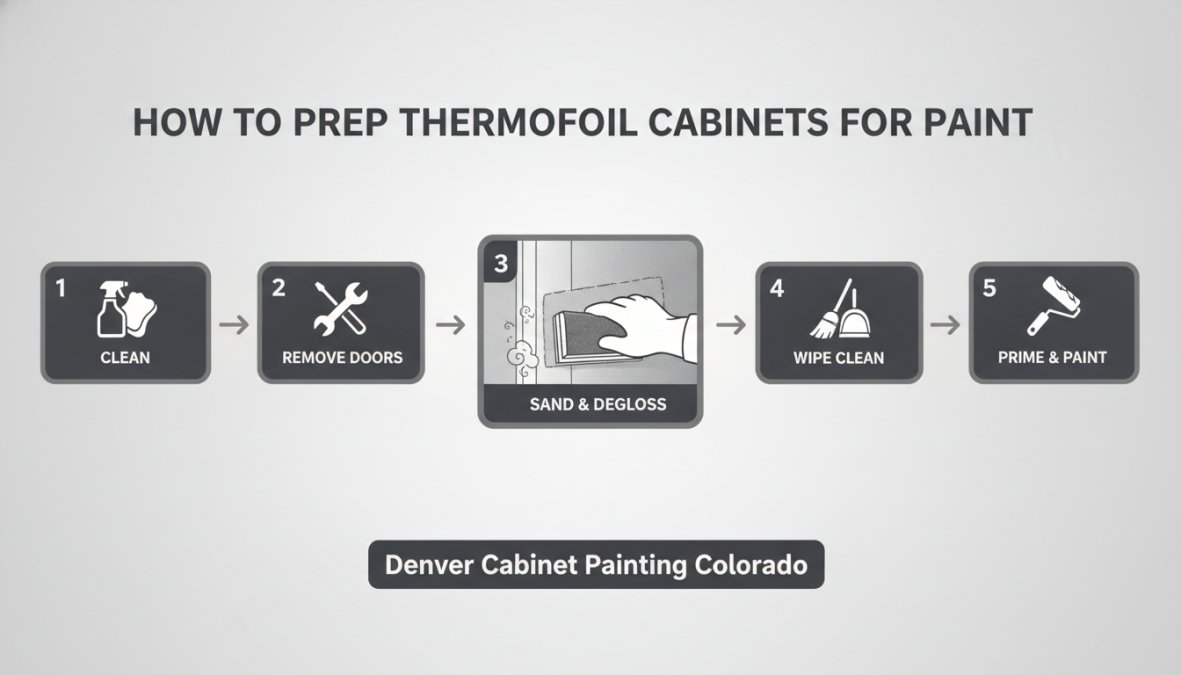
How to Prep Thermofoil Cabinets for Paint
Step 1: Inspect for Signs of Peeling Thermofoil
Before committing to painting, determine whether the thermofoil is salvageable. Look for vinyl lifting at corners or edges, visible gaps between vinyl and substrate, soft spots when pressed, or bubbling under the vinyl. Run your fingernail along edges; if you can slip it under the vinyl, delamination is active. Press firmly on flat surfaces; if the MDF feels spongy or the vinyl moves independently, moisture damage is present.
Minor peeling at a single corner can be addressed with careful removal and regluing. Widespread delamination covering more than 10-15% of a cabinet’s surface usually signals that replacement is more economical.
Step 2: Clean and Degrease the Surface
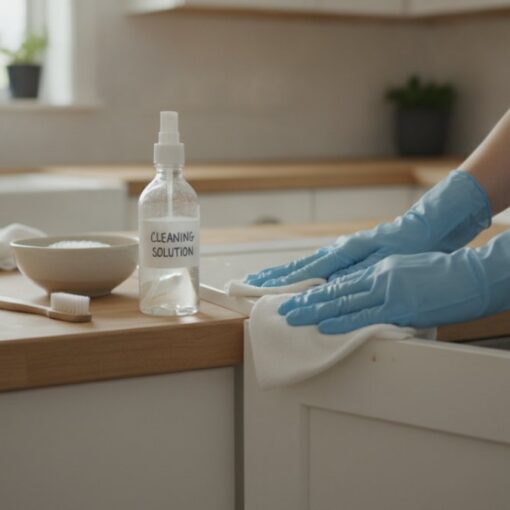
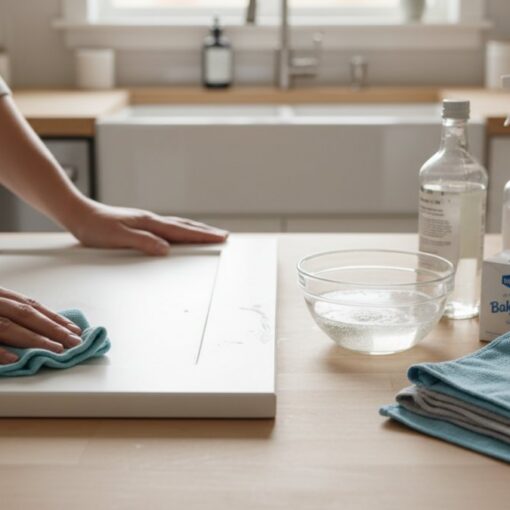
Thermofoil accumulates kitchen grease, dust, and cooking residue that creates a barrier between primer and substrate. Use a degreaser formulated for kitchen cabinets; TSP (trisodium phosphate) is the industry standard. Mix according to package directions and apply with a soft cloth, allowing it to sit for 2-3 minutes before wiping. Pay special attention to areas around handles and near the stove. Wipe thoroughly with a clean, damp cloth to remove all degreaser residue. Allow 24 hours for complete drying.
Step 3: Sand and Degloss the Thermofoil
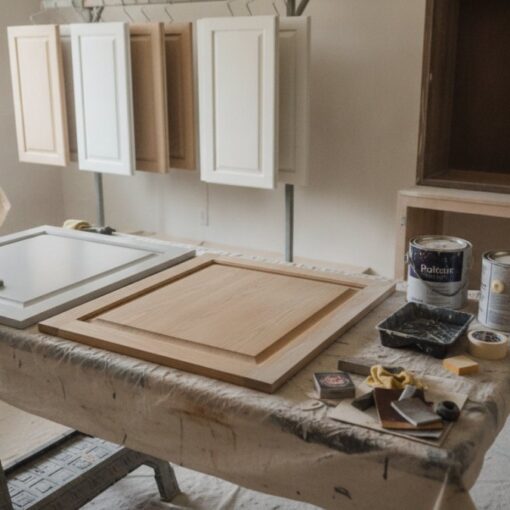
Thermofoil’s smooth, glossy surface prevents primer from gripping the substrate. Use 120-150 grit sandpaper for initial deglossing, applying light to moderate pressure in circular motions. The goal is to break the gloss, not sand through the vinyl. Switch to 180-220 grit for a final pass to smooth the surface and remove sanding scratches. Vacuum all dust thoroughly, then wipe with a tack cloth to remove fine particles.
Step 4: Address Delamination and Adhesion Issues
If you found minor peeling during inspection, address it now. Use a heat gun on low setting to warm the lifted vinyl and make the adhesive pliable. Gently lift the vinyl and apply flexible adhesive to the exposed MDF. Press down firmly and hold for 30-60 seconds. For larger delaminated areas, remove the vinyl completely, sand the exposed MDF smooth, apply new adhesive, and reattach. If delamination is extensive or the vinyl won’t reattach cleanly, cabinet refacing or replacement becomes the smarter choice.
Best Primer for Thermofoil Cabinets
Why Bonding Primer Matters for Thermofoil
Standard latex primers fail on thermofoil because they don’t bond to non-porous surfaces. Bonding primers contain adhesion promoters that grip the non-porous surface mechanically and chemically. When applied to deglossed thermofoil, they create a mechanical lock and chemical bond that standard primers cannot achieve.

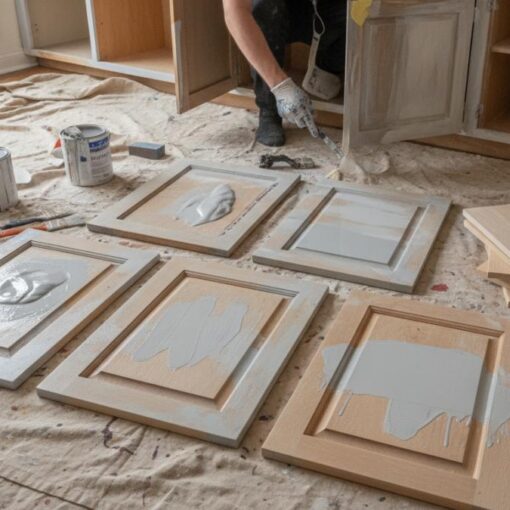
Apply bonding primer within 24 hours of final sanding. If dust settles or the thermofoil re-glazes, sand once more with 220-grit before priming.
Tint the primer to match your topcoat color. This reduces the number of topcoat layers needed and improves final coverage. Two coats of bonding primer followed by two coats of topcoat is standard.
Solvent-Based vs. Water-Based Primers
Solvent-based bonding primers offer superior adhesion and durability, penetrating slightly into the surface for a stronger mechanical lock. They cure faster, allowing topcoat application within 4-8 hours. The downside: strong fumes, better ventilation required, and mineral spirits for cleanup.
Water-based bonding primers are easier to apply, produce minimal fumes, and have improved significantly in recent years. They require longer between coats (12-24 hours) and are slightly less durable. For residential cabinet painting, water-based bonding primers are acceptable if you can provide 24 hours between primer and topcoat.
Painting Thermofoil Cabinets: Pros and Cons
Advantages of Painting Over Replacement
Painting costs a fraction of cabinet replacement and avoids the disruption of full kitchen renovation. You preserve your existing cabinet layout and storage configuration. The timeline is dramatically shorter, cabinet painting takes days to weeks versus weeks to months for replacement.
Risks and Durability Considerations
Painted thermofoil is more fragile than solid wood cabinets and can chip, scratch, or peel with heavy use. If the underlying thermofoil continues to delaminate after painting, your topcoat will fail. Moisture remains a long-term threat; paint slows but doesn’t stop moisture penetration.
Long-Term Durability: What to Expect
A well-executed cabinet paint job on stable thermofoil typically lasts 5-7 years before requiring touch-ups. High-traffic kitchens may see wear within 3-4 years; kitchens with excellent ventilation and light use can stretch to 8-10 years. First signs of wear are usually scratches or chips on cabinet edges and around handles. Peeling typically begins at corners or edges if preparation shortcuts were taken.
Paint Selection and Application for Thermofoil
Recommended Paint Types for Cabinet Doors
Cabinet-grade acrylic enamel is the standard choice for thermofoil refinishing. Acrylic enamels resist staining and clean easily, which matters in kitchens. Water-based acrylic enamels dry quickly and produce minimal fumes; solvent-based options remain the gold standard for durability and finish quality.
Avoid standard latex house paint or interior paint; these aren’t formulated for the wear and moisture exposure cabinets experience.
Topcoat Application and Curing Time
Apply topcoat in thin, even layers rather than one thick coat. Two coats of quality cabinet enamel over bonding primer creates a durable finish; three coats provides extra protection for high-traffic kitchens. Allow full cure time between coats (24 hours for water-based, 12-16 hours for solvent-based). Use a quality brush or foam roller for smooth, even application.
Water-based enamels need 7-14 days of light cure before cabinets are fully functional. Solvent-based enamels cure in 3-7 days. During cure, avoid heavy use and don’t slam doors.
Common Mistakes That Cause Paint Failure
Skipping Surface Preparation
This is the most common reason painted thermofoil fails. Homeowners see a smooth surface and assume it’s ready for primer, skipping degreasing or sanding lightly. Budget 40-60% of your total project time for preparation.
Using Wrong Primer or Paint Type
Standard latex primer on thermofoil fails within months. Bonding primer is non-negotiable. Similarly, using interior latex paint instead of cabinet-grade enamel seems economical until the finish wears within two years.
Ignoring Environmental Factors
Paint cabinets when temperatures are 55-75°F and humidity is 40-60%. Cold temperatures and high humidity prevent proper curing and can trap moisture in the finish.
Paint Thermofoil Cabinets or Replace Them? Cost-Benefit Analysis
When Painting Makes Sense
Paint thermofoil cabinets when the substrate is sound with no active delamination, you’re updating appearance without changing layout, and you want results quickly and affordably. If cabinets are 10-15 years old with minor cosmetic wear but no structural damage, painting extends their useful life by 5-10 years at a fraction of replacement cost. Painting is also ideal when preparing to sell your home.
When Cabinet Refacing or Replacement Is Better
Replace thermofoil cabinets when delamination affects more than 20-30% of surfaces, the MDF substrate is water-damaged or swollen, or frames are warped or unstable. Cabinet refacing, replacing doors and drawer fronts while keeping frames, is a middle-ground option. Replace cabinets if planning a major kitchen renovation.
Professional Finish vs. DIY: What You Need to Know
Professional painters bring expertise in preparation, material selection, and application technique that produces superior results lasting 7-10 years. They have commercial-grade materials and equipment, proper ventilation setup, and dust containment.
DIY painting is economical and gives you control. If detail-oriented and patient with preparation, DIY results can be acceptable. Expect longer timelines and potentially less durable finishes.
If you have 2-3 weeks available and accept minor imperfections, DIY painting is viable. If you need a flawless finish quickly, professional painting is worth the investment.
Thermofoil cabinets are absolutely paintable with proper preparation and materials. The difference between a paint job lasting five years and one failing in six months is the preparation phase: degreasing, sanding, and using bonding primer. These steps aren’t optional shortcuts; they’re the foundation of durability.
Frequently Asked Questions
Why does paint peel off thermofoil cabinets?
Paint peels from thermofoil due to poor adhesion between the paint and the vinyl substrate. Thermofoil is a heat-applied vinyl layer over MDF, and without proper surface preparation, degreasing, sanding, and deglossing, paint cannot bond effectively. Additionally, moisture, heat damage, and delamination of the thermofoil itself can cause paint failure. Using the wrong primer or skipping bonding primer is a common culprit.
What is the best primer for thermofoil cabinets?
A bonding primer specifically designed for glossy, non-porous surfaces is essential for thermofoil cabinets. Solvent-based bonding primers typically offer superior adhesion on vinyl substrates compared to water-based alternatives. The primer must create a mechanical bond through the deglossed surface and chemically adhere to the thermofoil. Always choose a primer labeled for use on cabinets and glossy surfaces to prevent peeling.
Do I need to sand thermofoil cabinets before painting?
Yes, sanding is critical. Thermofoil has a glossy, slick surface that resists paint adhesion. Deglossing with medium-grit sandpaper (120-150 grit) removes the shine and creates microscopic texture for the primer to grip. After sanding, use a tack cloth to remove all dust. This surface preparation step is non-negotiable for preventing paint failure and ensuring your finish lasts.
How long does painted thermofoil last?
With proper preparation and quality materials, painted thermofoil cabinets can last 5-10 years or longer. Durability depends on humidity levels, kitchen ventilation, heat exposure, and maintenance. Cabinets in high-moisture environments or near heat sources may experience shorter paint life. Professional application and acrylic enamel or conversion varnish topcoats generally provide better longevity than DIY projects or lower-quality paints.
This article was written using GrandRanker